


DsbA-L alleviates endoplasmic reticulum stress-induced adiponectin downregulation
- PMID: 20699416
- PMCID: PMC2963539
- DOI: 10.2337/db10-0412
DsbA-L alleviates endoplasmic reticulum stress-induced adiponectin downregulation
Abstract
Objective: Obesity impairs adiponectin expression, assembly, and secretion, yet the underlying mechanisms remain elusive. The aims of this study were 1) to determine the molecular mechanisms by which obesity impairs adiponectin multimerization and stability, and 2) to determine the potential role of disulfide-bond-A oxidoreductase-like protein (DsbA-L), a recently identified adiponectin interactive protein that promotes adiponectin multimerization and stability in obesity-induced endoplasmic reticulum (ER) stress and adiponectin downregulation.
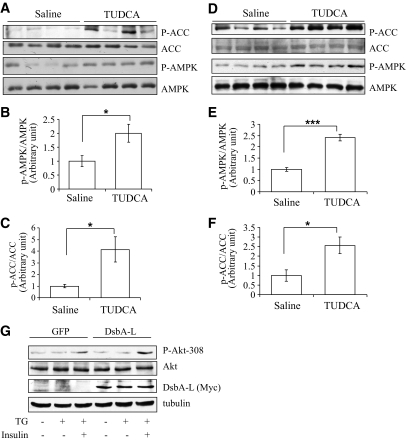
Research design and methods: Tauroursodeoxycholic acid (TUDCA), a chemical chaperone that alleviates ER stress, was used to study the mechanism underlying obesity-induced adiponectin downregulation in db/db mice, high-fat diet-induced obese mice, and in ER-stressed 3T3-L1 adipocytes. The cellular levels of DsbA-L were altered by RNAi-mediated suppression or adenovirus-mediated overexpression. The protective role of DsbA-L in obesity- and ER stress-induced adiponectin downregulation was characterized.
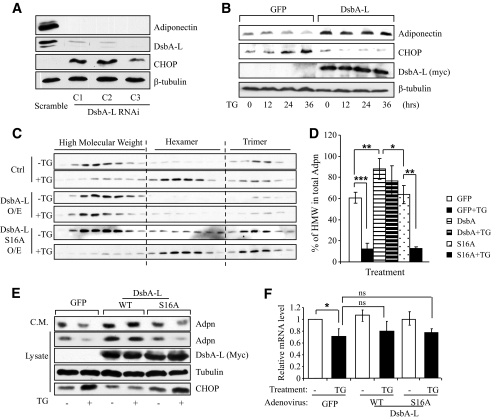
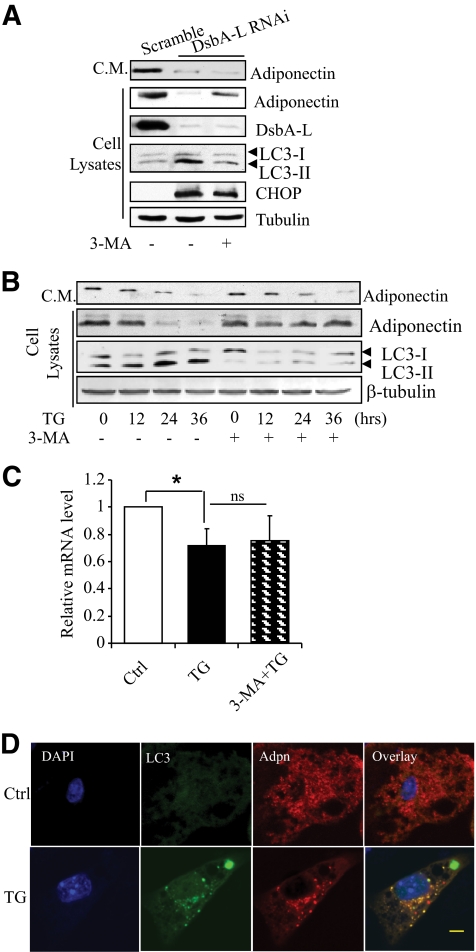
Results: Treating db/db mice and diet-induced obese mice with TUDCA increased the cellular and serum levels of adiponectin. In addition, inducing ER stress is sufficient to downregulate adiponectin levels in 3T3-L1 adipocytes, which could be protected by treating cells with the autophagy inhibitor 3-methyladenine or by overexpression of DsbA-L.
Conclusions: ER stress plays a key role in obesity-induced adiponectin downregulation. In addition, DsbA-L facilitates adiponectin folding and assembly and provides a protective effect against ER stress-mediated adiponectin downregulation in obesity.
Figures

References
-
- Shetty S, Kusminski CM, Scherer PE. Adiponectin in health and disease: evaluation of adiponectin-targeted drug development strategies. Trends Pharmacol Sci 2009;30:234–239 - PubMed
-
- Pajvani UB, Du X, Combs TP, Berg AH, Rajala MW, Schulthess T, Engel J, Brownlee M, Scherer PE. Structure-function studies of the adipocyte-secreted hormone Acrp30/adiponectin. Implications fpr metabolic regulation and bioactivity. J Biol Chem 2003;278:9073–9085 - PubMed
-
- Tsao TS, Murrey HE, Hug C, Lee DH, Lodish HF. Oligomerization state-dependent activation of NF-κ B signaling pathway by adipocyte complement-related protein of 30 kDa (Acrp30). J Biol Chem 2002;277:29359–29362 - PubMed
-
- Waki H, Yamauchi T, Kamon J, Ito Y, Uchida S, Kita S, Hara K, Hada Y, Vasseur F, Froguel P, Kimura S, Nagai R, Kadowaki T. Impaired multimerization of human adiponectin mutants associated with diabetes. Molecular structure and multimer formation of adiponectin. J Biol Chem 2003;278:40352–40363 - PubMed
Publication types
MeSH terms
Substances
Grants and funding
LinkOut - more resources
Full Text Sources
Molecular Biology Databases
Miscellaneous
