


EPO receptor gain-of-function causes hereditary polycythemia, alters CD34 cell differentiation and increases circulating endothelial precursors
- PMID: 20700488
- PMCID: PMC2916842
- DOI: 10.1371/journal.pone.0012015
EPO receptor gain-of-function causes hereditary polycythemia, alters CD34 cell differentiation and increases circulating endothelial precursors
Retraction in
-
Retraction: EPO Receptor Gain-of-Function Causes Hereditary Polycythemia, Alters CD34+ Cell Differentiation and Increases Circulating Endothelial Precursors.PLoS One. 2020 Mar 4;15(3):e0230279. doi: 10.1371/journal.pone.0230279. eCollection 2020. PLoS One. 2020. PMID: 32130275 Free PMC article. No abstract available.
Abstract
Background: Gain-of-function of erythropoietin receptor (EPOR) mutations represent the major cause of primary hereditary polycythemia. EPOR is also found in non-erythroid tissues, although its physiological role is still undefined.
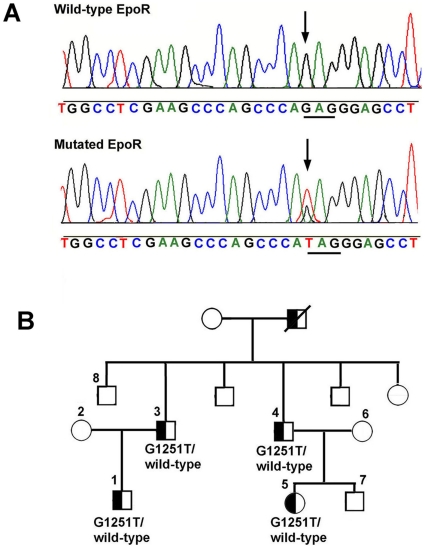
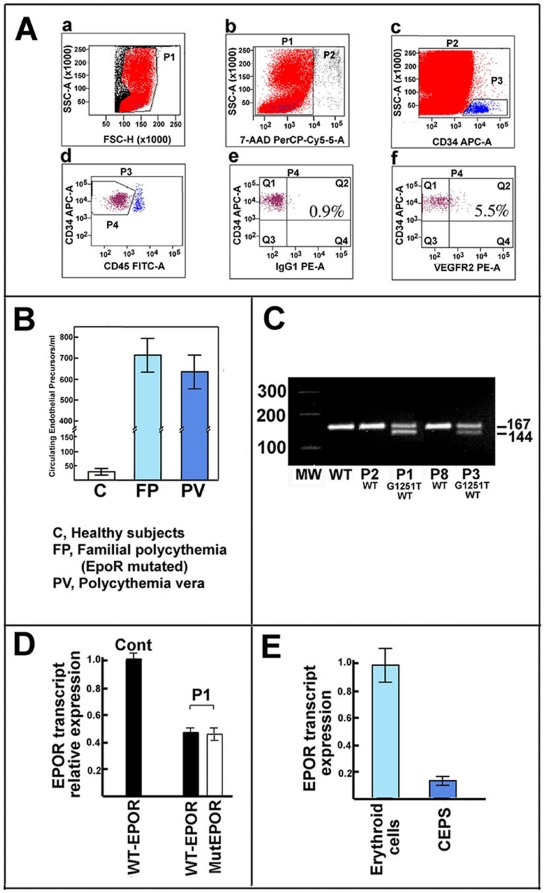
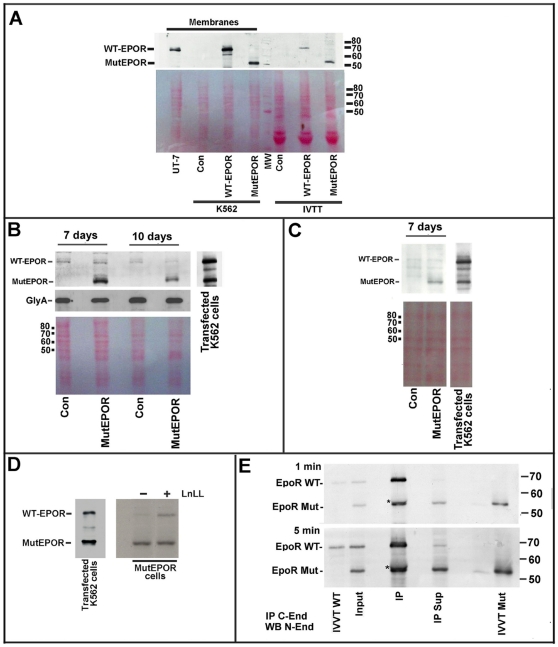
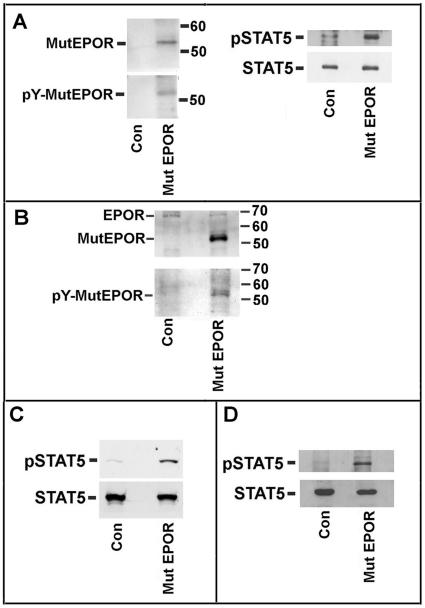
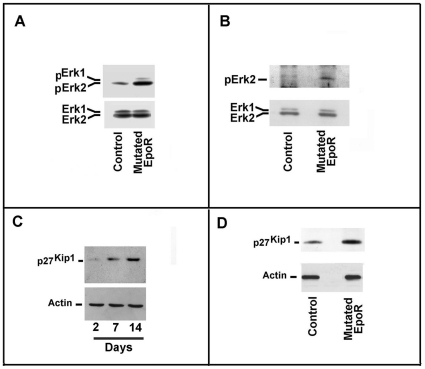
Methodology/principal findings: We describe a family with polycythemia due to a heterozygous mutation of the EPOR gene that causes a G-->T change at nucleotide 1251 of exon 8. The novel EPOR G1251T mutation results in the replacement of a glutamate residue by a stop codon at amino acid 393. Differently from polycythemia vera, EPOR G1251T CD34(+) cells proliferate and differentiate towards the erythroid phenotype in the presence of minimal amounts of EPO. Moreover, the affected individuals show a 20-fold increase of circulating endothelial precursors. The analysis of erythroid precursor membranes demonstrates a heretofore undescribed accumulation of the truncated EPOR, probably due to the absence of residues involved in the EPO-dependent receptor internalization and degradation. Mutated receptor expression in EPOR-negative cells results in EPOR and Stat5 phosphorylation. Moreover, patient erythroid precursors present an increased activation of EPOR and its effectors, including Stat5 and Erk1/2 pathway.
Conclusions/significance: Our data provide an unanticipated mechanism for autosomal dominant inherited polycythemia due to a heterozygous EPOR mutation and suggest a regulatory role of EPO/EPOR pathway in human circulating endothelial precursors homeostasis.
Conflict of interest statement
Figures

References
-
- Barber DL, D'Andrea AD. The erythropoietin receptor and the molecular basis of signal transduction. Semin Hematol. 1992;29:293–304. - PubMed
Publication types
MeSH terms
Substances
Grants and funding
LinkOut - more resources
Full Text Sources
Research Materials
Miscellaneous
