


Heritability of delay discounting in adolescence: a longitudinal twin study
- PMID: 20700643
- PMCID: PMC3036802
- DOI: 10.1007/s10519-010-9384-7
Heritability of delay discounting in adolescence: a longitudinal twin study
Abstract
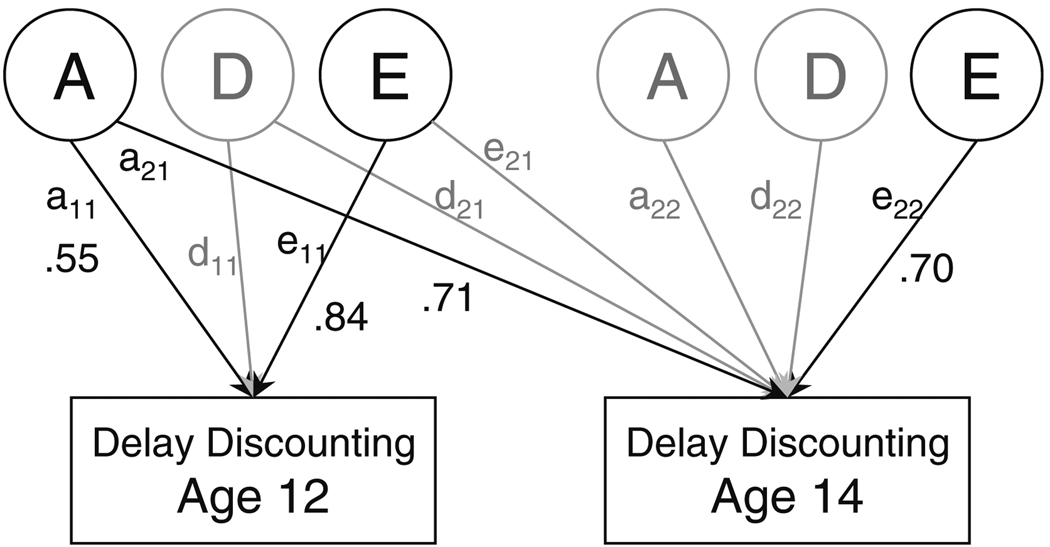
Delay discounting (DD) refers to the preference for smaller immediate rewards over larger but delayed rewards, and is considered to be a distinct component of a broader "impulsivity" construct. Although greater propensity for discounting the value of delayed gratification has been associated with a range of problem behaviors and substance abuse, particularly in adolescents, the origins of individual differences in DD remain unclear. We examined genetic and environmental influences on a real-life behavioral measure of DD using a longitudinal twin design. Adolescent participants were asked to choose between a smaller ($7) reward available immediately and a larger ($10) reward to be received in 7 days. Biometrical genetic analysis using linear structural equation modeling showed significant heritability of DD at ages 12 and 14 (30 and 51%, respectively) and suggested that the same genetic factors influenced the trait at both ages. DD was significantly associated with symptoms of conduct disorder, attention deficit hyperactivity disorder, substance use, and with higher novelty seeking and poor self-regulation. This study provides the first evidence for heritability of DD in humans and suggests that DD can be a promising endophenotype for genetic studies of addiction and externalizing disorders.
Figures
References
-
- Ainslie G. Specious reward: a behavioral theory of impulsiveness and impulse control. Psychol Bull. 1975;82:463–496. - PubMed
-
- Anokhin AP, Birbaumer N, Lutzenberger W, Nikolaev A, Vogel F. Age increases brain complexity. Electroencephalogr Clin Neurophysiol. 1996;99:63–68. - PubMed
-
- Audrain-McGovern J, Rodriguez D, Tercyak KP, Epstein LH, Goldman P, Wileyto EP. Applying a behavioral economic framework to understanding adolescent smoking. Psychol Addict Behav. 2004;18:64–73. - PubMed
-
- Bechara A. Decision making, impulse control and loss of willpower to resist drugs: a neurocognitive perspective. Nat Neurosci. 2005;8:1458–1463. - PubMed
-
- Beck RC, Triplett MF. Test–retest reliability of a group-administered paper–pencil measure of delay discounting. Exp Clin Psychopharmacol. 2009;17:345–355. - PubMed
Publication types
MeSH terms
Grants and funding
LinkOut - more resources
Full Text Sources
