


A concept for major incident triage: full-scaled simulation feasibility study
- PMID: 20701802
- PMCID: PMC2928192
- DOI: 10.1186/1471-227X-10-17
A concept for major incident triage: full-scaled simulation feasibility study
Abstract
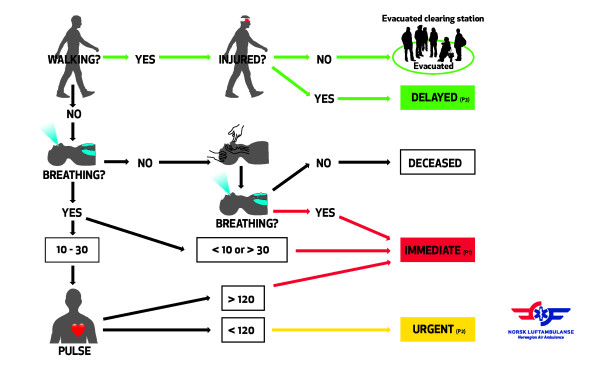
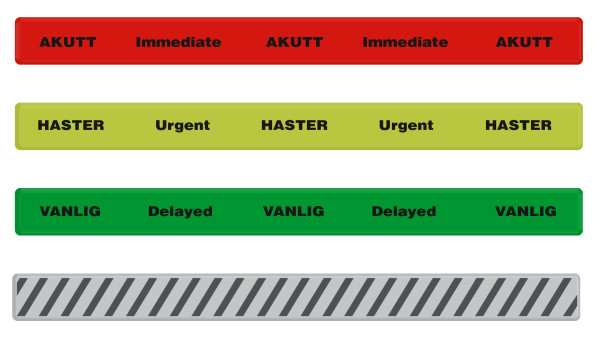
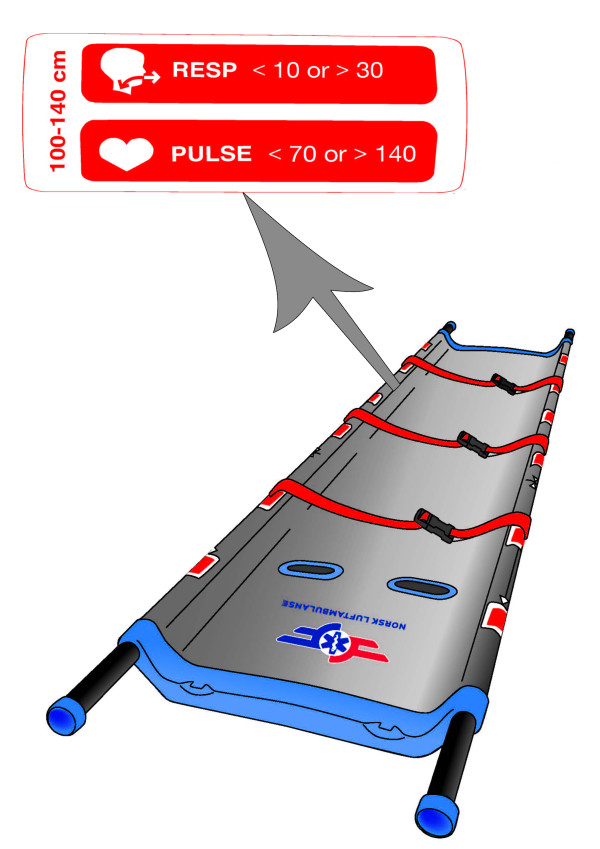
Background: Efficient management of major incidents involves triage, treatment and transport. In the absence of a standardised interdisciplinary major incident management approach, the Norwegian Air Ambulance Foundation developed Interdisciplinary Emergency Service Cooperation Course (TAS). The TAS-program was established in 1998 and by 2009, approximately 15 500 emergency service professionals have participated in one of more than 500 no-cost courses. The TAS-triage concept is based on the established triage Sieve and Paediatric Triage Tape models but modified with slap-wrap reflective triage tags and paediatric triage stretchers. We evaluated the feasibility and accuracy of the TAS-triage concept in full-scale simulated major incidents.
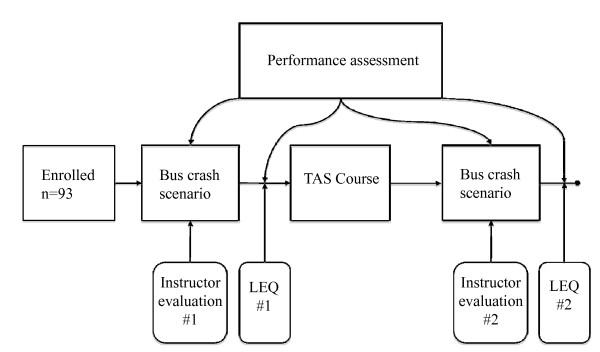
Methods: The learners participated in two standardised bus crash simulations: without and with competence of TAS-triage and access to TAS-triage equipment. The instructors calculated triage accuracy and measured time consumption while the learners participated in a self-reported before-after study. Each question was scored on a 7-point Likert scale with points labelled "Did not work" (1) through "Worked excellent" (7).
Results: Among the 93 (85%) participating emergency service professionals, 48% confirmed the existence of a major incident triage system in their service, whereas 27% had access to triage tags. The simulations without TAS-triage resulted in a mean over- and undertriage of 12%. When TAS-Triage was used, no mistriage was found. The average time from "scene secured to all patients triaged" was 22 minutes (range 15-32) without TAS-triage vs. 10 minutes (range 5-21) with TAS-triage. The participants replied to "How did interdisciplinary cooperation of triage work?" with mean 4,9 (95% CI 4,7-5,2) before the course vs. mean 5,8 (95% CI 5,6-6,0) after the course, p < 0,001.
Conclusions: Our modified triage Sieve tool is feasible, time-efficient and accurate in allocating priority during simulated bus accidents and may serve as a candidate for a future national standard for major incident triage.
Figures
References
-
- Advanced Life Support Group (Ed.) Major Incident Medical Management and Support, the Practical Approach at the scene. Second. Plymouth, UK: BMJ Publishing Group; 2002.
-
- Aylwin CJ, Konig TC, Brennan NW, Shirley PJ, Davies G, Walsh MS, Brohi K. Reduction in critical mortality in urban mass casualty incidents: analysis of triage, surge, and resource use after the London bombings on July 7, 2005.[see comment] Lancet. 2006;368:2219–2225. doi: 10.1016/S0140-6736(06)69896-6. - DOI - PubMed
-
- Seynaeve G, Archer F, Fisher J, Lueger-Schuster B, Rowlands A, Sellwood P, Vandevelde K, Zigoura A. International standards and guidelines on education and training for the multi-disciplinary health response to major events that threaten the health status of a community. Prehosp Disaster Med. 2004;19:S17–30. - PubMed
-
- Hodgetts T, Hall J, Maconochie I, Smart C. Paediatric triage tape. Pre-Hospital Immediate Care. 1998;2:155–159.
Publication types
MeSH terms
LinkOut - more resources
Full Text Sources
Medical
