


Perceived social competence, negative social interactions, and negative cognitive style predict depressive symptoms during adolescence
- PMID: 20706914
- PMCID: PMC2921900
- DOI: 10.1080/15374416.2010.501284
Perceived social competence, negative social interactions, and negative cognitive style predict depressive symptoms during adolescence
Abstract
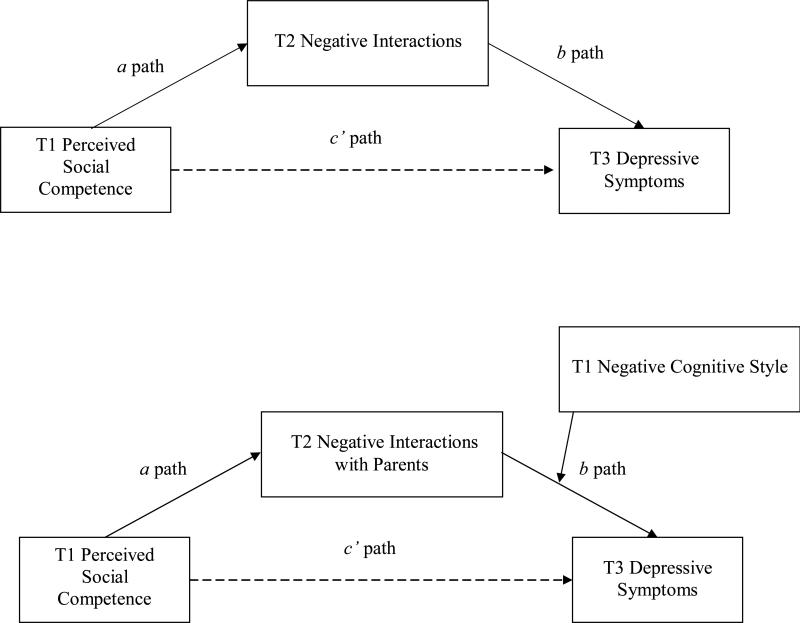
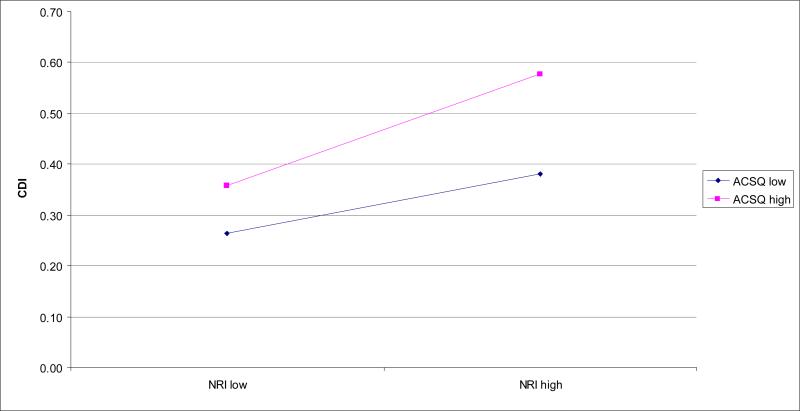
The current study examined whether negative interactions with parents and peers would mediate the longitudinal association between perceived social competence and depressive symptoms and whether a negative cognitive style would moderate the longitudinal association between negative interactions with parents and increases in depressive symptoms. Youth (N = 350; 6th-10th graders) completed self-report measures of perceived social competence, negative interactions with parents and peers, negative cognitive style, and depressive symptoms at three time points. Results indicated that the relationship between perceived social competence and depressive symptoms was partially mediated by negative interactions with parents but not peers. Further, baseline negative cognitive style interacted with greater negative parent interactions to predict later depressive symptoms.
Figures
References
-
- Abela JRZ. The hopelessness theory of depression: A test of the diathesis-stress and causal mediation components in third and seventh grade children. Journal of Abnormal Child Psychology. 2001;29:241–254. - PubMed
-
- Abela JRZ. Depressive mood reactions to failure in the achievement domain: A test of the integration of the hopelessness and self-esteem theories of depression. Cognitive Therapy and Research. 2002;26:531–552.
-
- Abela JRZ, Hankin BL. Handbook of Depression in Children and Adolescents. Guilford Press; NY: 2008.
-
- Abela JRZ, Hankin BL. Cognitive vulnerability to depression in children and adolescents: A developmental psychopathology approach. In: Abela JRZ, Hankin BL, editors. Handbook of Child and Adolescent Depression. Guilford Press; New York, NY: 2008.
-
- Abela JRZ, Seligman MEP. The hopelessness theory of depression: A test of the diathesis-stress component in the interpersonal and achievement domains. Cognitive Therapy and Research. 2000;24:361–378.
Publication types
MeSH terms
Grants and funding
LinkOut - more resources
Full Text Sources
Medical
