


Benchmarking in the SWISSspine registry: results of 52 Dynardi lumbar total disc replacements compared with the data pool of 431 other lumbar disc prostheses
- PMID: 20711843
- PMCID: PMC2997199
- DOI: 10.1007/s00586-010-1550-3
Benchmarking in the SWISSspine registry: results of 52 Dynardi lumbar total disc replacements compared with the data pool of 431 other lumbar disc prostheses
Abstract
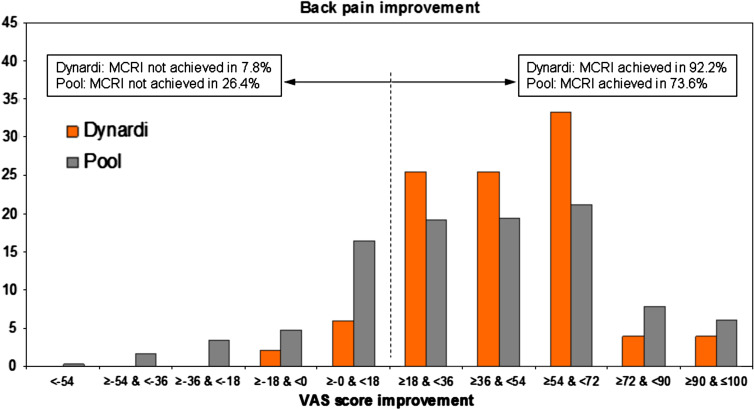
The SWISSspine registry is the first mandatory registry of its kind in the history of Swiss orthopaedics and it follows the principle of "coverage with evidence development". Its goal is the generation of evidence for a decision by the Swiss federal office of health about reimbursement of the concerned technologies and treatments by the basic health insurance of Switzerland. Recently, developed and clinically implemented, the Dynardi total disc arthroplasty (TDA) accounted for 10% of the implanted lumbar TDAs in the registry. We compared the outcomes of patients treated with Dynardi to those of the recipients of the other TDAs in the registry. Between March 2005 and October 2009, 483 patients with single-level TDA were documented in the registry. The 52 patients with a single Dynardi lumbar disc prosthesis implanted by two surgeons (CE and OS) were compared to the 431 patients who received one of the other prostheses. Data were collected in a prospective, observational multicenter mode. Surgery, implant, 3-month, 1-year, and 2-year follow-up forms as well as comorbidity, NASS and EQ-5D questionnaires were collected. For statistical analyses, the Wilcoxon signed-rank test and chi-square test were used. Multivariate regression analyses were also performed. Significant and clinically relevant reduction of low back pain and leg pain as well as improvement in quality of life was seen in both groups (P < 0.001 postop vs. preop). There were no inter-group differences regarding postoperative pain levels, intraoperative and follow-up complications or revision procedures with a new hospitalization. However, significantly more Dynardi patients achieved a minimum clinically relevant low back pain alleviation of 18 VAS points and a quality of life improvement of 0.25 EQ-5D points. The patients with Dynardi prosthesis showed a similar outcome to patients receiving the other TDAs in terms of postoperative low back and leg pain, complications, and revision procedures. A higher likelihood for achieving a minimum clinically relevant improvement of low back pain and quality of life in Dynardi patients was observed. This difference might be due to the large number of surgeons using other TDAs compared to only two surgeons using the Dynardi TDA, with corresponding variations in patient selection, patient-physician interaction and other factors, which cannot be assessed in a registry study.
Figures




References
-
- Schluessmann E, Aghayev E, Staub L, Moulin P, Zweig T, Roder C (2010) SWISSspine: the case of a governmentally required HTA-registry for total disc arthroplasty. Results of cervical disc prostheses. Spine (in press) - PubMed
-
- Diel P, Reuss W, Aghayev E, Moulin P, Roder C (2009) SWISSspine-a nationwide health technology assessment registry for balloon kyphoplasty: methodology and first results. Spine J. doi:10.1016/j.spinee.2009.08.452 - PubMed
-
- Hagg O, Fritzell P, Nordwall A. The clinical importance of changes in outcome scores after treatment for chronic low back pain. Eur Spine J. 2003;12:12–20. - PubMed
-
- Bertagnoli R, Yue JJ, Shah RV, Nanieva R, Pfeiffer F, Fenk-Mayer A, Kershaw T, Husted DS. The treatment of disabling single-level lumbar discogenic low back pain with total disc arthroplasty utilizing the Prodisc prosthesis: a prospective study with 2-year minimum follow-up. Spine. 2005;30:2230–2236. doi: 10.1097/01.brs.0000182217.87660.40. - DOI - PubMed
