


Nitric oxide inhibits ACTH-induced cortisol production in near-term, long-term hypoxic ovine fetal adrenocortical cells
- PMID: 20713972
- PMCID: PMC2943550
- DOI: 10.1177/1933719110376092
Nitric oxide inhibits ACTH-induced cortisol production in near-term, long-term hypoxic ovine fetal adrenocortical cells
Abstract
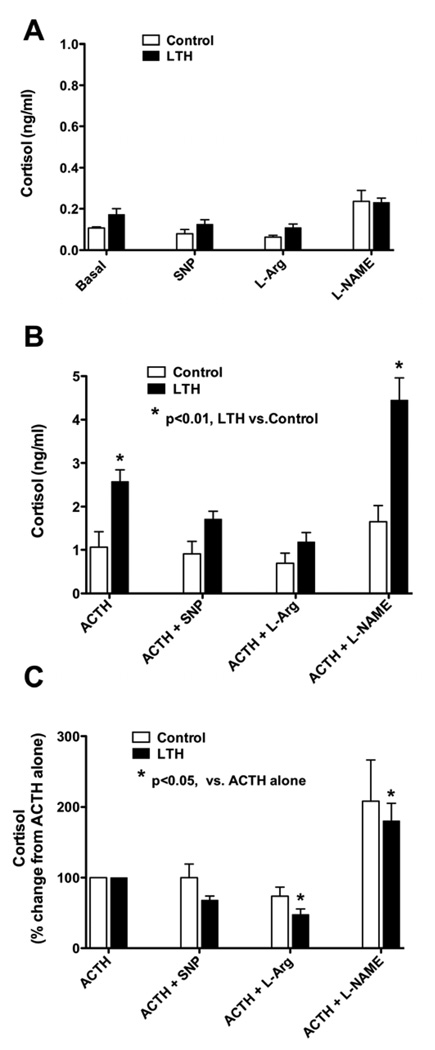
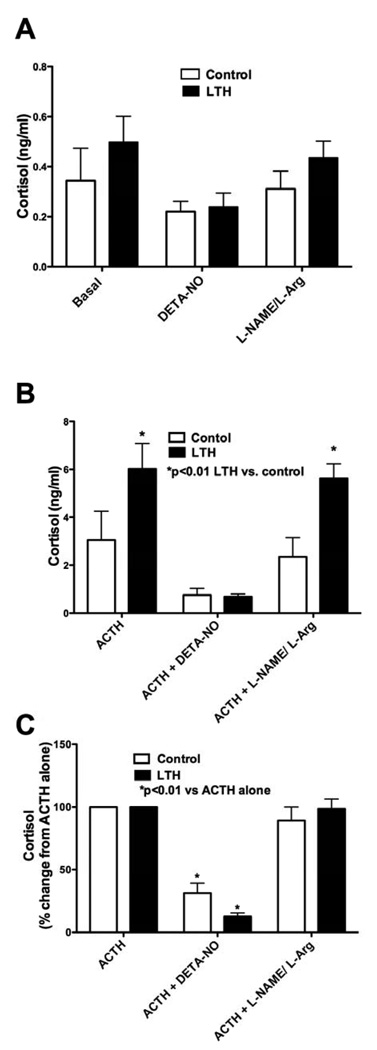
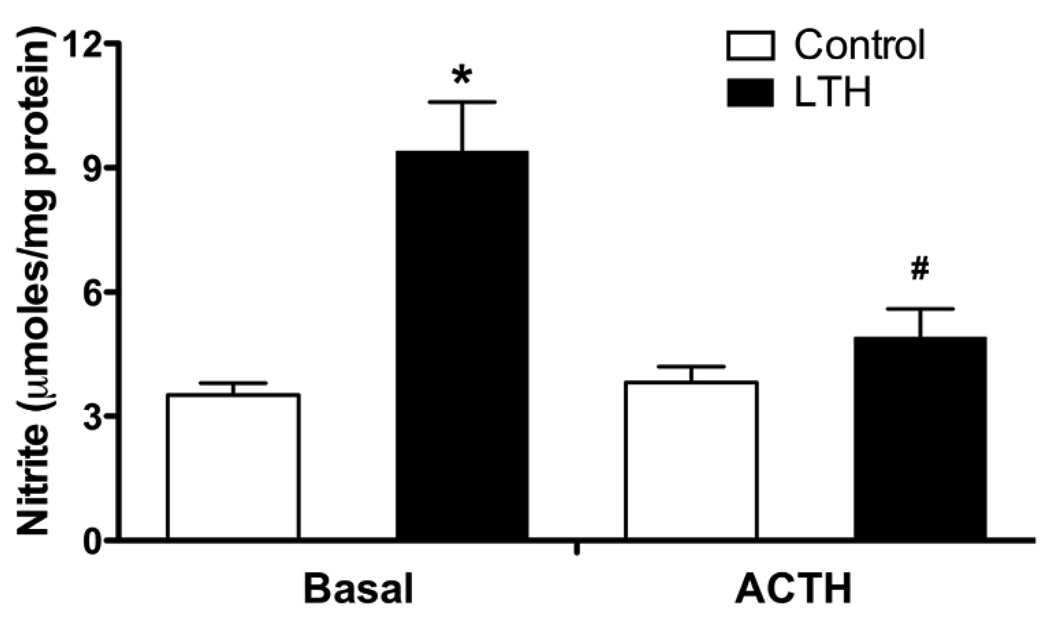
We previously reported that in the sheep fetus, long-term hypoxia (LTH) resulted in elevated basal plasma adrenocorticotropic hormone (ACTH(1- 39)) whereas the cortisol levels were not different from normoxic controls. We also showed that LTH enhances endothelial nitric oxide synthase (eNOS) expression in the fetal adrenal. This study was designed to determine the effect of NO on cortisol production in adrenocortical cells from LTH fetal sheep. Ewes were maintained at high altitude (3820 m) from ∼40 days' gestation (dG) to near term. Between 138 and 141 dG, fetal adrenal glands were collected from LTH and age-matched normoxic control fetuses. Adrenal cortical cells were pretreated with sodium nitroprusside (SNP), nitro-L-arginine methyl ester (L-NAME), L-arginine, or diethyleneamine NO (DETA-NO) and then challenged with 10 nmol/L ACTH. Cortisol responses were compared after 1 hour. Adrenocorticotropic hormone -induced cortisol secretion was significantly higher in LTH versus control (P < .01). Enhancement of NO with L-arginine resulted in a significant reduction of ACTH-mediated cortisol production in the LTH group. DETA-NO also caused a significant decrease in ACTH-mediated cortisol production (P < .05). Inhibition of NOS with L-NAME significantly increased cortisol production in the LTH group (P < .05 compared to ACTH alone), whereas the effect on the control group was not significant. Nitric oxide synthase activity was significantly higher in the LTH group compared to control, but this difference was eliminated following ACTH treatment. These data indicate that LTH enhances adrenal cortical sensitivity to the inhibitory effects of NO on cortisol production. Nitric oxide may, therefore, play an important role in regulating ACTH-induced cortisol production in the LTH fetal adrenal.
Figures
References
-
- Magyar DM, Fridshal D, Elsner CW, Glatz T, Eliot J, Klein AH, Lowe KC, Buster JE, Nathanielsz PW. Time-trend analysis of plasma cortisol concentrations in the fetal sheep in relation to parturition. Endocrinology. 1980;107:155–159. - PubMed
-
- Liggins GC. Premature delivery of foetal lambs infused with glucocorticoids. J Endocrinol. 1969;45:515–523. - PubMed
-
- Jenkin G, Young IR. Mechanisms responsible for parturition; the use of experimental models. Anim Reprod Sci. 2004;82–83:567–581. - PubMed
-
- Schwartz J, McMillen IC. Fetal hypothalamus-pituitary-adrenal axis on the road to parturition. Clin Exp Pharmacol Physiol. 2001;28:108–112. - PubMed
-
- Whittle WL, Patel FA, Alfaidy N, Holloway AC, Fraser M, Gyomorey S, Lye SJ, Gibb W, Challis JR. Glucocorticoid regulation of human and ovine parturition: The relationship between fetal hypothalamic-pituitary-adrenal axis activation and intrauterine prostaglandin production. Biol Reprod. 2001;64:1019–1032. - PubMed
Publication types
MeSH terms
Substances
Grants and funding
LinkOut - more resources
Full Text Sources
Medical
