


Atypical disengagement from faces and its modulation by the control of eye fixation in children with autism spectrum disorder
- PMID: 20714799
- PMCID: PMC3796730
- DOI: 10.1007/s10803-010-1082-z
Atypical disengagement from faces and its modulation by the control of eye fixation in children with autism spectrum disorder
Abstract
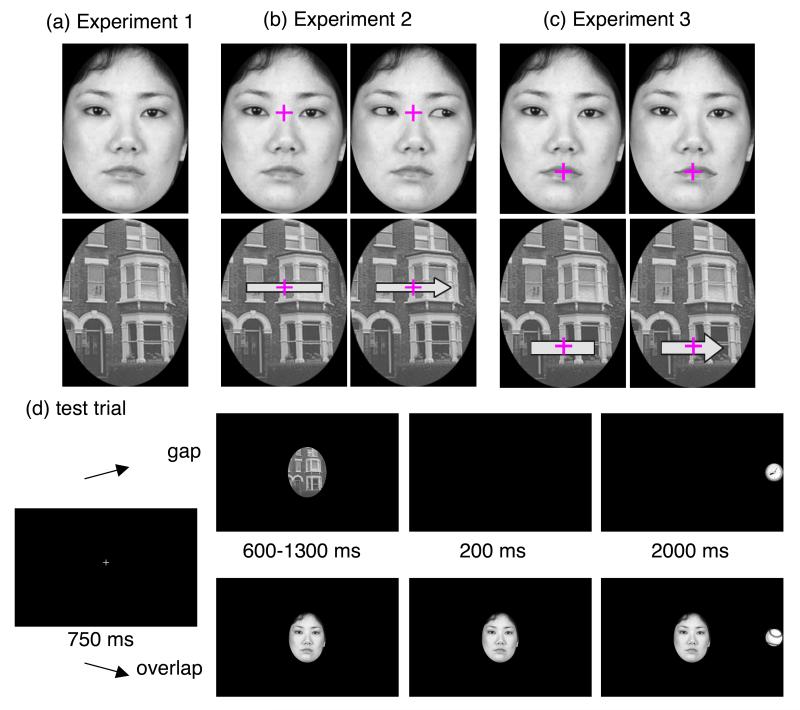
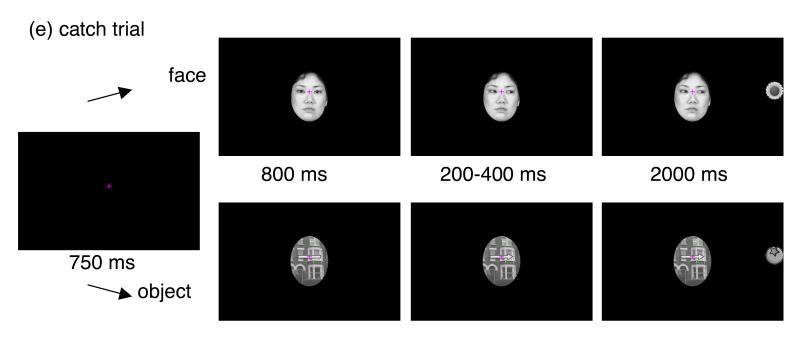
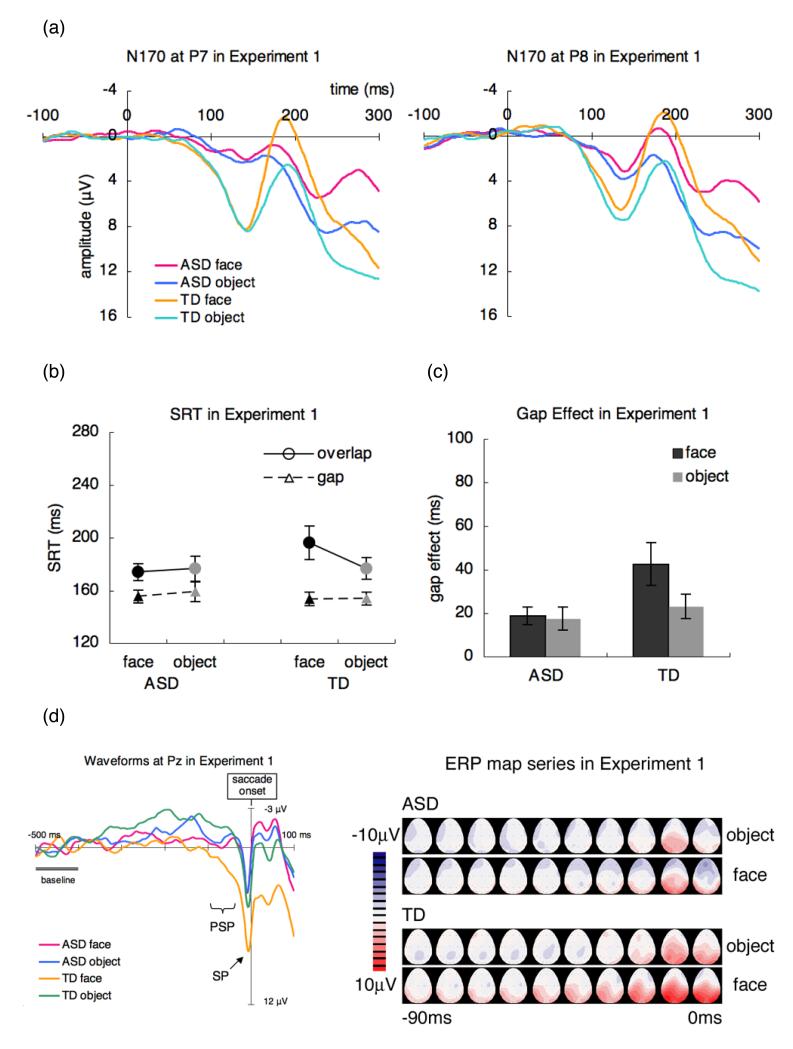
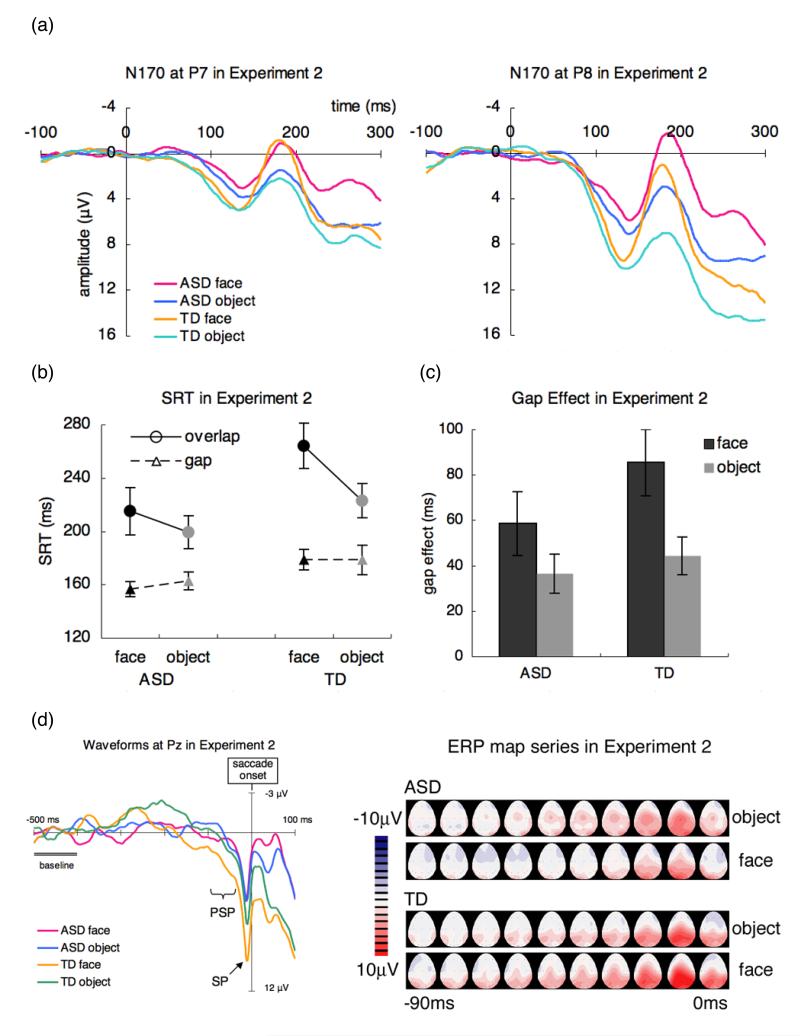
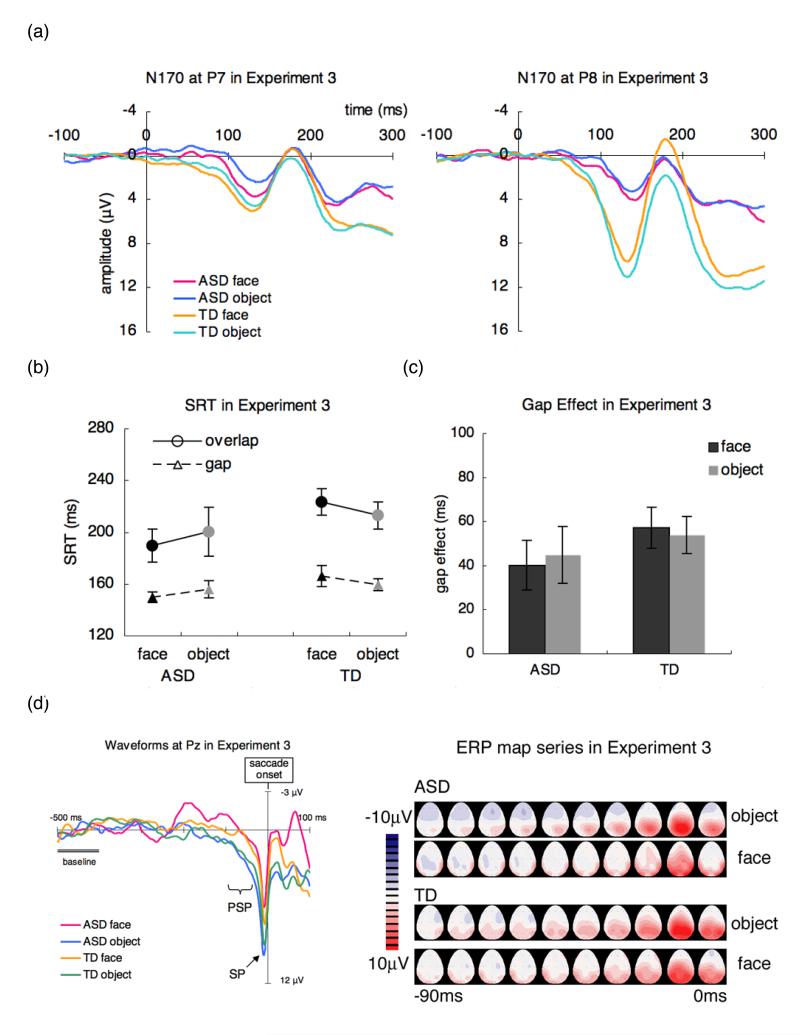
By using the gap overlap task, we investigated disengagement from faces and objects in children (9-17 years old) with and without autism spectrum disorder (ASD) and its neurophysiological correlates. In typically developing (TD) children, faces elicited larger gap effect, an index of attentional engagement, and larger saccade-related event-related potentials (ERPs), compared to objects. In children with ASD, by contrast, neither gap effect nor ERPs differ between faces and objects. Follow-up experiments demonstrated that instructed fixation on the eyes induces larger gap effect for faces in children with ASD, whereas instructed fixation on the mouth can disrupt larger gap effect in TD children. These results suggest a critical role of eye fixation on attentional engagement to faces in both groups.
Figures
References
-
- American Psychiatric Association . Diagnostic and Statistical Manual of Mental Disorders. 4th ed Washington, DC: 1994.
-
- American Psychiatric Association . Diagnostic and Statistical Manual of Mental Disorders (DSM-IV-TR) 4th edn American Psychiatric Publishing, Inc.; 2000.
-
- Balaban CD, Weinstein JM. The human pre-saccadic spike potential: influences of a visual target, saccade direction, electrode laterality and instructions to perform saccades. Brain Research. 1985;347:49–57. - PubMed
-
- Berument SK, Rutter M, Lord C, Pickles A, Bailey A. Autism screening questionnaire: diagnostic validity. British Journal of Psychiatry. 1999;175:444–451. - PubMed
Publication types
MeSH terms
Grants and funding
LinkOut - more resources
Full Text Sources
Miscellaneous
