


Reduced intra-amygdala activity to positively valenced faces in adolescent schizophrenia offspring
- PMID: 20716480
- PMCID: PMC3174012
- DOI: 10.1016/j.schres.2010.07.023
Reduced intra-amygdala activity to positively valenced faces in adolescent schizophrenia offspring
Abstract
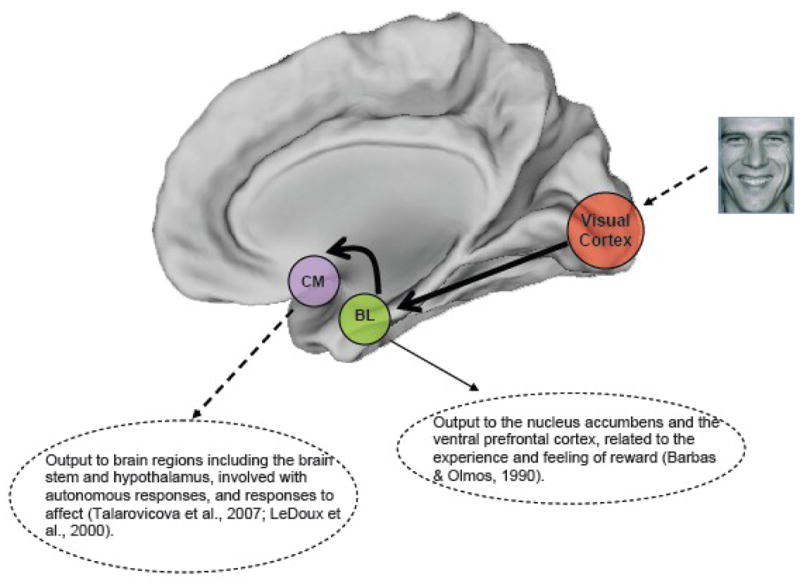
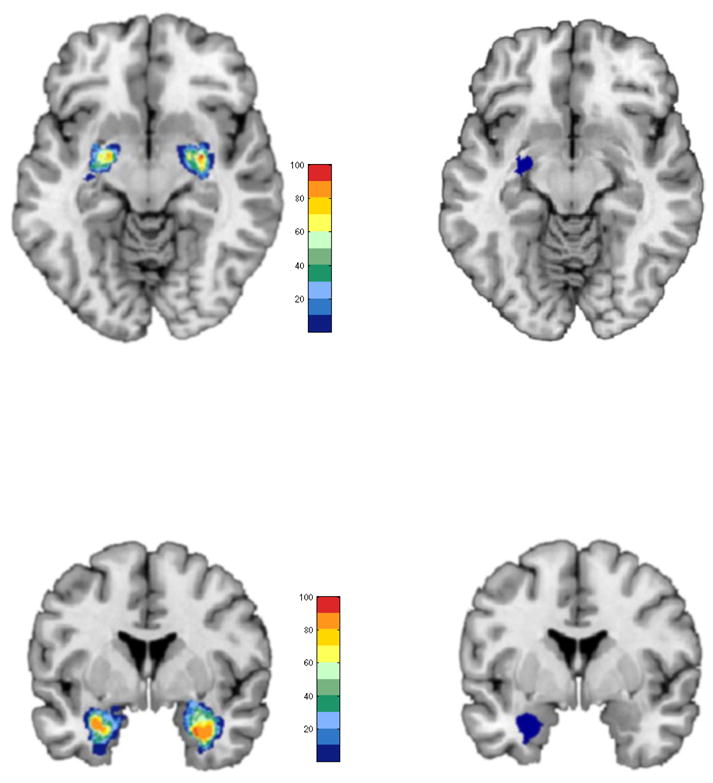
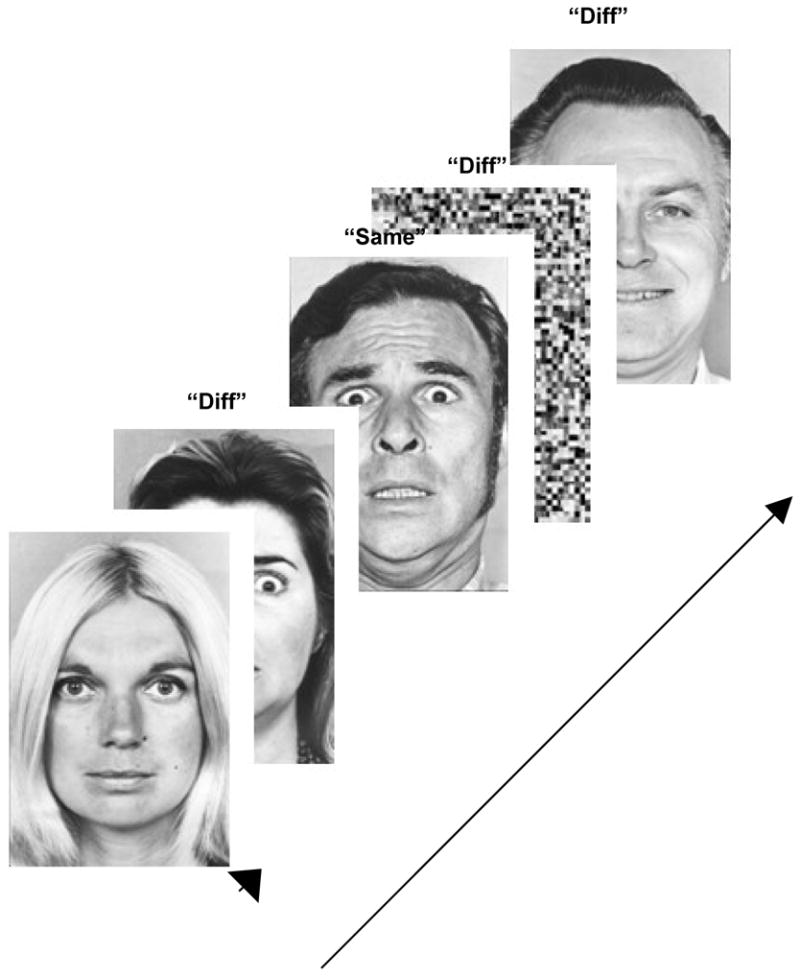
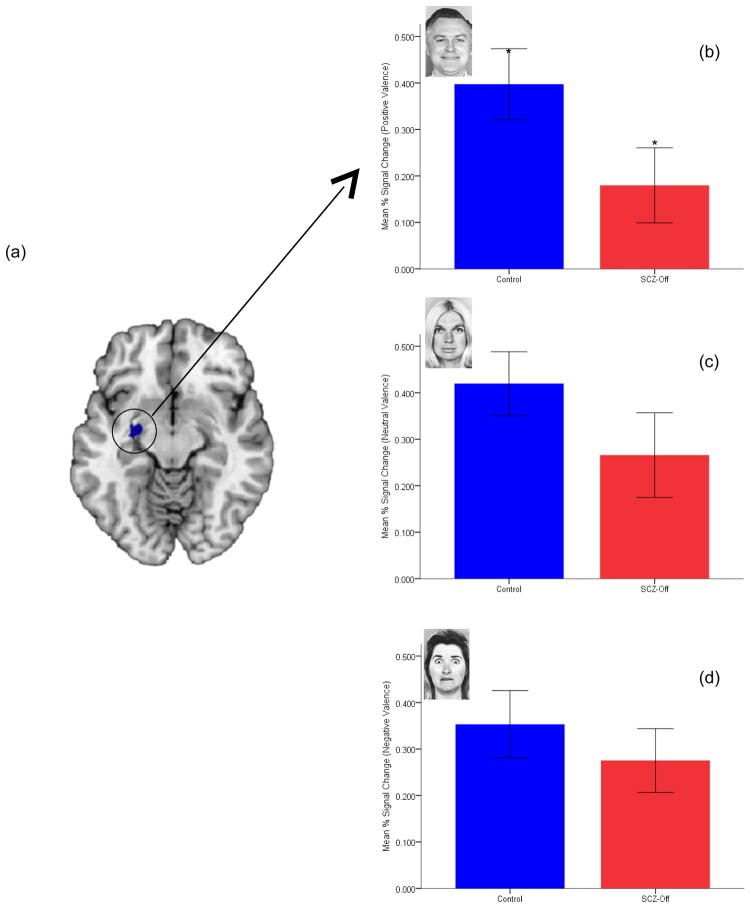
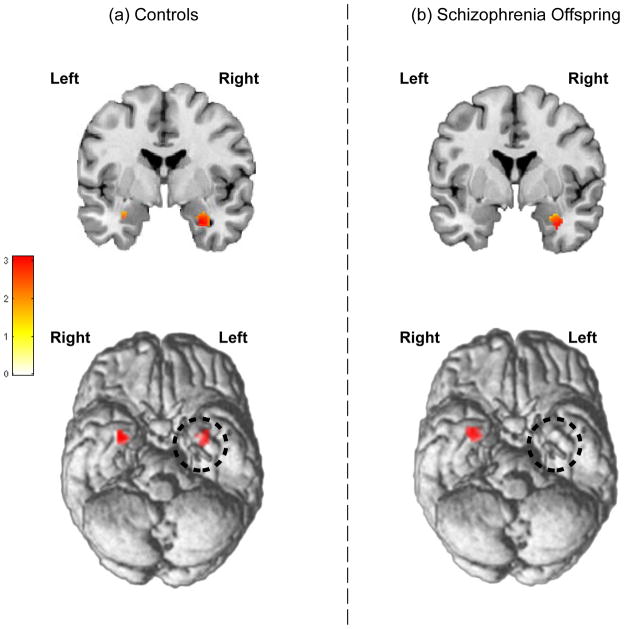
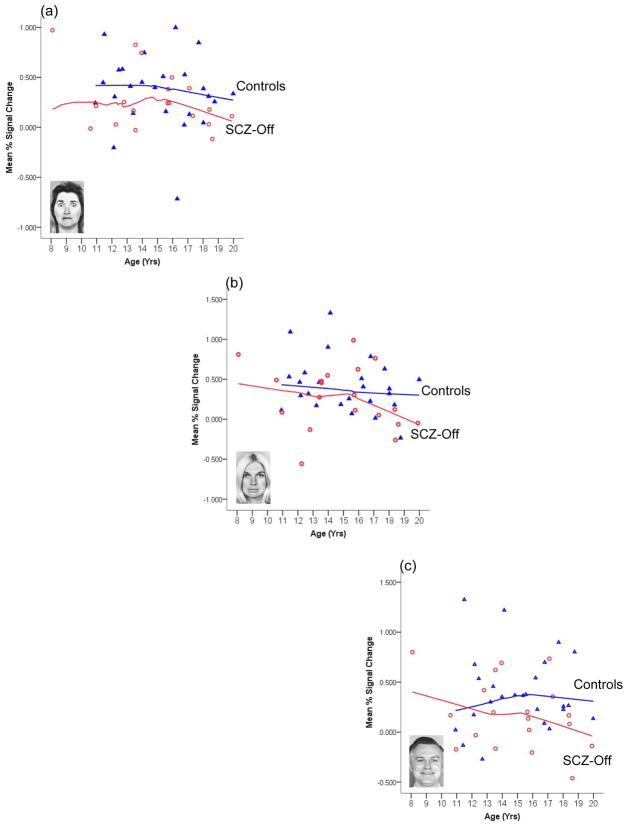
Studies suggest that the affective response is impaired in both schizophrenia and adolescent offspring of schizophrenia patients. Adolescent offspring of patients are developmentally vulnerable to impairments in several domains, including affective responding, yet the bases of these impairments and their relation to neuronal responses within the limbic system are poorly understood. The amygdala is the central region devoted to the processing of emotional valence and its sub-nuclei including the baso-lateral and centro-medial are organized in a relative hierarchy of affective processing. Outputs from the centro-medial nucleus converge on regions involved in the autonomous regulation of behavior, and outputs from the baso-lateral nucleus modulate the response of reward processing regions. Here using fMRI we assessed the intra-amygdala response to positive, negative, and neutral valenced faces in a group of controls (with no family history of psychosis) and offspring of schizophrenia parents (n=44 subjects in total). Subjects performed an affective continuous performance task during which they continually appraised whether the affect signaled by a face on a given trial was the same or different from the previous trial (regardless of facial identity). Relative to controls, offspring showed reduced activity in the left centro-medial nucleus to positively (but not negatively or neutral) valenced faces. These results were independent of behavioral/cognitive performance (equal across groups) suggesting that an impaired affective substrate in the intra-amygdala response may lie at the core of deficits of social behavior that have been documented in this population.
Copyright © 2010 Elsevier B.V. All rights reserved.
Conflict of interest statement
Figures
References
-
- Adolphs R, Baron-Cohen S, Tranel D. Impaired recognition of social emotions following amygdala damage. J Cogn Neurosci. 2002;14:1264–1274. - PubMed
-
- Aleman A, Kahn RS. Strange feelings: do amygdala abnormalities dysregulate the emotional brain in schizophrenia? Prog Neurobiol. 2005;77:283–298. - PubMed
-
- Amaral DG, Behniea H, Kelly JL. Topographic organization of projections from the amygdala to the visual cortex in the macaque monkey. Neuroscience. 2003a;118:1099–1120. - PubMed
-
- Amaral DG, Capitanio JP, Jourdain M, Mason WA, Mendoza SP, Prather M. The amygdala: is it an essential component of the neural network for social cognition? Neuropsychologia. 2003b;41:235–240. - PubMed
-
- Amunts K, Kedo O, Kindler M, Pieperhoff P, Mohlberg H, Shah NJ, Habel U, Schneider F, Zilles K. Cytoarchitectonic mapping of the human amygdala, hippocampal region and entorhinal cortex: intersubject variability and probability maps. Anat Embryol (Berl) 2005;210:343–352. - PubMed
Publication types
MeSH terms
Grants and funding
LinkOut - more resources
Full Text Sources
Medical
