


Cardiac oxidative stress and dysfunction by fine concentrated ambient particles (CAPs) are mediated by angiotensin-II
- PMID: 20718632
- PMCID: PMC3771644
- DOI: 10.3109/08958378.2010.503322
Cardiac oxidative stress and dysfunction by fine concentrated ambient particles (CAPs) are mediated by angiotensin-II
Abstract
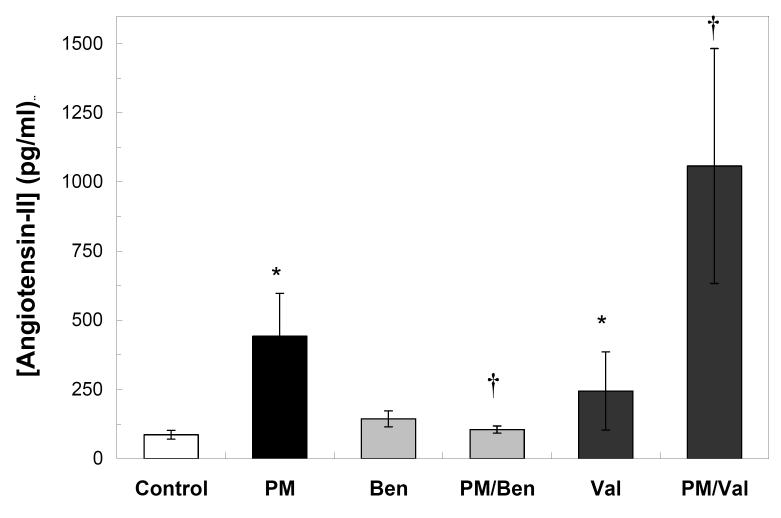
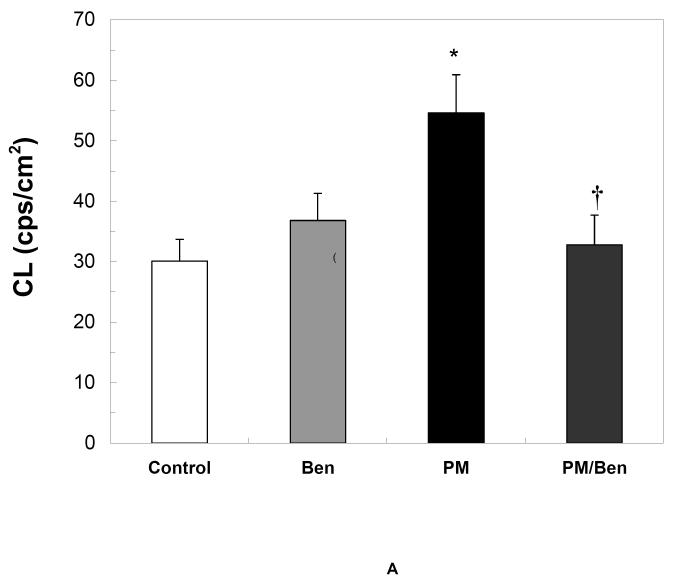
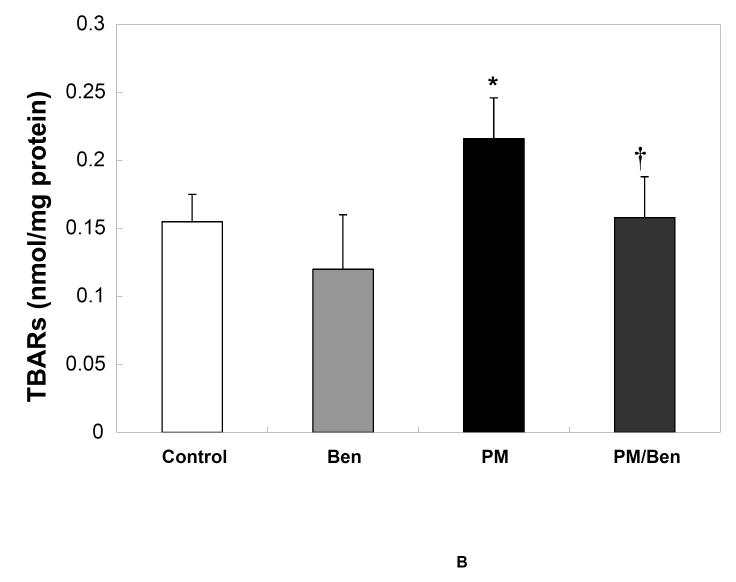
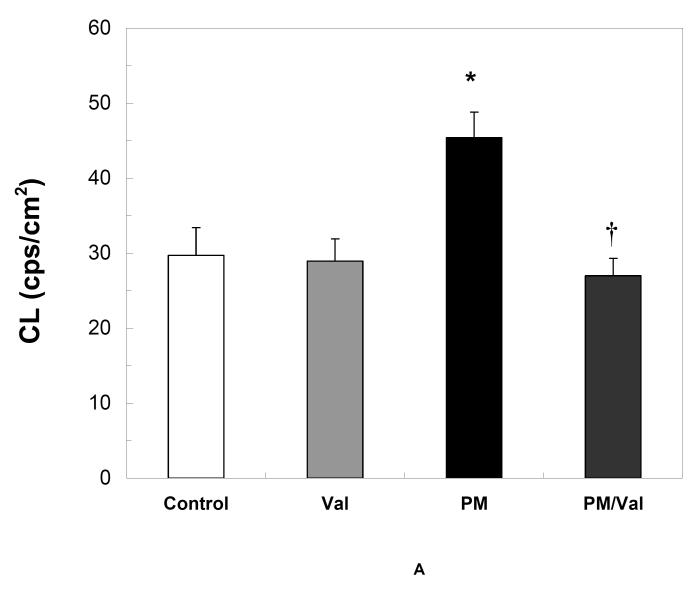
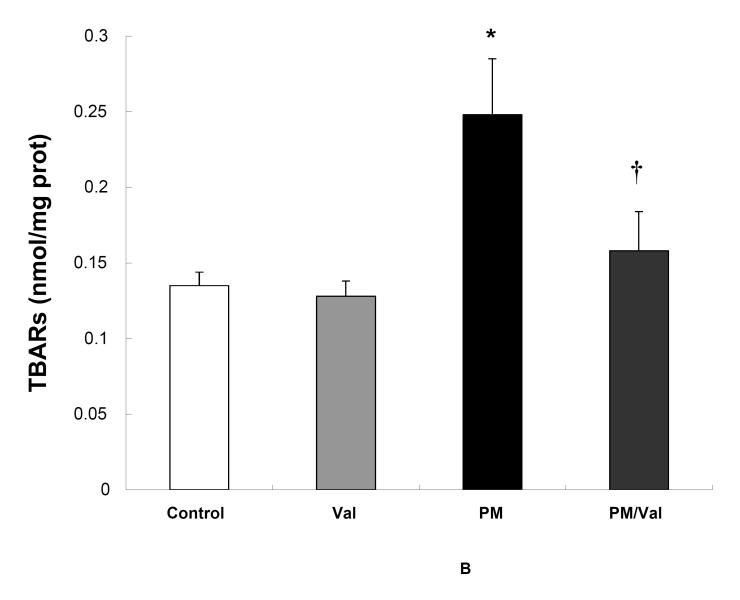
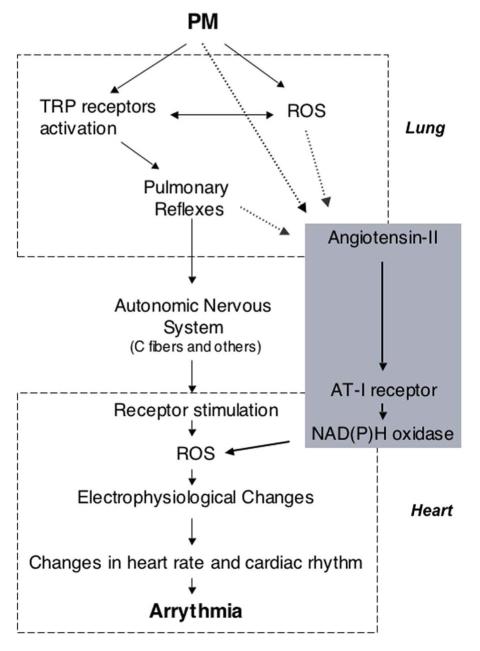
Inhalation exposure to fine concentrated ambient particles (CAPs) increases cardiac oxidants by mechanisms involving modulation of the sympathovagal tone on the heart. Angiotensin-II is a potent vasoconstrictor and a sympatho-excitatory peptide involved in the regulation of blood pressure. We hypothesized that increases in angiotensin-II after fine particulate matter (PM) exposure could be involved in the development of cardiac oxidative stress. Adult rats were treated with an angiotensin-converting enzyme (ACE) inhibitor (benazepril), or an angiotensin receptor blocker (ARB; valsartan) before exposure to fine PM aerosols or filtered air. Exposures were carried out for 5 hours in the chamber of the Harvard fine particle concentrator (fine PM mass concentration: 440 +/- 80 microg/m(3)). At the end of the exposure the animals were tested for in situ chemiluminescence (CL) of the heart, thiobarbituric acid reactive substances (TBARS) and for plasma levels of angiotensin-II. Also, continuous electrocardiogram (ECG) measurements were collected on a subgroup of exposed animals. PM exposure was associated with statistically significant increases in plasma angiotensin concentrations. Pre-treatment with the ACE inhibitor effectively lowered angiotensin concentration, whereas ARB treatment led to increases in angiotensin above the PM-only level. PM exposure also led to significant increases in heart oxidative stress (CL, TBARS), and a shortening of the T-end to T-peak interval on the ECG that were prevented by treatment with both the ACE inhibitor and ARB. These results show that ambient fine particles can increase plasma levels of angiotensin-II and suggest a role of the renin-angiotensin system in the development of particle-related acute cardiac events.
Figures
References
-
- Antzelevitch C. Transmural dispersion of repolarization and the T wave. Cardiovasc Res. 2001;50:426–431. - PubMed
-
- Barker TA, Massett MP, Korshunov VA, Mohan AM, Kennedy AJ, BC. B. Angiotensin II type 2 receptor expression after vascular injury: differing effects of angiotensin-converting enzyme inhibition and angiotensin receptor blockade. Hypertension. 2006;5:942–9. - PubMed
-
- Berl T. Angiotensin-converting enzyme inhibitors versus AT1 receptor antagonist in cardiovascular and renal protection: the case for AT1 receptor antagonist. J Am Soc Nephrol. 2004;15(Suppl 1):S71–6. - PubMed
-
- Brook R, Brook JR, Urch B, Vincent R, Rajagopalan S, Silverman F. Inhalation of fine particulate air pollution and ozone causes acute arterial vasoconstriction in healthy adults. Circulation. 2002;105:1534–6. - PubMed
Publication types
MeSH terms
Substances
Grants and funding
LinkOut - more resources
Full Text Sources
Miscellaneous