The crosstalk of RAS with the TGF-β family during carcinoma progression and its implications for targeted cancer therapy
- PMID: 20718708
- PMCID: PMC3044462
- DOI: 10.2174/156800910793357943
The crosstalk of RAS with the TGF-β family during carcinoma progression and its implications for targeted cancer therapy
Abstract
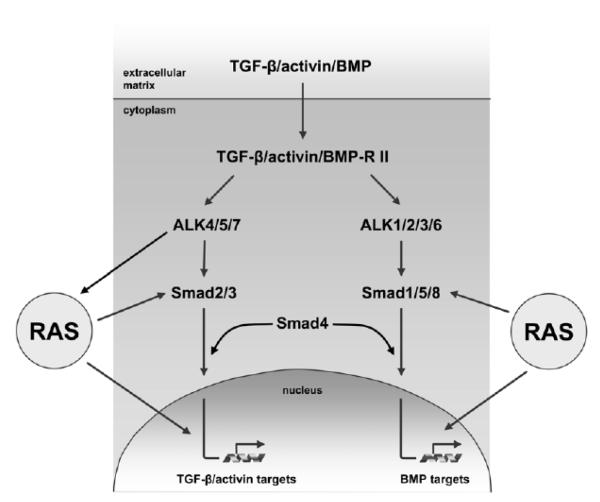
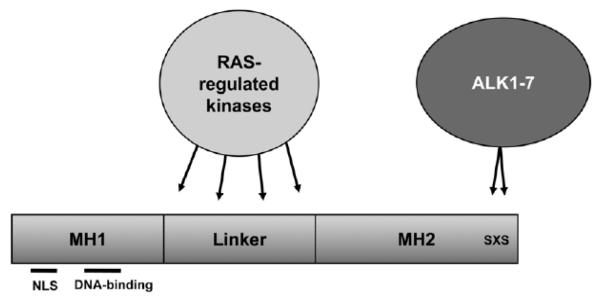
Both RAS and transforming growth factor (TGF)-β signaling cascades are central in tumorigenesis and show synergisms depending on tumor stage and tissue context. In this review we focus on the interaction of RAS subeffector proteins with signaling components of the TGF-β family including those of TGF-βs, activins and bone morphogenic proteins. Compelling evidence indicates that RAS signaling is essentially involved in the switch from tumor-suppressive to tumor-promoting functions of the TGF-β family leading to enhanced cancer growth and metastatic dissemination of primary tumors. Thus, the interface of these signaling cascades is considered as a promising target for the development of novel cancer therapeutics. The current pharmacological anti-cancer concepts combating the molecular cooperation between RAS and TGF-β family signaling during carcinoma progression are critically discussed.
Figures
References
-
- Friedl P, Wolf K. Tumour-cell invasion and migration: diversity and escape mechanisms. Nat. Rev. Cancer. 2003;3:362–374. - PubMed
-
- Nguyen DX, Bos PD, Massague J. Metastasis: from dissemination to organ-specific colonization. Nat. Rev. Cancer. 2009;9:274–284. - PubMed
-
- Hanahan D, Weinberg RA. The hallmarks of cancer. Cell. 2000;100:57–70. - PubMed
-
- Mantovani A. Cancer: Inflaming metastasis. Nature. 2009;457:36–37. - PubMed
Publication types
MeSH terms
Substances
Grants and funding
LinkOut - more resources
Full Text Sources