


γ-Tocotrienol but not γ-tocopherol blocks STAT3 cell signaling pathway through induction of protein-tyrosine phosphatase SHP-1 and sensitizes tumor cells to chemotherapeutic agents
- PMID: 20720018
- PMCID: PMC2963373
- DOI: 10.1074/jbc.M110.158378
γ-Tocotrienol but not γ-tocopherol blocks STAT3 cell signaling pathway through induction of protein-tyrosine phosphatase SHP-1 and sensitizes tumor cells to chemotherapeutic agents
Retraction in
-
γ-Tocotrienol but not γ-tocopherol blocks STAT3 cell signaling pathway through induction of protein-tyrosine phosphatase SHP-1 and sensitizes tumor cells to chemotherapeutic agents.J Biol Chem. 2016 Aug 5;291(32):16922. doi: 10.1074/jbc.A110.158378. J Biol Chem. 2016. PMID: 27496963 Free PMC article. No abstract available.
Abstract
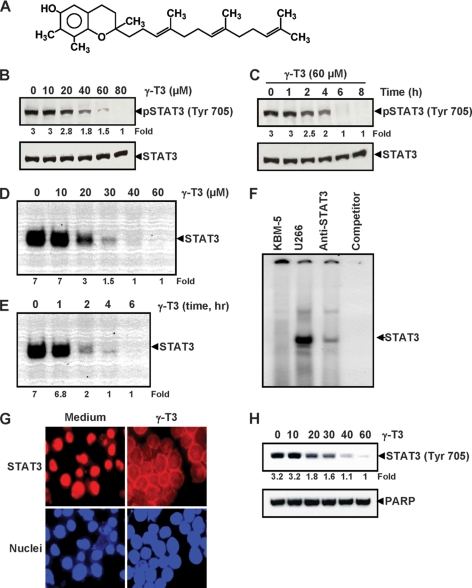
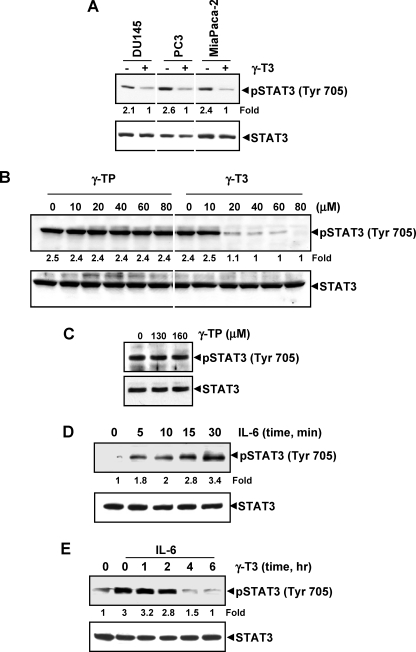
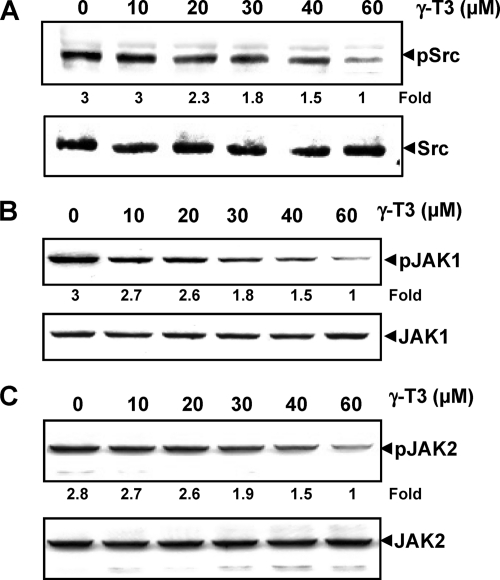
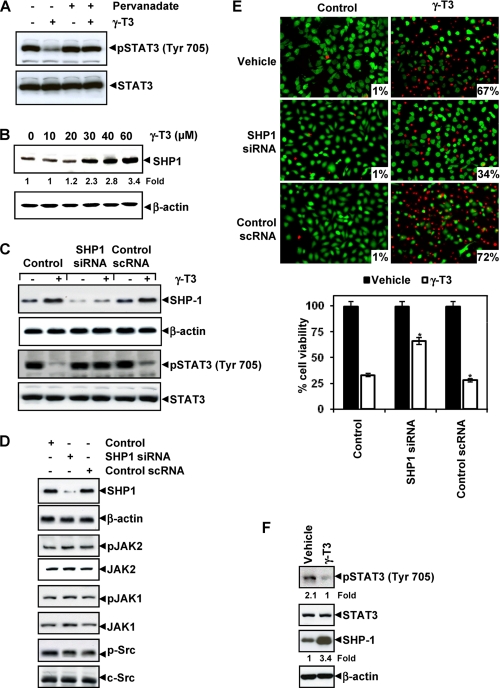
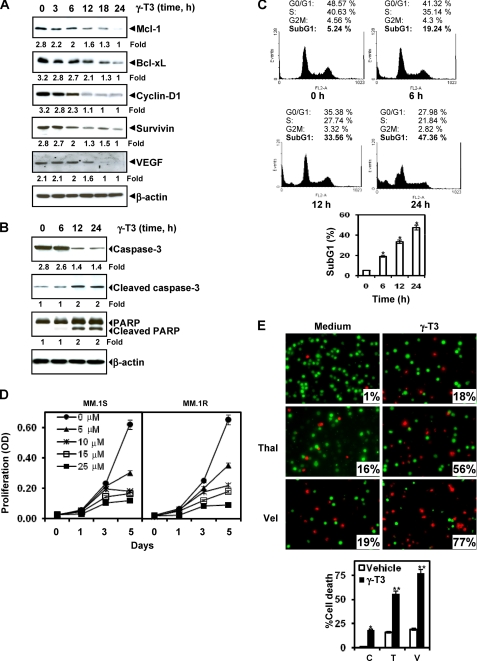
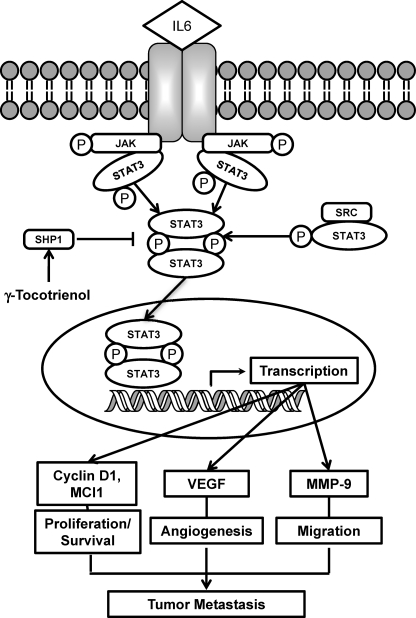
Although γ-tocotrienol (T3), a vitamin E isolated primarily from palm and rice bran oil, has been linked with anticancer activities, the mechanism of this action is poorly understood. In this study, we investigated whether γ-T3 can modulate the STAT3 cell signaling pathway, closely linked to inflammation and tumorigenesis. We found that γ-T3 but not γ-tocopherol, the most common saturated form of vitamin E, inhibited constitutive activation of STAT3 in a dose- and time-dependent manner, and this inhibition was not cell type-specific. γ-T3 also inhibited STAT3 DNA binding. This correlated with inhibition of Src kinase and JAK1 and JAK2 kinases. Pervanadate reversed the γ-T3-induced down-regulation of STAT3 activation, suggesting the involvement of a protein-tyrosine phosphatase. When examined further, we found that γ-T3 induced the expression of the tyrosine phosphatase SHP-1, and gene silencing of the SHP-1 by small interfering RNA abolished the ability of γ-T3 to inhibit STAT3 activation, suggesting a vital role for SHP-1 in the action of γ-T3. Also γ-T3 down-modulated activation of STAT3 and induced SHP-1 in vivo. Eventually, γ-T3 down-regulated the expression of STAT3-regulated antiapoptotic (Bcl-2, Bcl-xL, and Mcl-1), proliferative (cyclin D1), and angiogenic (VEGF) gene products; and this correlated with suppression of proliferation, the accumulation of cells in sub-G(1) phase of the cell cycle, and induction of apoptosis. This vitamin also sensitized the tumor cells to the apoptotic effects of thalidomide and bortezomib. Overall, our results suggest that γ-T3 is a novel blocker of STAT3 activation pathway both in vitro and in vivo and thus may have potential in prevention and treatment of cancers.
Figures
References
Publication types
MeSH terms
Substances
Grants and funding
LinkOut - more resources
Full Text Sources
Medical
Research Materials
Miscellaneous
