


Human protein C concentrate in the treatment of purpura fulminans: a retrospective analysis of safety and outcome in 94 pediatric patients
- PMID: 20723255
- PMCID: PMC2945140
- DOI: 10.1186/cc9226
Human protein C concentrate in the treatment of purpura fulminans: a retrospective analysis of safety and outcome in 94 pediatric patients
Abstract
Introduction: Purpura fulminans (PF) is a devastating complication of uncontrolled systemic inflammation, associated with high incidence of amputations, skin grafts and death. In this study, we aimed to clarify the clinical profile of pediatric patients with PF who improved with protein C (PC) treatment, explore treatment effects and safety, and to refine the prognostic significance of protein C plasma levels.
Methods: In Germany, patients receiving protein C concentrate (Ceprotin, Baxter AG, Vienna, Austria) are registered. The database was used to locate all pediatric patients with PF treated with PC from 2002 to 2005 for this national, retrospective, multi-centered study.
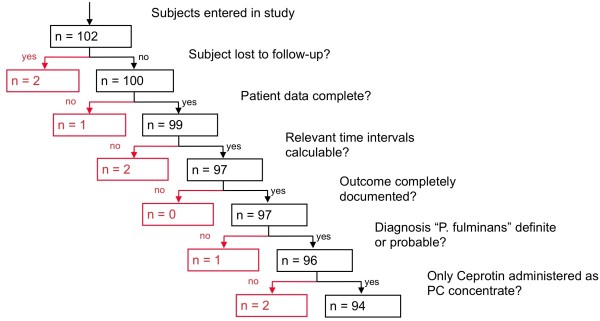
Results: Complete datasets were acquired in 94 patients, treated in 46 centers with human, non-activated protein C concentrate for purpura fulminans. PC was given for 2 days (median, range 1-24 days) with a median daily dose of 100 IU/kg. Plasma protein C levels increased from a median of 27% to a median of 71% under treatment. 22.3% of patients died, 77.7% survived to discharge. Skin grafts were required in 9.6%, amputations in 5.3%. PF recovered or improved in 79.8%, remained unchanged in 13.8% and deteriorated in 6.4%. Four adverse events occurred in 3 patients, none classified as severe. Non-survivors had lower protein C plasma levels (P < 0.05) and higher prevalence of coagulopathy at admission (P < 0.01). Time between admission and start of PC substitution was longer in patients who died compared to survivors (P = 0.03).
Conclusions: This retrospective dataset shows that, compared to historic controls, only few pediatric patients with PF under PC substitution needed dermatoplasty and/or amputations. Apart from epistaxis, no bleeding was observed. Although the data comes from a retrospective study, the evidence we present suggests that PC had a beneficial impact on the need for dermatoplasty and amputations, pointing to the potential value of carrying out a prospective randomised controlled trial.
Figures
References
-
- White B, Livingstone W, Murphy C, Hodgson A, Rafferty M, Smith OP. An open-label study of the role of adjuvant hemostatic support with protein C replacement therapy in purpura fulminans-associated meningococcemia. Blood. 2000;96:3719–3724. - PubMed
-
- Vincent JL, Nadel S, Kutsogiannis DJ, Gibney RT, Yan SB, Wyss VL, Bailey JE, Mitchell CL, Sarwat S, Shinall SM, Janes JM. Drotrecogin alfa (activated) in patients with severe sepsis presenting with purpura fulminans, meningitis, or meningococcal disease: a retrospective analysis of patients enrolled in recent clinical studies. Crit Care. 2005;9:R331–343. doi: 10.1186/cc3538. - DOI - PMC - PubMed
Publication types
MeSH terms
Substances
LinkOut - more resources
Full Text Sources
