


Probing the electrode-neuron interface with focused cochlear implant stimulation
- PMID: 20724356
- PMCID: PMC4111350
- DOI: 10.1177/1084713810375249
Probing the electrode-neuron interface with focused cochlear implant stimulation
Abstract
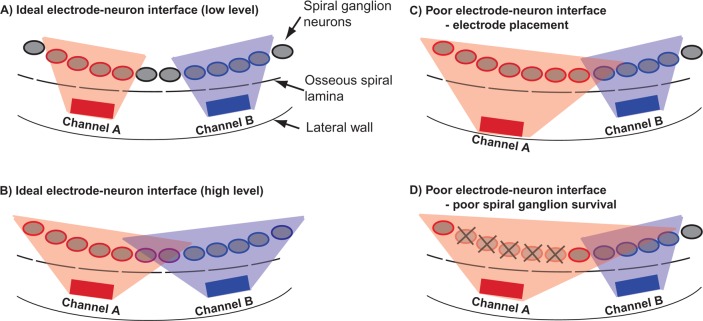
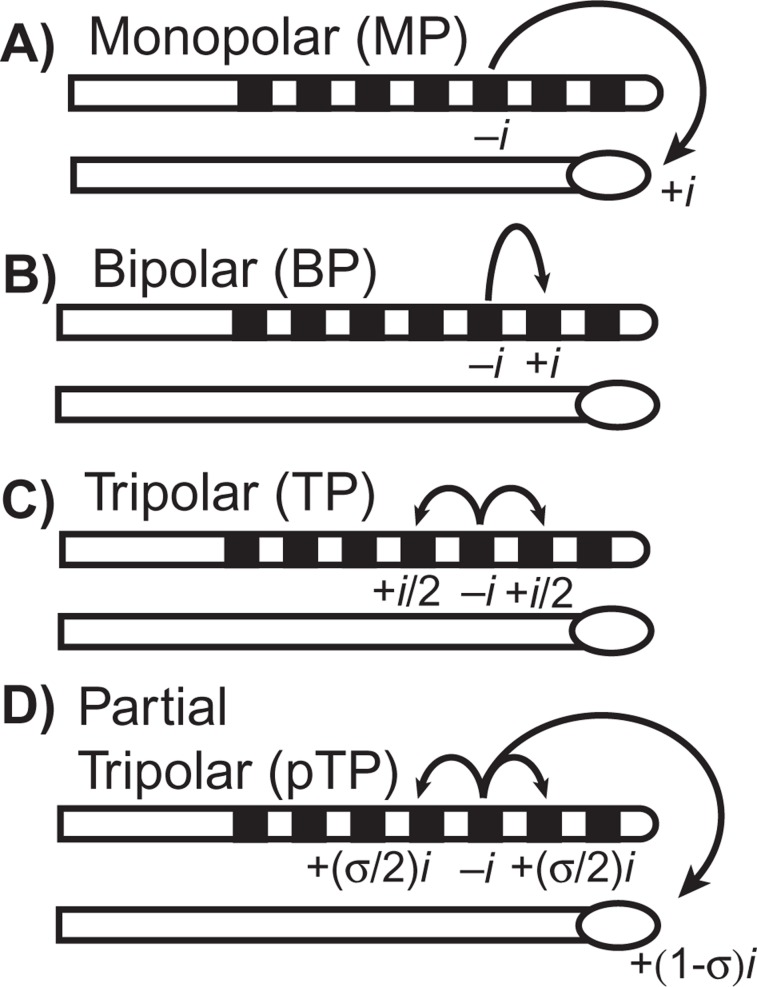
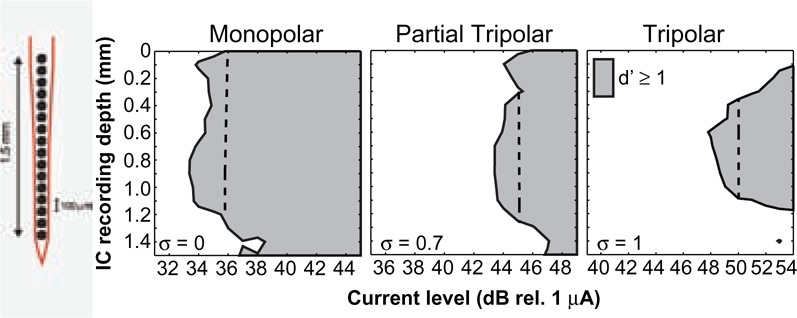
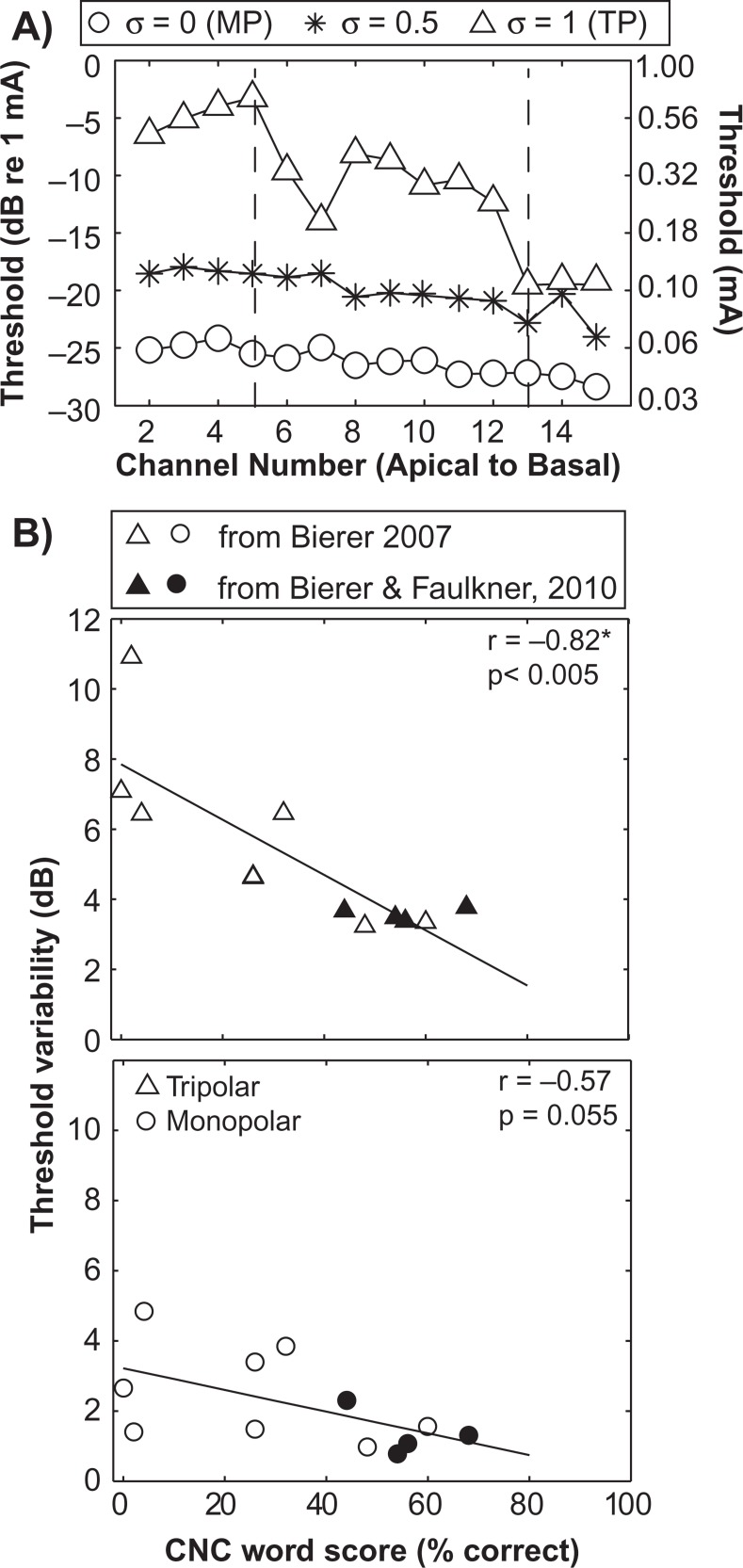
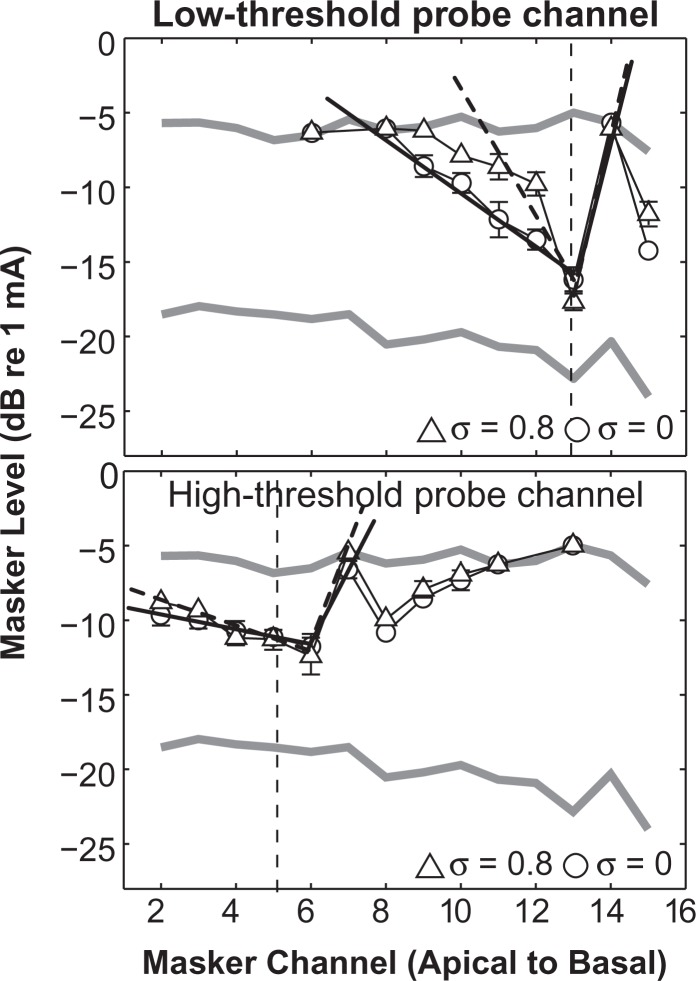
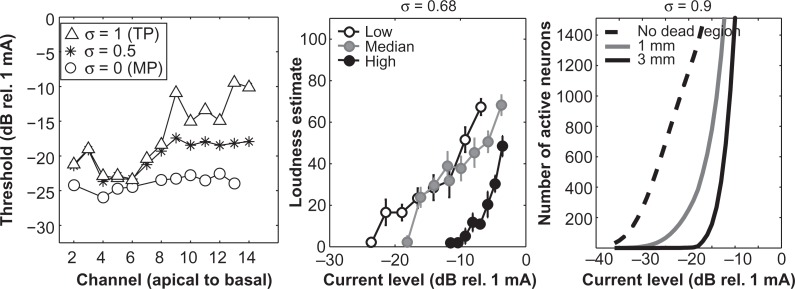
Cochlear implants are highly successful neural prostheses for persons with severe or profound hearing loss who gain little benefit from hearing aid amplification. Although implants are capable of providing important spectral and temporal cues for speech perception, performance on speech tests is variable across listeners. Psychophysical measures obtained from individual implant subjects can also be highly variable across implant channels. This review discusses evidence that such variability reflects deviations in the electrode-neuron interface, which refers to an implant channel's ability to effectively stimulate the auditory nerve. It is proposed that focused electrical stimulation is ideally suited to assess channel-to-channel irregularities in the electrode-neuron interface. In implant listeners, it is demonstrated that channels with relatively high thresholds, as measured with the tripolar configuration, exhibit broader psychophysical tuning curves and smaller dynamic ranges than channels with relatively low thresholds. Broader tuning implies that frequency-specific information intended for one population of neurons in the cochlea may activate more distant neurons, and a compressed dynamic range could make it more difficult to resolve intensity-based information, particularly in the presence of competing noise. Degradation of both types of cues would negatively affect speech perception.
Figures
References
-
- Baskent D., Shannon R. V. (2004). Frequency-place compression and expansion in cochlear implant listeners. Journal of the Acoustical Society of America, 116, 3130–3140 - PubMed
-
- Bierer J. A. (2007). Threshold and channel interaction in cochlear implant users: Evaluation of the tripolar electrode configuration. Journal of the Acoustical Society of America, 121, 1642–1653 - PubMed
-
- Bierer J. A., Middlebrooks J. C. (2002). Auditory cortical images of cochlear-implant stimuli: Dependence on electrode configuration. Journal of Neurophysiology, 87, 478–492 - PubMed
-
- Busby P. A., Whitford L. A., Blamey P. J., Richardson L. M., Clarke G. M. (1994). Pitch perception for different modes of stimulation using the cochlear multiple-electrode prosthesis. Journal of the Acoustical Society of America, 95, 2658–2669 - PubMed
Publication types
MeSH terms
Grants and funding
LinkOut - more resources
Full Text Sources
Other Literature Sources
Medical