


Reactive oxygen species originating from mitochondria regulate the cardiac sodium channel
- PMID: 20724705
- PMCID: PMC2955818
- DOI: 10.1161/CIRCRESAHA.110.220673
Reactive oxygen species originating from mitochondria regulate the cardiac sodium channel
Abstract
Rationale: Pyridine nucleotides regulate the cardiac Na(+) current (I(Na)) through generation of reactive oxygen species (ROS).
Objective: We investigated the source of ROS induced by elevated NADH.
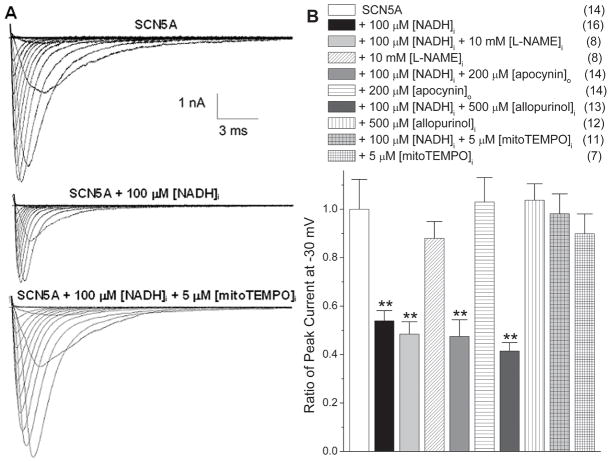
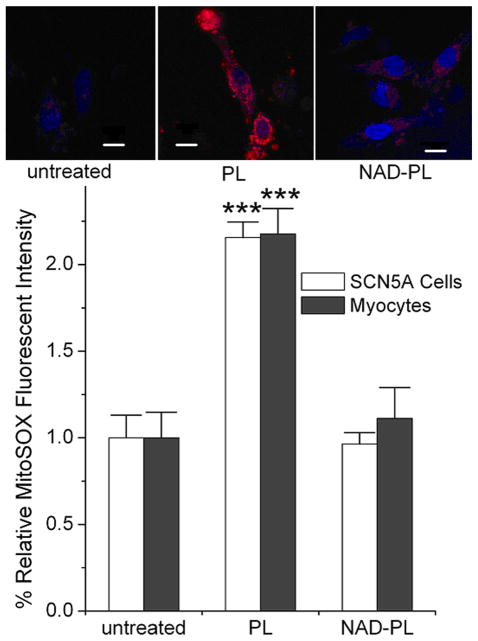
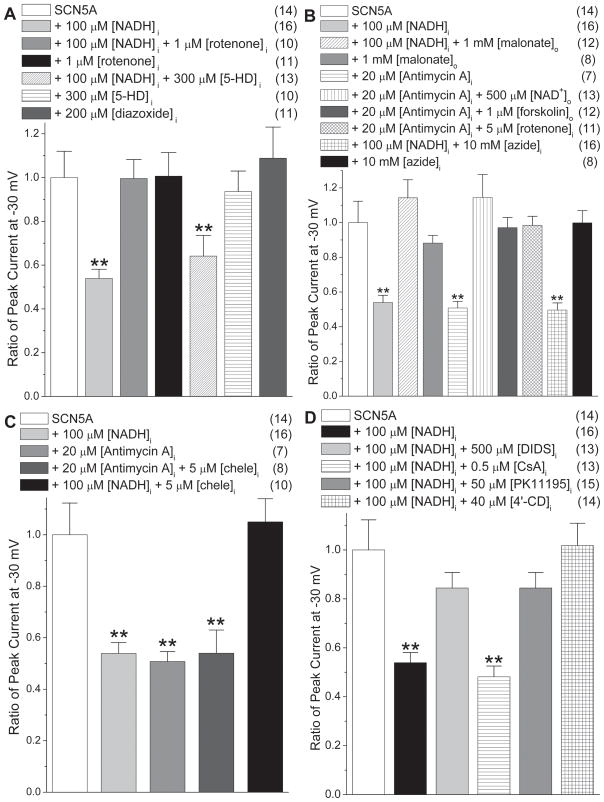
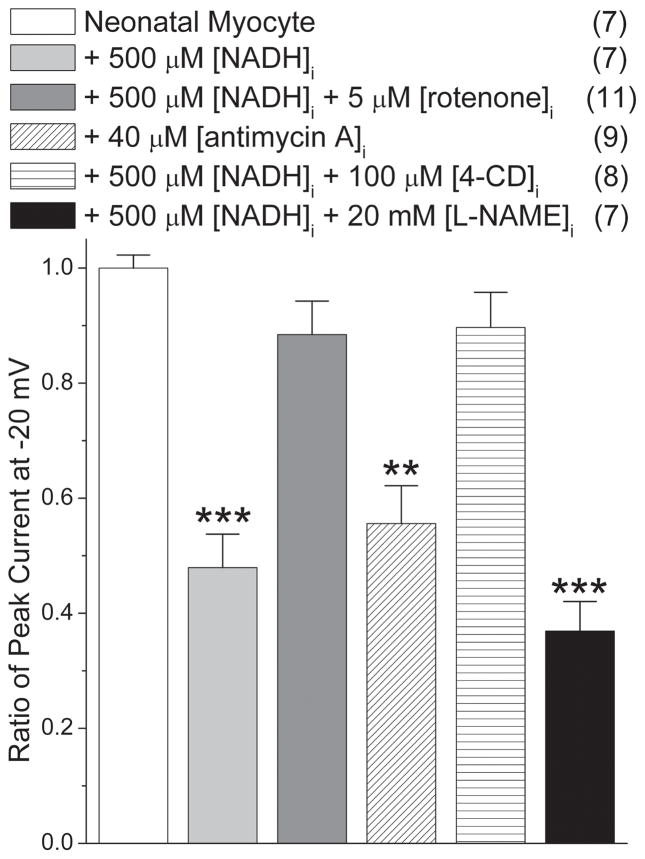
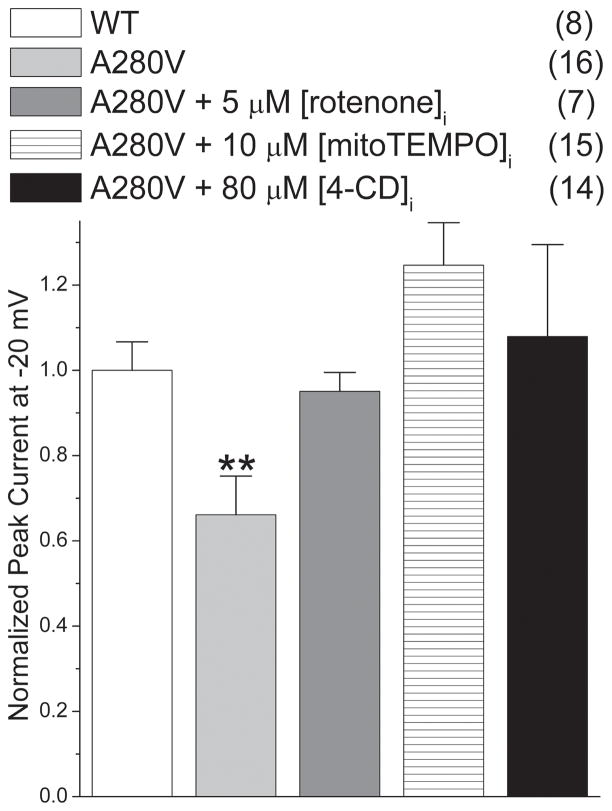
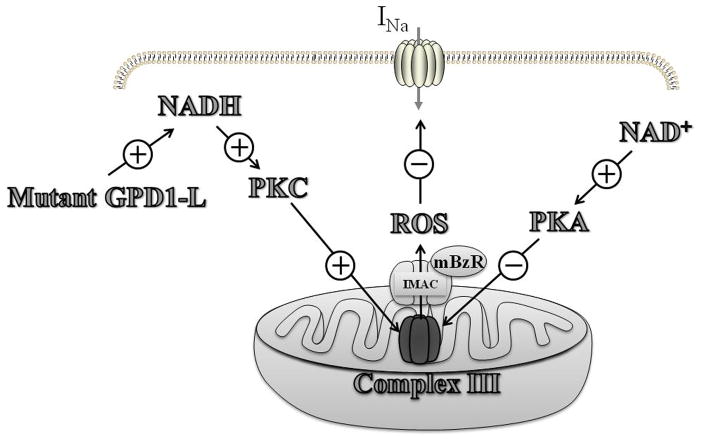
Methods and results: In human embryonic kidney (HEK) cells stably expressing the cardiac Na(+) channel, the decrease of I(Na) (52±9%; P<0.01) induced by cytosolic NADH application (100 μmol/L) was reversed by mitoTEMPO, rotenone, malonate, DIDS (4,4'-diisothiocyanatostilbene-2,2'-disulfonic acid), PK11195, and 4'-chlorodiazepam, a specific scavenger of mitochondrial superoxide and inhibitors of the mitochondrial complex I, complex II, voltage-dependent anion channels, and benzodiazepine receptor, respectively. Anti-mycin A (20 μmol/L), a complex III inhibitor known to generate ROS, decreased I(Na) (51±4%, P<0.01). This effect was blocked by NAD(+), forskolin, or rotenone. Inhibitors of complex IV, nitric oxide synthase, the NAD(P)H oxidases, xanthine oxidases, the mitochondrial permeability transition pore, and the mitochondrial ATP-sensitive K(+) channel did not change the NADH effect on I(Na). Analogous results were observed in cardiomyocytes. Rotenone, mitoTEMPO, and 4'-chlorodiazepam also blocked the mutant A280V GPD1-L (glycerol-3-phosphate dehydrogenase 1-like) effect on reducing I(Na), indicating a role for mitochondria in the Brugada syndrome caused by this mutation. Fluorescent microscopy confirmed mitochondrial ROS generation with elevated NADH and ROS inhibition by NAD(+).
Conclusions: Altering the oxidized to reduced NAD(H) balance can activate mitochondrial ROS production, leading to reduced I(Na). This signaling cascade may help explain the link between altered metabolism, conduction block, and arrhythmic risk.
Figures
References
-
- London B, Michalec M, Mehdi H, Zhu X, Kerchner L, Sanyal S, Viswanathan PC, Pfahnl AE, Shang LL, Madhusudanan M, Baty CJ, Lagana S, Aleong R, Gutmann R, Ackerman MJ, McNamara DM, Weiss R, Dudley SC., Jr Mutation in glycerol-3-phosphate dehydrogenase 1-like gene (GPD1-L) decreases cardiac Na+ current and causes inherited arrhythmias. Circulation. 2007;116:2260–8. - PMC - PubMed
-
- Shaw RM, Rudy Y. Ionic mechanisms of propagation in cardiac tissue: roles of the sodium and L-type calcium currents during reduced excitability and decreased gap junction coupling. Circ Res. 1997;81:727–41. - PubMed
-
- Shimizu W, Aiba T, Kamakura S. Mechanisms of disease: current understanding and future challenges in Brugada syndrome. Nat Clin Pract Cardiovasc Med. 2005;2:408–14. - PubMed
MeSH terms
Substances
Grants and funding
LinkOut - more resources
Full Text Sources
Other Literature Sources
Miscellaneous
