


True lies: the double life of the nucleotide excision repair factors in transcription and DNA repair
- PMID: 20725631
- PMCID: PMC2915888
- DOI: 10.4061/2010/616342
True lies: the double life of the nucleotide excision repair factors in transcription and DNA repair
Abstract
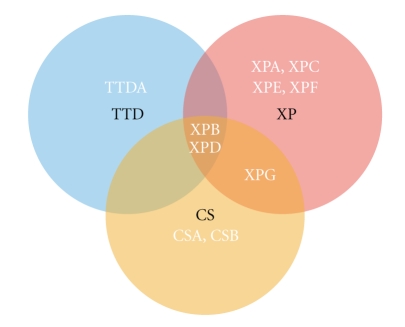
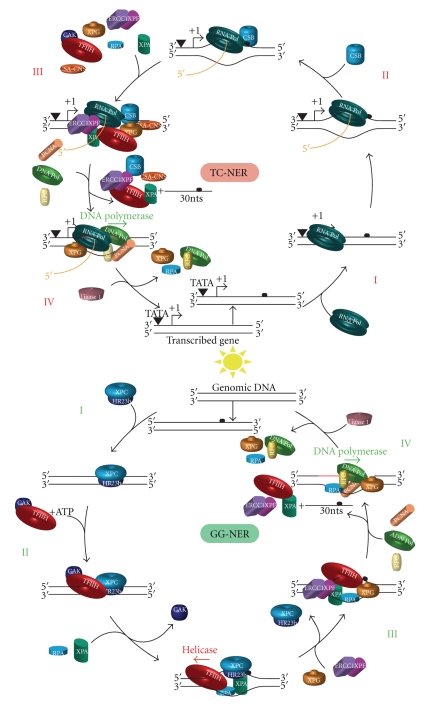
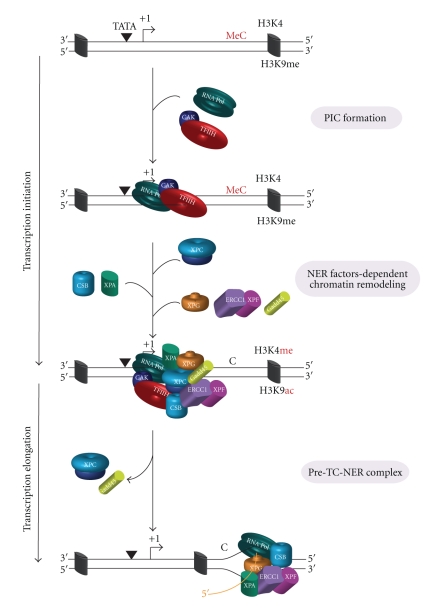
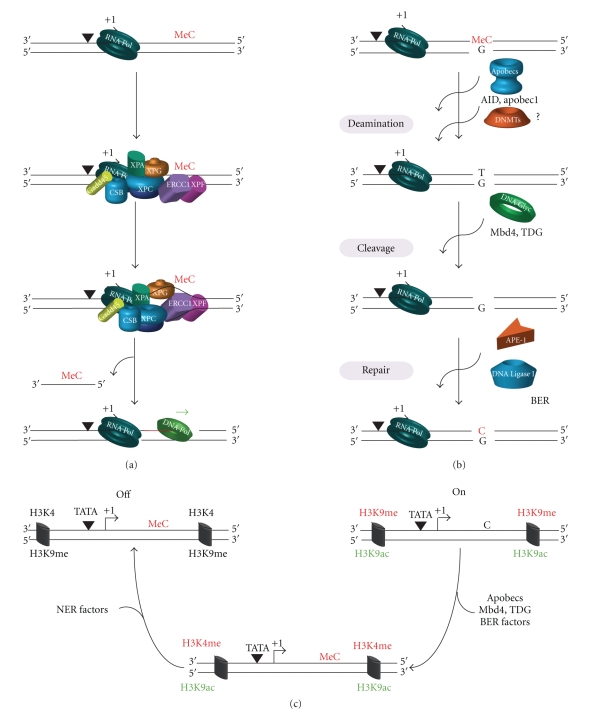
Nucleotide excision repair (NER) is a major DNA repair pathway in eukaryotic cells. NER removes structurally diverse lesions such as pyrimidine dimers, arising upon UV irradiation or bulky chemical adducts, arising upon exposure to carcinogens and some chemotherapeutic drugs. NER defects lead to three genetic disorders that result in predisposition to cancers, accelerated aging, neurological and developmental defects. During NER, more than 30 polypeptides cooperate to recognize, incise, and excise a damaged oligonucleotide from the genomic DNA. Recent papers reveal an additional and unexpected role for the NER factors. In the absence of a genotoxic attack, the promoters of RNA polymerases I- and II-dependent genes recruit XPA, XPC, XPG, and XPF to initiate gene expression. A model that includes the growth arrest and DNA damage 45alpha protein (Gadd45alpha) and the NER factors, in order to maintain the promoter of active genes under a hypomethylated state, has been proposed but remains controversial. This paper focuses on the double life of the NER factors in DNA repair and transcription and describes the possible roles of these factors in the RNA synthesis process.
Figures
References
-
- Hoeijmakers JHJ. DNA damage, aging, and cancer. The New England Journal of Medicine. 2009;361(15):1475–1485. - PubMed
-
- Svejstrup JQ. The interface between transcription and mechanisms maintaining genome integrity. Trends in Biochemical Sciences. 2010;35(6):333–338. - PubMed
-
- Schumacher B, Garinis GA, Hoeijmakers JHJ. Age to survive: DNA damage and aging. Trends in Genetics. 2008;24(2):77–85. - PubMed
-
- Kamenisch Y, Berneburg M. Progeroid syndromes and UV-induced oxidative DNA damage. Journal of Investigative Dermatology Symposium Proceedings. 2009;14(1):8–14. - PubMed
-
- Lehmann AR. DNA repair-deficient diseases, xeroderma pigmentosum, Cockayne syndrome and trichothiodystrophy. Biochimie. 2003;85(11):1101–1111. - PubMed
LinkOut - more resources
Full Text Sources
