


Evaluation of dense polylactic acid/beta-tricalcium phosphate scaffolds for bone tissue engineering
- PMID: 20725979
- PMCID: PMC2958236
- DOI: 10.1002/jbm.a.32868
Evaluation of dense polylactic acid/beta-tricalcium phosphate scaffolds for bone tissue engineering
Abstract
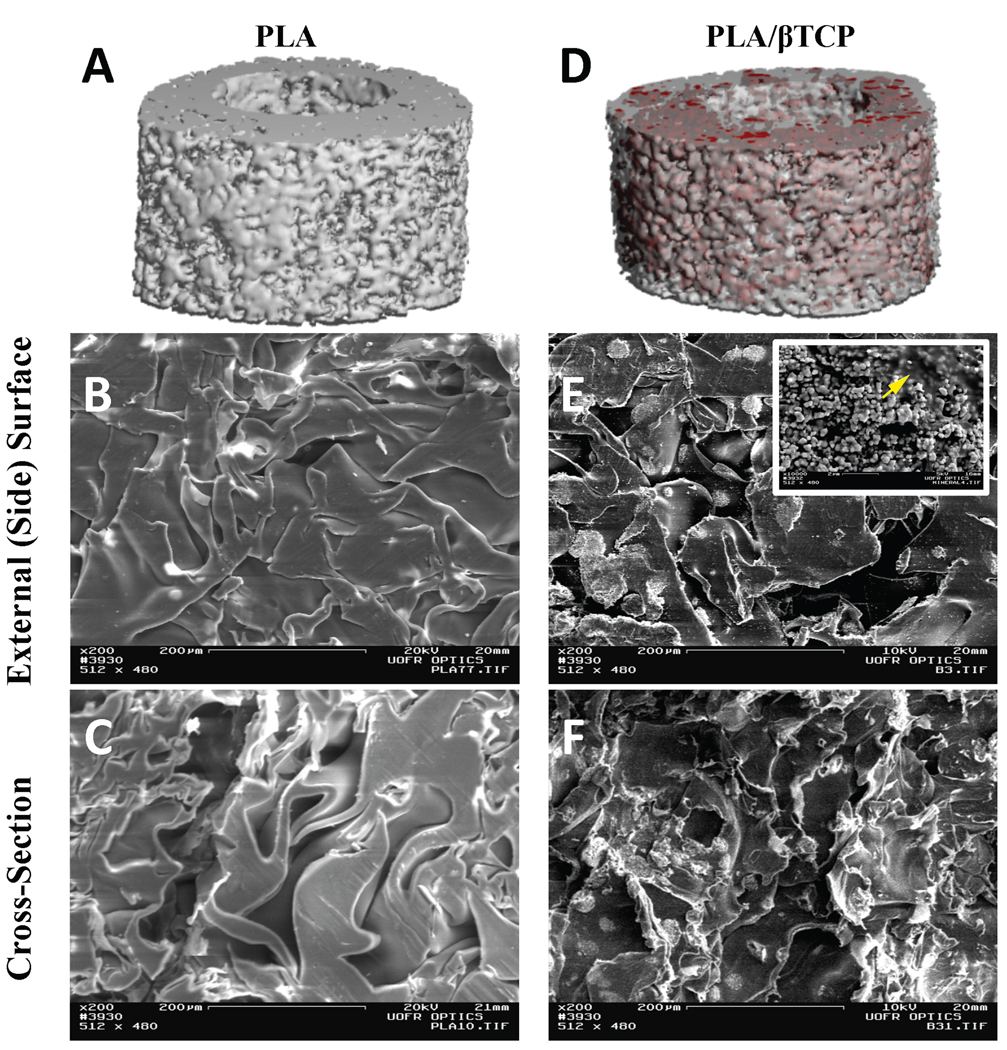
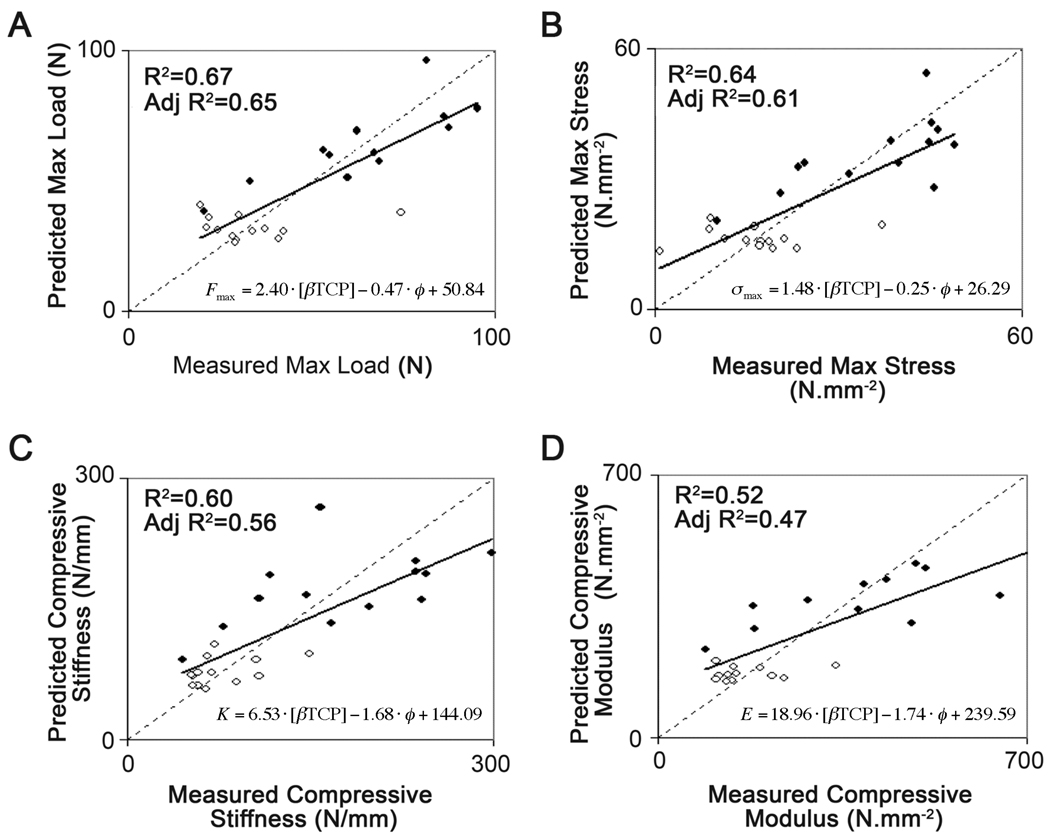
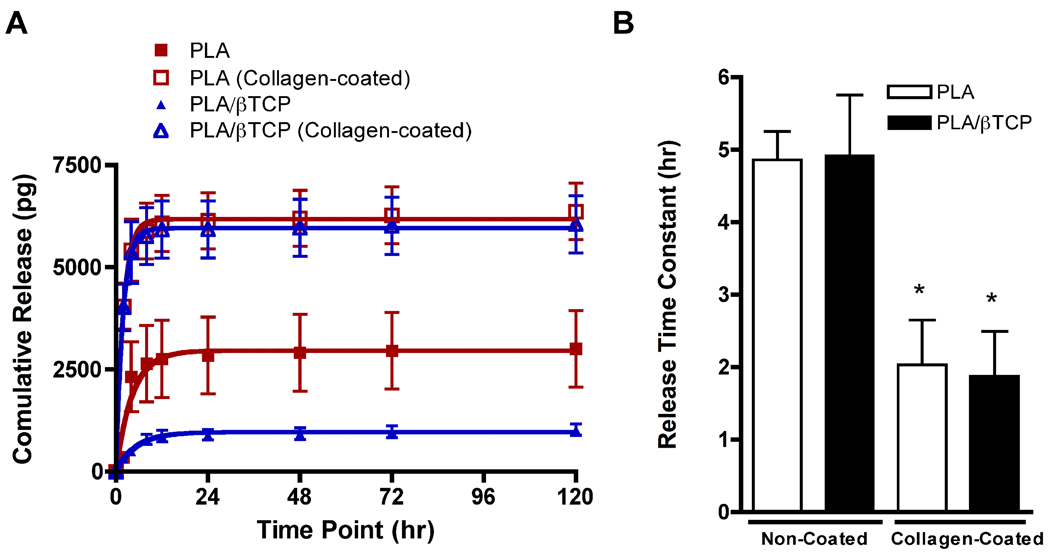
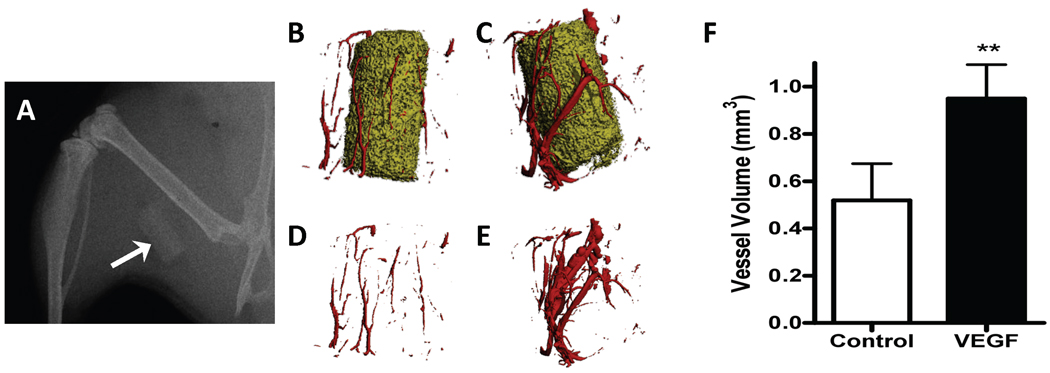
Advances in biomaterial fabrication have introduced numerous innovations in designing scaffolds for bone tissue engineering. Often, the focus has been on fabricating scaffolds with high and interconnected porosity that would allow for cellular seeding and tissue ingrowth. However, such scaffolds typically lack the mechanical strength to sustain in vivo ambulatory stresses in models of load bearing cortical bone reconstruction. In this study, we investigated the microstructural and mechanical properties of dense PLA and PLA/beta-TCP (85:15) scaffolds fabricated using a rapid volume expansion phase separation technique, which embeds uncoated beta-TCP particles within the porous polymer. PLA scaffolds had a volumetric porosity in the range of 30 to 40%. With the embedding of beta-TCP mineral particles, the porosity of the scaffolds was reduced in half, whereas the ultimate compressive and torsional strength were significantly increased. We also investigated the properties of the scaffolds as delivery vehicles for growth factors in vitro and in vivo. The low-surface porosity resulted in sub optimal retention efficiency of the growth factors, and burst release kinetics reflecting surface coating rather than volumetric entrapment, regardless of the scaffold used. When loaded with BMP2 and VEGF and implanted in the quadriceps muscle, PLA/beta-TCP scaffolds did not induce ectopic mineralization but induced a significant 1.8-fold increase in neo vessel formation. In conclusion, dense PLA/beta-TCP scaffolds can be engineered with enhanced mechanical properties and potentially be exploited for localized therapeutic factor delivery.
© 2010 Wiley Periodicals, Inc. J Biomed Mater Res Part A, 2010.
Figures
References
-
- Akkus O, Rimnac CM. Fracture resistance of gamma radiation sterilized cortical bone allografts. J Orthop Res. 2001;19(5):927–934. - PubMed
-
- Reddi AH. Morphogenesis and tissue engineering of bone and cartilage: inductive signals, stem cells, and biomimetic biomaterials. Tissue Eng. 2000;6(4):351–359. - PubMed
-
- Hutmacher DW. Scaffolds in tissue engineering bone and cartilage. Biomaterials. 2000;21(24):2529–2543. - PubMed
-
- Suuronen R, Kallela I, Lindqvist C. Bioabsorbable plates and screws: Current state of the art in facial fracture repair. J Craniomaxillofac Trauma. 2000;6(1):19–27. - PubMed
-
- Montjovent MO, Mathieu L, Schmoekel H, Mark S, Bourban PE, Zambelli PY, Laurent-Applegate LA, Pioletti DP. Repair of critical size defects in the rat cranium using ceramic-reinforced PLA scaffolds obtained by supercritical gas foaming. J Biomed Mater Res A. 2007;83(1):41–51. - PubMed
Publication types
MeSH terms
Substances
Grants and funding
LinkOut - more resources
Full Text Sources
