


Cytokine binding by polysaccharide-antibody conjugates
- PMID: 20726535
- PMCID: PMC3008761
- DOI: 10.1021/mp100150z
Cytokine binding by polysaccharide-antibody conjugates
Abstract
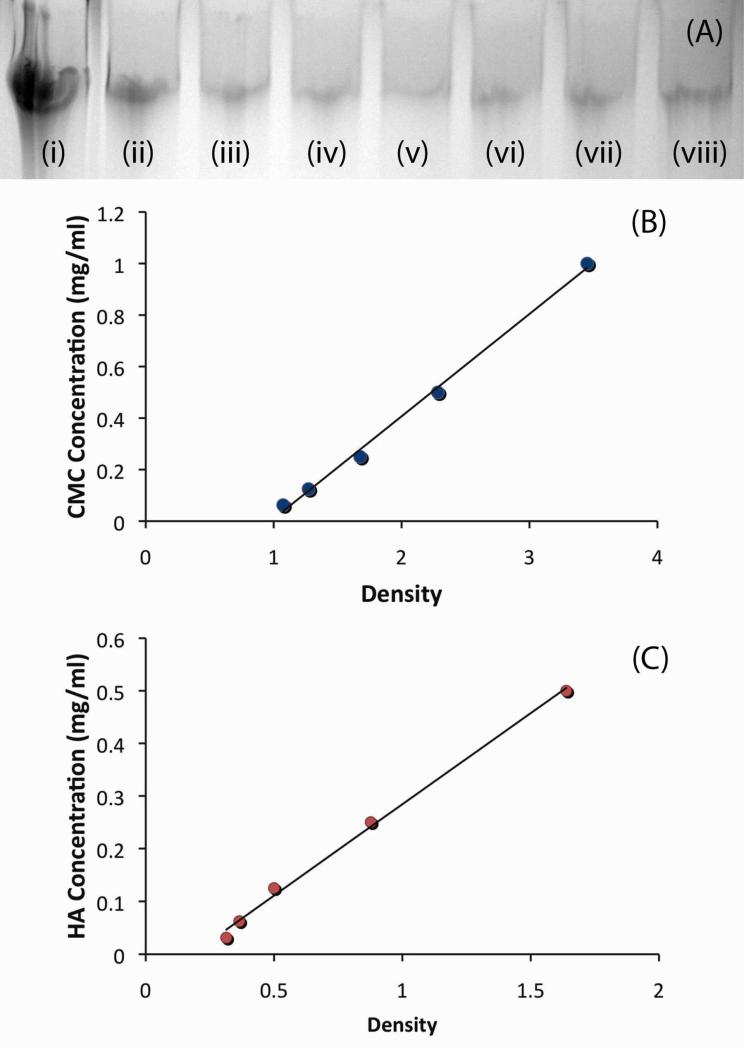
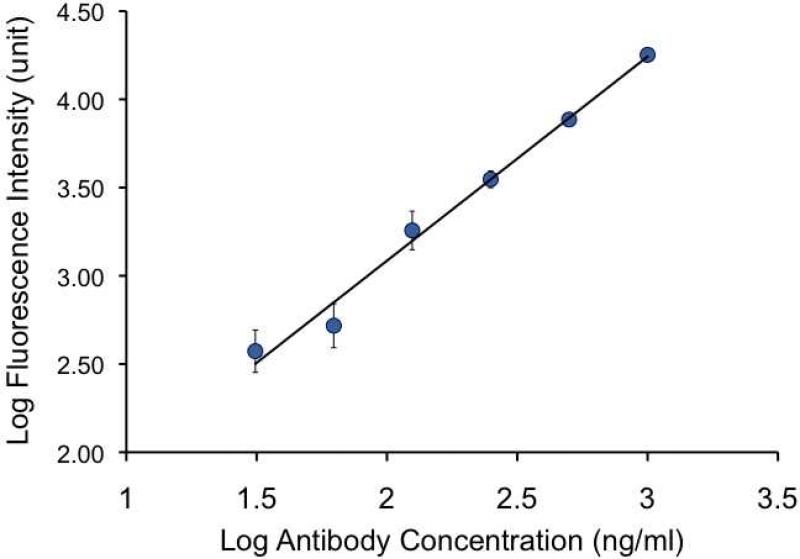
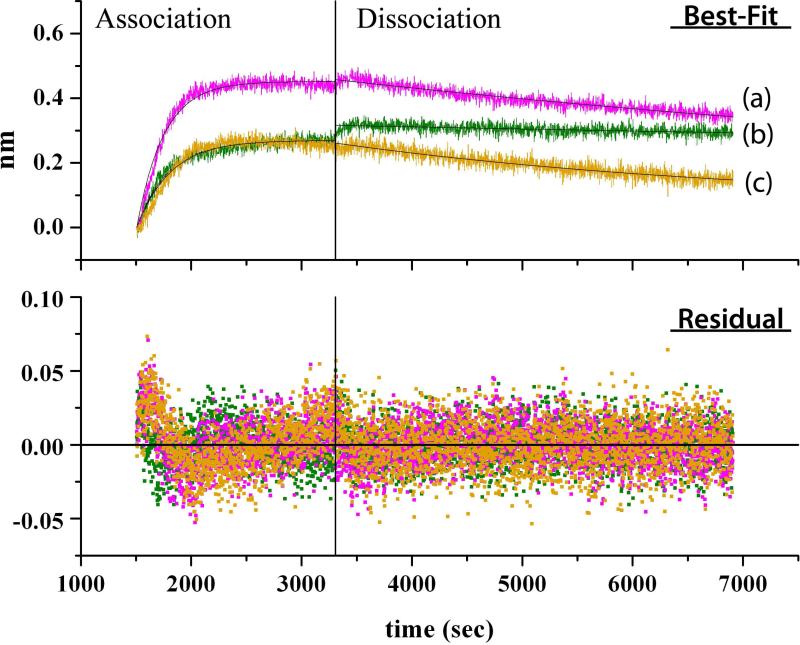
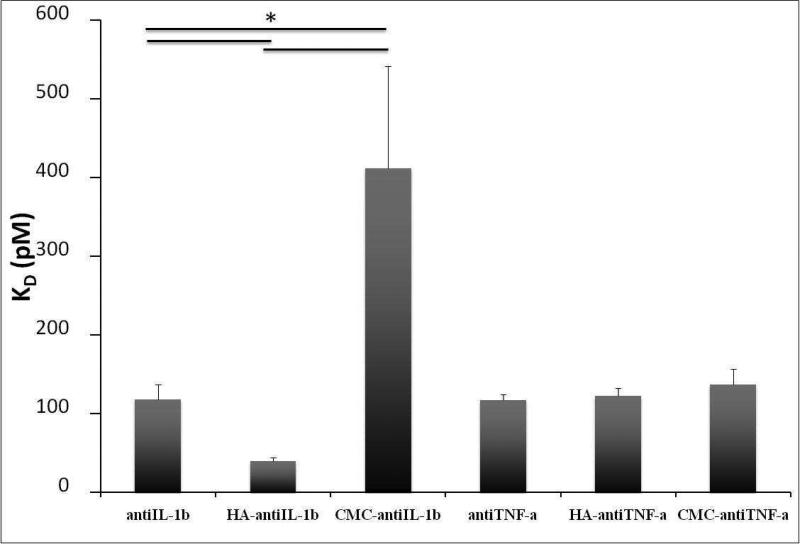
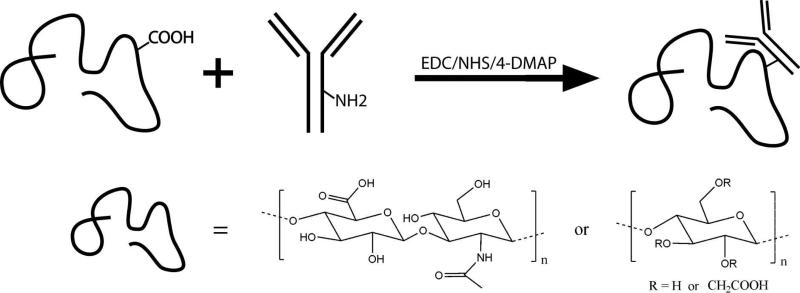
Cytokine-neutralizing antibodies are used in treating a broad range of inflammatory conditions. We demonstrate that monoclonal antibodies against interleukin-1β and tumor necrosis factor-α were still active when conjugated to high molecular weight polysaccharides. These polysaccharides are hydrophilic, but their size makes them unable to circulate in the bloodstream when delivered to tissues, opening up the possibility of localized treatment of inflammatory conditions. To explore this new class of protein-polysaccharide conjugates, we covalently modified interleukin-1β and tumor necrosis factor-α monoclonal antibodies with high molecular weight hyaluronic acid and carboxymethylcellulose. Rigorous purification using dialysis with a 300 kDa-cutoff membrane removed unconjugated monoclonal antibodies. We characterized the composition of the constructs and demonstrated using molecular binding affinity measurements and cell assays that the conjugates were capable of binding proinflammatory cytokines. The binding affinities of both the unconjugated antibodies for their cytokines were measured to be approximately 120 pM. While all conjugates had pM-level binding constants, they ranged from 40 pM for the hyaluronic acid-(anti-interleukin-1β) conjugate to 412 pM for the carboxymethylcellulose-(anti-interleukin-1β) conjugate. Interestingly, the dissociation time constants varied more than the association time constants, suggesting that conjugation to a high molecular weight polysaccharide did not interfere with the formation of the antibody-cytokine complex but could stabilize or destabilize it once formed. Conjugation of cytokine-neutralizing antibodies to high molecular weight polymers represents a novel method of delivering anticytokine therapeutics that may avoid many of the complications associated with systemic delivery.
Figures
References
-
- Thomson AW, Lotze MT. The Cytokine Handbook. 4th ed. Academic Press; London: 2003. p. 1536.
-
- Brekke OH, Sandlie I. Therapeutic antibodies for human diseases at the dawn of the twenty-first century. Nat Rev Drug Discov. 2003;2(1):52–62. - PubMed
-
- Bongartz T, Sutton AJ, Sweeting MJ, Buchan I, Matteson EL, Montori V. Anti-TNF antibody therapy in rheumatoid arthritis and the risk of serious infections and malignancies: systematic review and meta-analysis of rare harmful effects in randomized controlled trials. Jama. 2006;295(19):2275–85. - PubMed
-
- Veronese FM, Pasut G. PEGylation, successful approach to drug delivery. Drug Discov Today. 2005;10(21):1451–8. - PubMed
-
- Kubetzko S, Sarkar CA, Pluckthun A. Protein PEGylation decreases observed target association rates via a dual blocking mechanism. Molecular Pharmacology. 2005;68(5):1439–1454. - PubMed
Publication types
MeSH terms
Substances
Grants and funding
LinkOut - more resources
Full Text Sources
Other Literature Sources
