


Inhibitors of catechol-O-methyltransferase sensitize mice to pain
- PMID: 20726980
- PMCID: PMC3010567
- DOI: 10.1111/j.1476-5381.2010.00999.x
Inhibitors of catechol-O-methyltransferase sensitize mice to pain
Abstract
Background and purpose: Catechol-O-methyltransferase (COMT) inhibitors are used in Parkinson's disease in which pain is an important symptom. COMT polymorphisms modulate pain and opioid analgesia in humans. In rats, COMT inhibitors have been shown to be pro-nociceptive in acute pain models, but also to attenuate allodynia and hyperalgesia in a model of diabetic neuropathy. Here, we have assessed the effects of acute and repeated administrations of COMT inhibitors on mechanical, thermal and carrageenan-induced nociception in male mice.
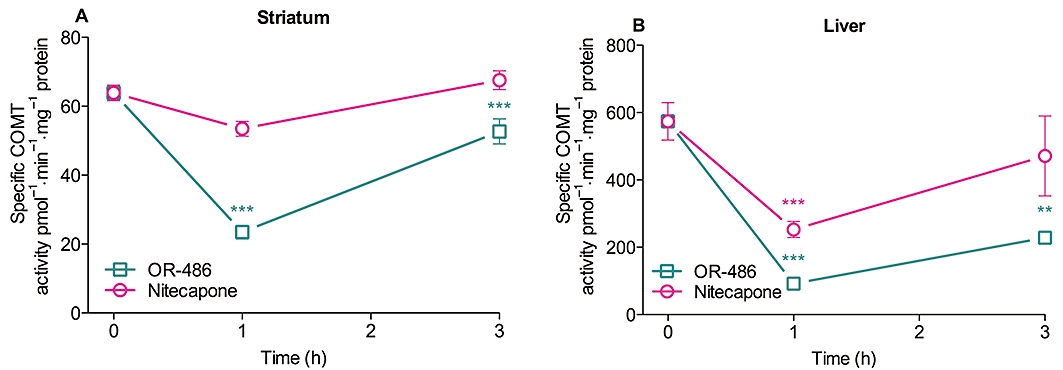
Experimental approach: We used single and repeated administration of a peripherally restricted, short-acting (nitecapone) and also a centrally acting (3,5-dinitrocatechol, OR-486) COMT inhibitor. We also tested CGP 28014, an indirect inhibitor of COMT enzyme. Effects of OR-486 on thermal nociception were also studied in COMT deficient mice. Effects on spinal pathways were assessed in rats given intrathecal nitecapone.
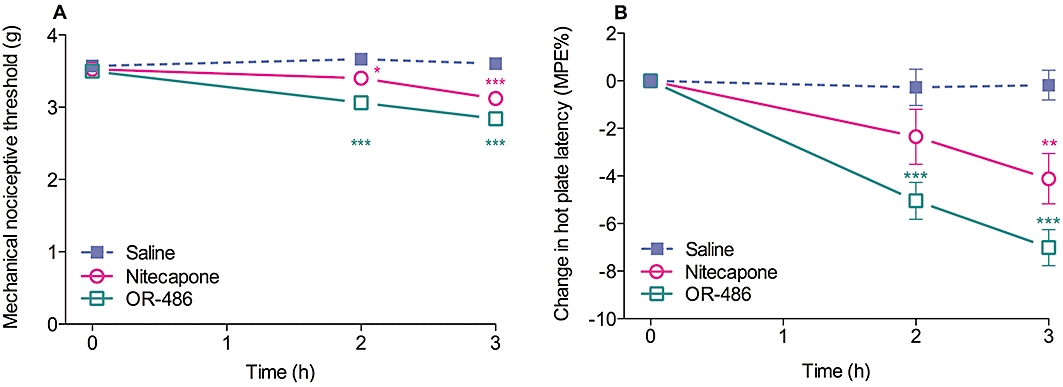
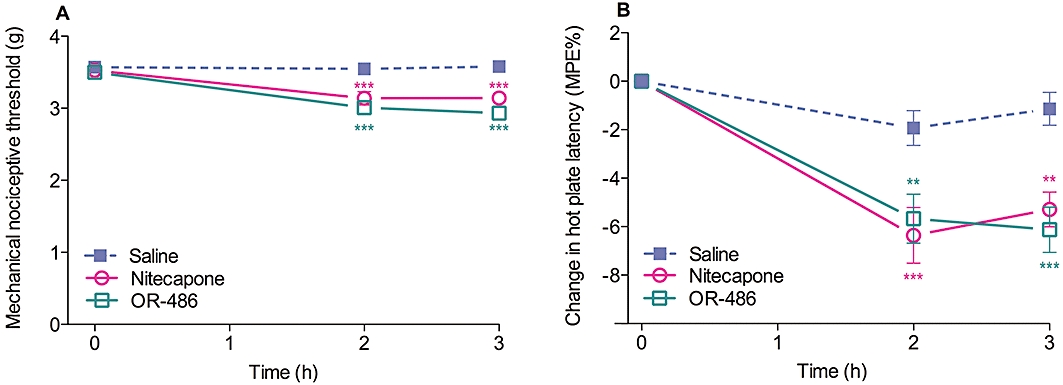
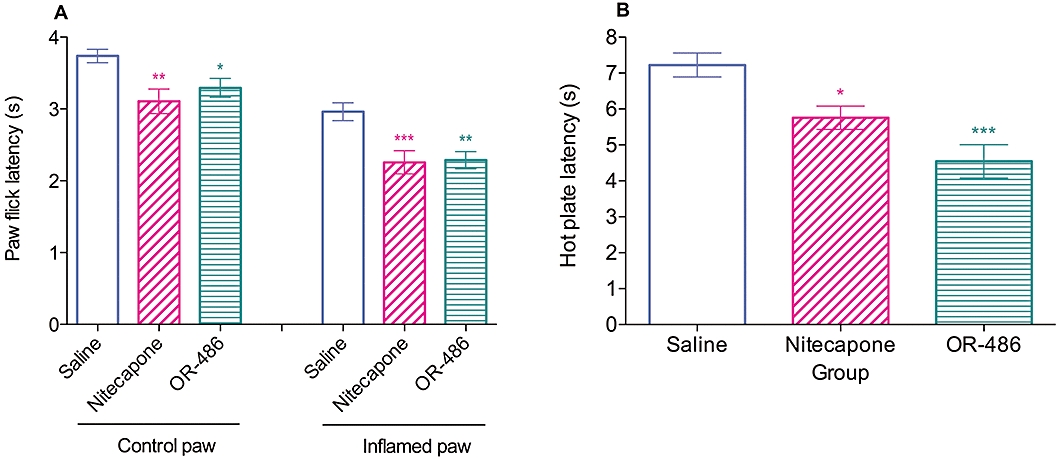
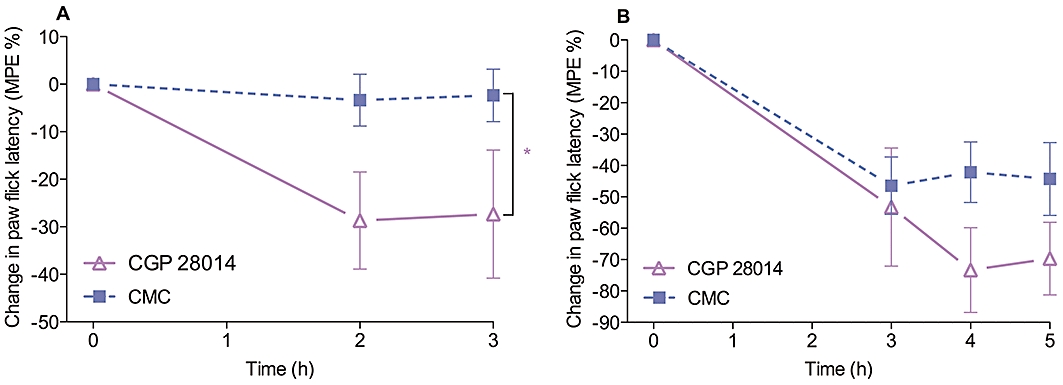
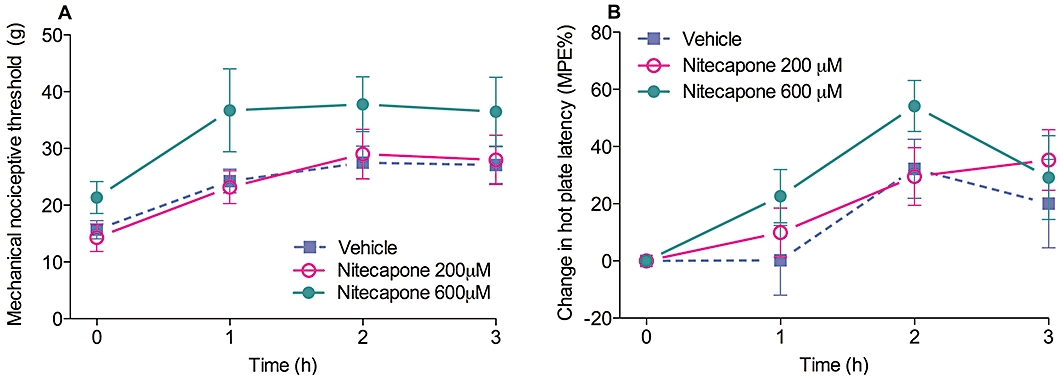
Key results: After single administration, both nitecapone and OR-486 reduced mechanical nociceptive thresholds and thermal nociceptive latencies (hot plate test) at 2 and 3 h, regardless of their brain penetration. These effects were still present after chronic treatment with COMT inhibitors for 5 days. Intraplantar injection of carrageenan reduced nociceptive latencies and both COMT inhibitors potentiated this reduction without modifying inflammation. CGP 28014 shortened paw flick latencies. OR-486 did not modify hot plate times in Comt gene deficient mice. Intrathecal nitecapone modified neither thermal nor mechanical nociception.
Conclusions and implications: Pro-nociceptive effects of COMT inhibitors were confirmed. The pro-nociceptive effects were primarily mediated via mechanisms acting outside the brain and spinal cord. COMT protein was required for these actions.
Figures
References
-
- Bäckström R, Honkanen E, Pippuri A, Kairisalo P, Pystynen J, Heinola K, et al. Synthesis of some novel potent and selective catechol O-methyltransferase inhibitors. J Med Chem. 1989;32:841–846. - PubMed
-
- Beiske AG, Loge JH, Ronningen A, Svensson E. Pain in Parkinson's disease: prevalence and characteristics. Pain. 2009;141:173–177. - PubMed
-
- Berthele A, Platzer S, Jochim B, Boecker H, Buettner A, Conrad B, et al. COMT Val108/158Met genotype affects the mu-opioid receptor system in the human brain: evidence from ligand-binding, G-protein activation and preproenkephalin mRNA expression. Neuroimage. 2005;28:185–193. - PubMed
-
- Boudikova B, Szumlanski C, Maidak B, Weinshilboum R. Human liver catechol-O-methyltransferase pharmacogenetics. Clin Pharmacol Ther. 1990;48:381–389. - PubMed
Publication types
MeSH terms
Substances
LinkOut - more resources
Full Text Sources
Other Literature Sources
Medical
Miscellaneous
