


Carotid intima-media thickness in individuals with and without type 2 diabetes: a reproducibility study
- PMID: 20727128
- PMCID: PMC2931499
- DOI: 10.1186/1475-2840-9-40
Carotid intima-media thickness in individuals with and without type 2 diabetes: a reproducibility study
Abstract
Background: The use of carotid intima-media thickness (carotid IMT) as a surrogate marker of cardiovascular disease is increasing and the method has now also been applied in several trials investigating patients with type 2 diabetes (T2D). Even though knowledge about methodology is of highest importance in order to make accurate power calculations and analyses of results, no reproducibility studies have been performed in this group of patients. The aim of this study was to quantify the variability of the measurement of carotid IMT in individuals with and without T2D.
Methods: We used B-mode ultrasound and a computerized software programme (MIA vascular tools) for analysis of carotid IMT. Measurement of carotid IMT in the far wall of the common carotid artery (CCA) was done for 30 patients with T2D and 30 persons without T2D. The examinations were done by two different sonographers and two different readers on two separate days in order to quantify sonographer-, reader-, and day-to-day variability.
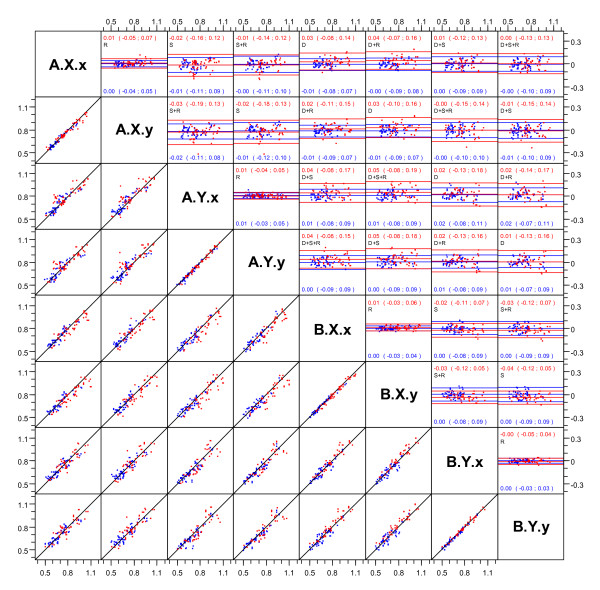
Results: Comparisons of measurement of carotid IMT in CCA between sonographers (sonographer variability) resulted in limits of agreement (LoA) from -0.18 to 0.13 mm for patients with T2D and -0.12 to 0.10 mm for persons without T2D. This means, that a second scanning of the same person with 95% probability would be within this interval of the first scanning. Comparisons between readers assessing the same scanning (reader variability) resulted in LoA from -0.05 to 0.07 mm and -0.04 to 0.05 mm respectively. LoA of the day-to-day variability was -0.13 to 0.18 mm and -0.09 to 0.18 mm respectively. This corresponds to coefficients of variations (CV) of the sonographer- and day-to-day variability of 10% in patients with T2D and 8% in persons without T2D. The CV of the reader variability was 4% and 3% respectively.
Conclusion: Measurement of carotid IMT in the CCA can be determined with good and comparable reproducibility in both patients with T2D and persons without T2D. These findings support the use of carotid IMT in clinical trials with T2D patients and suggest that the numbers of patients needed to detect a given difference will be the same whether the patients have T2D or not.
Figures
References
-
- Bots ML, Hoes AW, Koudstaal PJ, Hofman A, Grobbee DE. Common carotid intima-media thickness and risk of stroke and myocardial infarction: the Rotterdam Study. Circulation. 1997;96:1432–1437. - PubMed
-
- Chambless LE, Folsom AR, Clegg LX, Sharrett AR, Shahar E, Nieto FJ, Rosamond WD, Evans G. Carotid wall thickness is predictive of incident clinical stroke: the Atherosclerosis Risk in Communities (ARIC) study. American Journal of Epidemiology. 2000;151:478–487. - PubMed
-
- O'Leary DH, Polak JF, Kronmal RA, Manolio TA, Burke GL, Wolfson SK Jr. Carotid-artery intima and media thickness as a risk factor for myocardial infarction and stroke in older adults. Cardiovascular Health Study Collaborative Research Group. N Engl J Med. 1999;340:14–22. doi: 10.1056/NEJM199901073400103. - DOI - PubMed
-
- Yamasaki Y, Kodama M, Nishizawa H, Sakamoto K, Matsuhisa M, Kajimoto Y, Kosugi K, Shimizu Y, Kawamori R, Hori M. Carotid intima-media thickness in Japanese type 2 diabetic subjects: predictors of progression and relationship with incident coronary heart disease. Diabetes Care. 2000;23:1310–1315. doi: 10.2337/diacare.23.9.1310. - DOI - PubMed
Publication types
MeSH terms
Grants and funding
LinkOut - more resources
Full Text Sources
Medical
