


Similar progression of fibrosis between HIV/HCV-infected and HCV-infected patients: Analysis of paired liver biopsy samples
- PMID: 20728569
- PMCID: PMC2997143
- DOI: 10.1016/j.cgh.2010.08.004
Similar progression of fibrosis between HIV/HCV-infected and HCV-infected patients: Analysis of paired liver biopsy samples
Abstract
Background & aims: Fibrosis progression might be accelerated in patients who are coinfected with human immunodeficiency virus (HIV) and HCV (HIV/HCV). However, no studies have directly compared fibrosis progression by paired liver biopsy between patients infected with HIV and HCV versus those infected with only HCV.
Methods: Liver biopsy samples were collected from patients with HIV/HCV (n = 306) and those with HCV; biopsies from 59 without a sustained virologic response (SVR) or cirrhosis were matched with those from patients with only HCV (controls) for initial fibrosis stage, demographics, and HCV treatment. For HIV/HCV patients, categorical variables at baseline and the area under the curve of continuous variables per unit time were analyzed for associations with fibrosis progression.
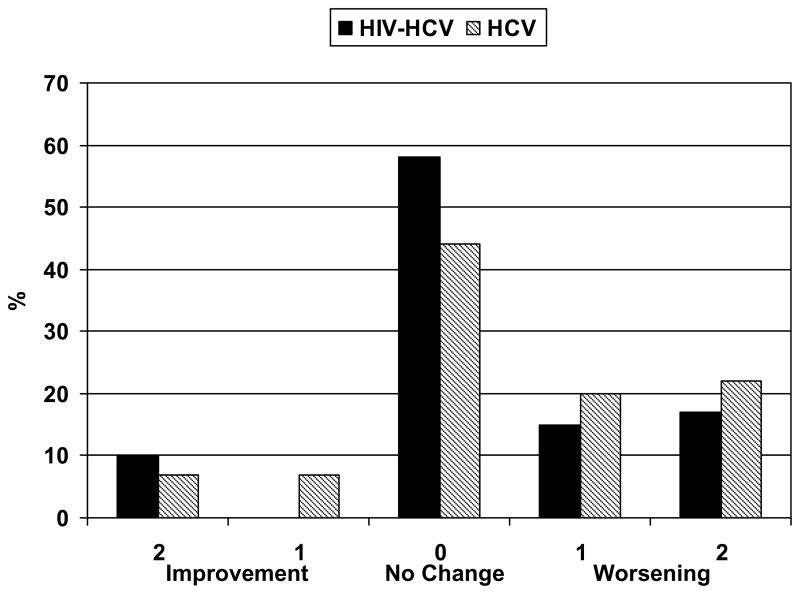
Results: Liver biopsies from HIV/HCV patients had more piecemeal necrosis than controls (P = .001) and increased lobular inflammation (P = .002); HIV/HCV patients also had shorter intervals between liver biopsies (4.7 vs 5.9 years, P < .0001). Between the first and second biopsies, fibrosis remained unchanged or progressed 1 or 2 units in 55%, 18%, and 18% of HIV/HCV patients, respectively, compared with 45%, 30%, and 9% of controls. The fibrosis progression rate was similar between HIV/HCV and control patients (0.12 ± 0.40 vs 0.091 ± 0.29 units/y; P = .72). In paired biopsies from 66 patients, including those with SVR, there were no associations between fibrosis progression and demographics; numbers of CD4+ T cells; levels of aspartate aminotransferase or alanine aminotransferase; use of highly active antiretroviral therapy; response to HCV therapy (no treatment, SVR, or non-response); baseline levels of FIB-4; or histologic features including inflammation, fibrosis, or steatosis.
Conclusions: On the basis of analysis of liver biopsy samples, fibrosis progression was similar between HIV/HCV-infected and HCV-infected patients; no clinical or laboratory parameters predicted disease progression.
Copyright © 2010 AGA Institute. Published by Elsevier Inc. All rights reserved.
Figures
References
-
- Lee LM, Karon JM, Selik R, et al. Survival after AIDS diagnosis in adolescents and adults during the treatment era, United States, 1984–1997. JAMA. 2001;285(10):1308–1315. - PubMed
-
- Weber R, Sabin CA, Friis-Møller N, et al. Arch Intern Med. 2006 Aug 14–28;166(15):1632–41. - PubMed
-
- Sherman KE, Rouster SD, Chung RT, Rajicic N. Hepatitis C virus prevalence among patients infected with human immunodeficiency virus: a cross-sectional analysis of the US adult AIDS Clinical Trials Group. Clin Infect Dis. 2002;4:831–837. - PubMed
-
- Natural history of liver fibrosis progression in patients with chronic hepatitis C. 9055. Vol. 349. The OBSVIRC, METAVIR, CLINIVIR, and DOSVIRC groups; 1997. Mar 22, pp. 825–32. - PubMed
Publication types
MeSH terms
Grants and funding
LinkOut - more resources
Full Text Sources
Medical
Research Materials
