


A long nuclear-retained non-coding RNA regulates synaptogenesis by modulating gene expression
- PMID: 20729808
- PMCID: PMC2944070
- DOI: 10.1038/emboj.2010.199
A long nuclear-retained non-coding RNA regulates synaptogenesis by modulating gene expression
Abstract
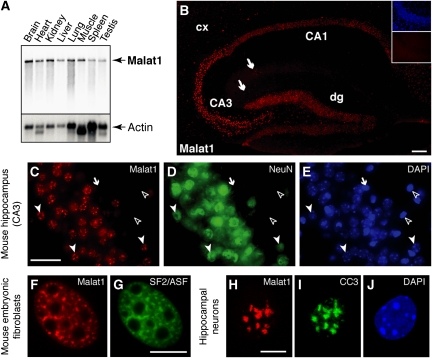
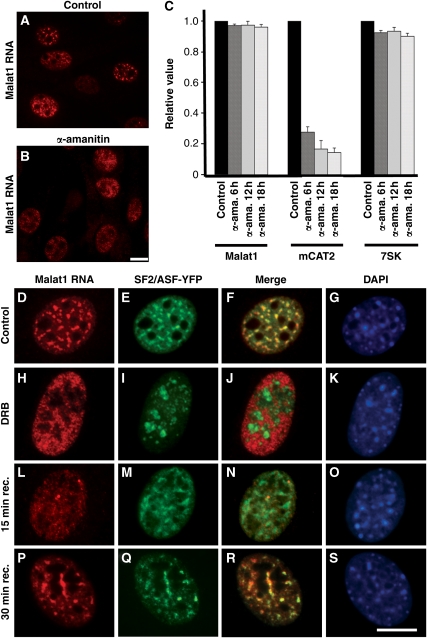
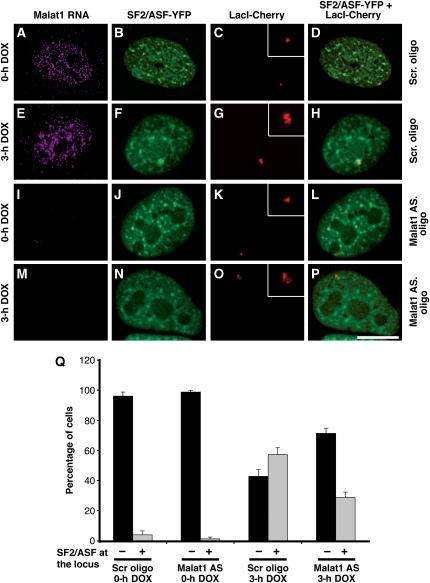
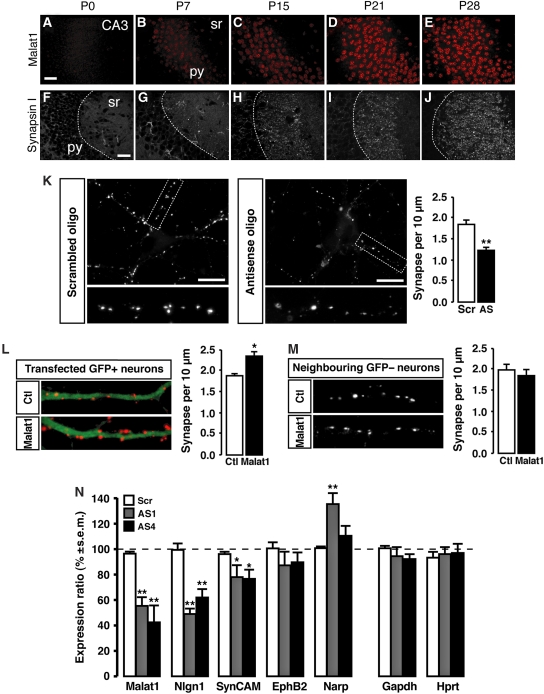
A growing number of long nuclear-retained non-coding RNAs (ncRNAs) have recently been described. However, few functions have been elucidated for these ncRNAs. Here, we have characterized the function of one such ncRNA, identified as metastasis-associated lung adenocarcinoma transcript 1 (Malat1). Malat1 RNA is expressed in numerous tissues and is highly abundant in neurons. It is enriched in nuclear speckles only when RNA polymerase II-dependent transcription is active. Knock-down studies revealed that Malat1 modulates the recruitment of SR family pre-mRNA-splicing factors to the transcription site of a transgene array. DNA microarray analysis in Malat1-depleted neuroblastoma cells indicates that Malat1 controls the expression of genes involved not only in nuclear processes, but also in synapse function. In cultured hippocampal neurons, knock-down of Malat1 decreases synaptic density, whereas its over-expression results in a cell-autonomous increase in synaptic density. Our results suggest that Malat1 regulates synapse formation by modulating the expression of genes involved in synapse formation and/or maintenance.
Conflict of interest statement
The authors declare that they have no conflict of interest.
Figures
References
-
- Ahmari SE, Buchanan J, Smith SJ (2000) Assembly of presynaptic active zones from cytoplasmic transport packets. Nat Neurosci 3: 445–451 - PubMed
-
- Biederer T, Sara Y, Mozhayeva M, Atasoy D, Liu X, Kavalali ET, Sudhof TC (2002) SynCAM, a synaptic adhesion molecule that drives synapse assembly. Science 297: 1525–1531 - PubMed
Publication types
MeSH terms
Substances
Grants and funding
LinkOut - more resources
Full Text Sources
Other Literature Sources
Molecular Biology Databases
Research Materials
