


Viremia associated with fatal outcomes in ferrets infected with avian H5N1 influenza virus
- PMID: 20730085
- PMCID: PMC2921151
- DOI: 10.1371/journal.pone.0012099
Viremia associated with fatal outcomes in ferrets infected with avian H5N1 influenza virus
Abstract
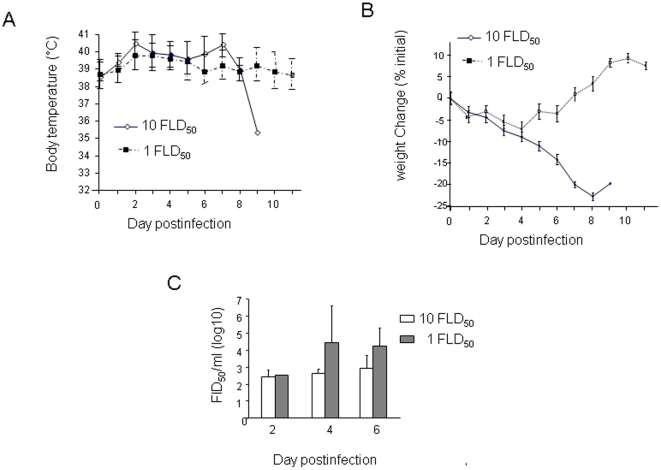
Avian H5N1 influenza viruses cause severe disease and high mortality in infected humans. However, tissue tropism and underlying pathogenesis of H5N1 virus infection in humans needs further investigation. The objective of this work was to study viremia, tissue tropism and disease pathogenesis of H5N1 virus infection in the susceptible ferret animal model. To evaluate the relationship of morbidity and mortality with virus loads, we performed studies in ferrets infected with the H5N1 strain A/VN/1203/04 to assess clinical signs after infection and virus load in lung, brain, ileum, nasal turbinate, nasal wash, and blood. We observed that H5N1 infection in ferrets is characterized by high virus load in the brain and and low levels in the ileum using real-time PCR. In addition, viral RNA was frequently detected in blood one or two days before death and associated with symptoms of diarrhea. Our observations further substantiate pathogenicity of H5N1 and further indicate that viremia may be a bio-marker for fatal outcomes in H5N1 infection.
Conflict of interest statement
Figures
References
-
- Claas EC, Osterhaus AD, van Beek R, De Jong JC, Rimmelzwaan GF, et al. Human influenza A H5N1 virus related to a highly pathogenic avian influenza virus. Lancet. 1998;351:472–477. - PubMed
-
- Subbarao K, Klimov A, Katz J, Regnery H, Lim W, et al. Characterization of an avian influenza A (H5N1) virus isolated from a child with a fatal respiratory illness. Science. 1998;279:393–396. - PubMed
-
- Stanley ED, Jackson GG. Viremia in Asian influenza. Trans Assoc Am Phys. 1966;79:376–387. - PubMed
MeSH terms
LinkOut - more resources
Full Text Sources
Medical
