Transcriptional regulation by CHIP/LDB complexes
- PMID: 20730086
- PMCID: PMC2921152
- DOI: 10.1371/journal.pgen.1001063
Transcriptional regulation by CHIP/LDB complexes
Erratum in
- PLoS Genet. 2011 Feb;7(2). doi: 10.1371/annotation/0bac4872-2fa2-416e-ac45-4b0ac79f8ddd doi: 10.1371/annotation/0bac4872-2fa2-416e-ac45-4b0ac79f8ddd
Abstract
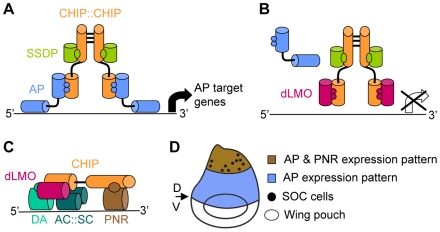
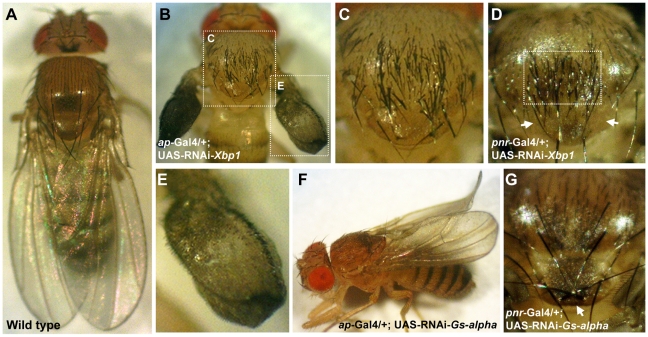
It is increasingly clear that transcription factors play versatile roles in turning genes "on" or "off" depending on cellular context via the various transcription complexes they form. This poses a major challenge in unraveling combinatorial transcription complex codes. Here we use the powerful genetics of Drosophila combined with microarray and bioinformatics analyses to tackle this challenge. The nuclear adaptor CHIP/LDB is a major developmental regulator capable of forming tissue-specific transcription complexes with various types of transcription factors and cofactors, making it a valuable model to study the intricacies of gene regulation. To date only few CHIP/LDB complexes target genes have been identified, and possible tissue-dependent crosstalk between these complexes has not been rigorously explored. SSDP proteins protect CHIP/LDB complexes from proteasome dependent degradation and are rate-limiting cofactors for these complexes. By using mutations in SSDP, we identified 189 down-stream targets of CHIP/LDB and show that these genes are enriched for the binding sites of APTEROUS (AP) and PANNIER (PNR), two well studied transcription factors associated with CHIP/LDB complexes. We performed extensive genetic screens and identified target genes that genetically interact with components of CHIP/LDB complexes in directing the development of the wings (28 genes) and thoracic bristles (23 genes). Moreover, by in vivo RNAi silencing we uncovered novel roles for two of the target genes, xbp1 and Gs-alpha, in early development of these structures. Taken together, our results suggest that loss of SSDP disrupts the normal balance between the CHIP-AP and the CHIP-PNR transcription complexes, resulting in down-regulation of CHIP-AP target genes and the concomitant up-regulation of CHIP-PNR target genes. Understanding the combinatorial nature of transcription complexes as presented here is crucial to the study of transcription regulation of gene batteries required for development.
Conflict of interest statement
The authors have declared that no competing interests exist.
Figures
References
-
- Alvarez M, Rhodes SJ, Bidwell JP. Context-dependent transcription: all politics is local. Gene. 2003;313:43–57. - PubMed
-
- Rosenfeld MG, Lunyak VV, Glass CK. Sensors and signals: a coactivator/corepressor/epigenetic code for integrating signal-dependent programs of transcriptional response. Genes & Development. 2006;20:1405–1428. - PubMed
-
- Ma J. Crossing the line between activation and repression. Trends Genet. 2005;21:54–59. - PubMed
-
- Cohen B, McGuffin ME, Pfeifle C, Segal D, Cohen SM. apterous, a gene required for imaginal disc development in Drosophila encodes a member of the LIM family of developmental regulatory proteins. Genes & Development. 1992;6:715–729. - PubMed
Publication types
MeSH terms
Substances
Grants and funding
LinkOut - more resources
Full Text Sources
Molecular Biology Databases