


Essential role of monocytes and macrophages in the progression of acute pancreatitis
- PMID: 20731012
- PMCID: PMC2928452
- DOI: 10.3748/wjg.v16.i32.3995
Essential role of monocytes and macrophages in the progression of acute pancreatitis
Abstract
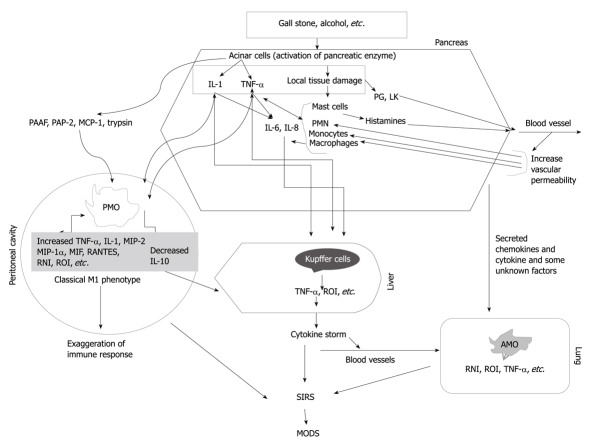
Acute pancreatitis (AP) is an inflammatory condition of the pancreas caused by an imbalance in factors involved in maintaining cellular homeostasis. Earliest events in AP occur within acinar cells accompanied by other principal contributors to the inflammatory response i.e. the endothelial cells, immunocytes (granulocytes, monocytes/macrophages, lymphocytes) and neutrophils. Monocytes/macrophages are important inflammatory mediators, involved in the pathophysiology of AP, known to reside in the peritoneal cavity (in the vicinity of the pancreas) and in peripancreatic tissue. Recent studies suggested that impaired clearance of injured acini by macrophages is associated with an altered cytokine reaction which may constitute a basis for progression of AP. This review focuses on the role of monocytes/macrophages in progression of AP and discusses findings on the inflammatory process involved.
Figures
References
-
- Vane JR, Botting RM. Anti-inflammatory drugs and their mechanism of action. Inflamm Res. 1998;47 Suppl 2:S78–S87. - PubMed
-
- Luster AD, Alon R, von Andrian UH. Immune cell migration in inflammation: present and future therapeutic targets. Nat Immunol. 2005;6:1182–1190. - PubMed
-
- Makhija R, Kingsnorth AN. Cytokine storm in acute pancreatitis. J Hepatobiliary Pancreat Surg. 2002;9:401–410. - PubMed
Publication types
MeSH terms
LinkOut - more resources
Full Text Sources
Medical
