


Meta-analysis of genome-wide association studies of attention-deficit/hyperactivity disorder
- PMID: 20732625
- PMCID: PMC2928252
- DOI: 10.1016/j.jaac.2010.06.008
Meta-analysis of genome-wide association studies of attention-deficit/hyperactivity disorder
Abstract
Objective: Although twin and family studies have shown attention-deficit/hyperactivity disorder (ADHD) to be highly heritable, genetic variants influencing the trait at a genome-wide significant level have yet to be identified. As prior genome-wide association studies (GWAS) have not yielded significant results, we conducted a meta-analysis of existing studies to boost statistical power.
Method: We used data from four projects: a) the Children's Hospital of Philadelphia (CHOP); b) phase I of the International Multicenter ADHD Genetics project (IMAGE); c) phase II of IMAGE (IMAGE II); and d) the Pfizer-funded study from the University of California, Los Angeles, Washington University, and Massachusetts General Hospital (PUWMa). The final sample size consisted of 2,064 trios, 896 cases, and 2,455 controls. For each study, we imputed HapMap single nucleotide polymorphisms, computed association test statistics and transformed them to z-scores, and then combined weighted z-scores in a meta-analysis.
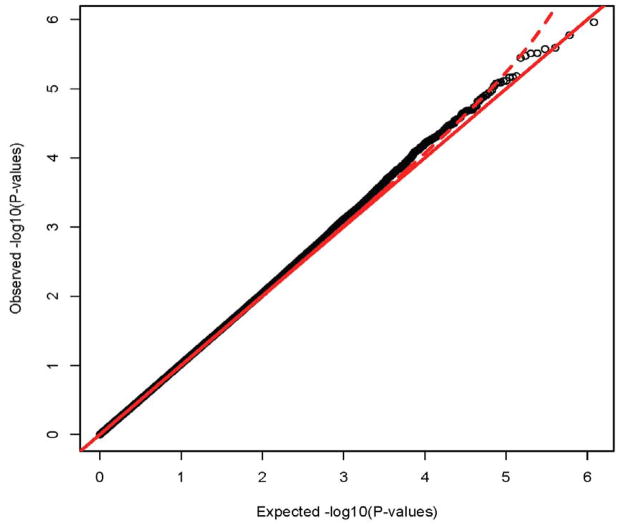
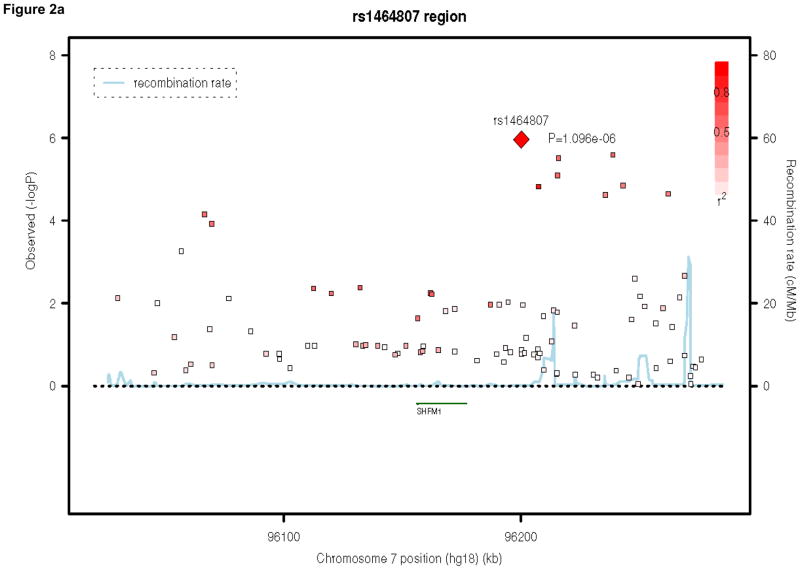
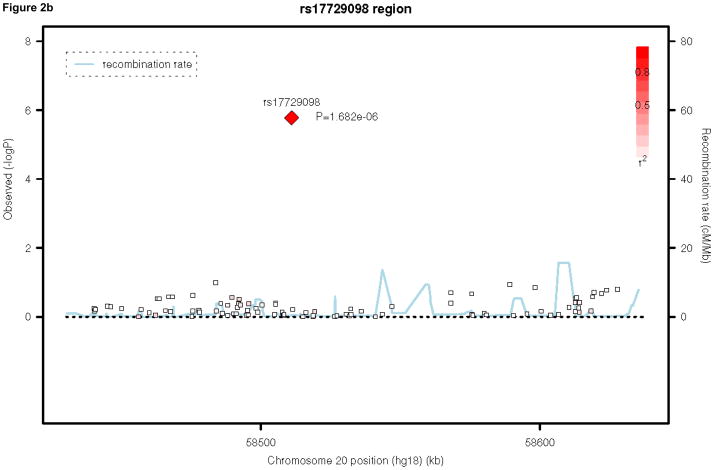
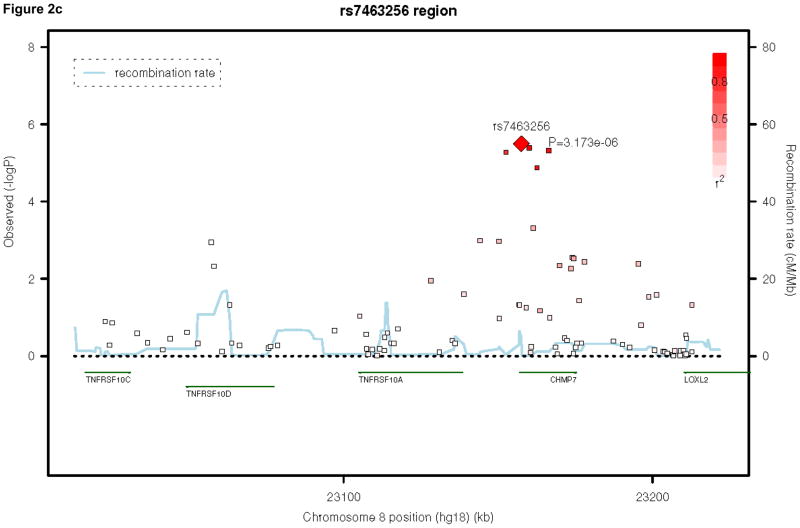
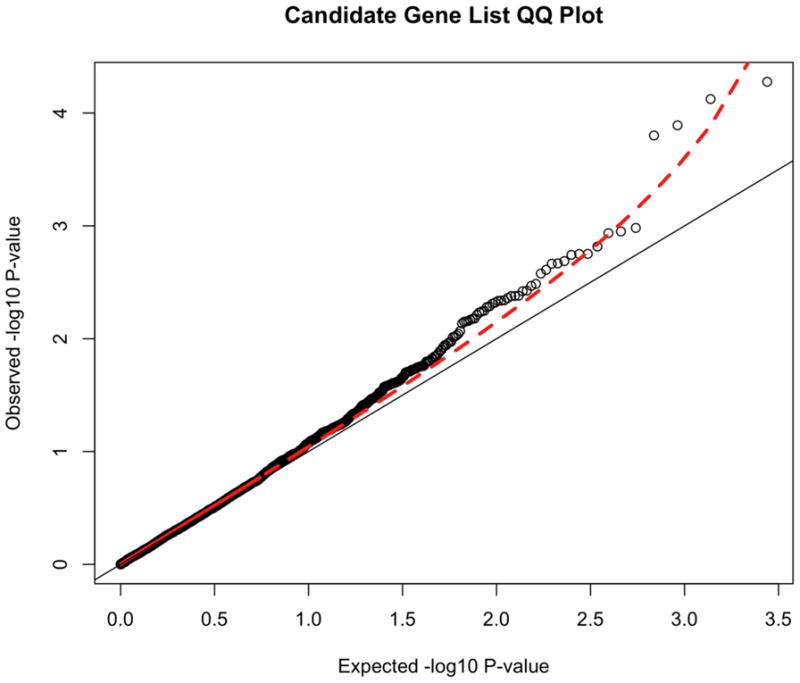
Results: No genome-wide significant associations were found, although an analysis of candidate genes suggests that they may be involved in the disorder.
Conclusions: Given that ADHD is a highly heritable disorder, our negative results suggest that the effects of common ADHD risk variants must, individually, be very small or that other types of variants, e.g., rare ones, account for much of the disorder's heritability.
2010 American Academy of Child and Adolescent Psychiatry. Published by Elsevier Inc. All rights reserved.
Figures
Comment in
-
The new genetics in child psychiatry.J Am Acad Child Adolesc Psychiatry. 2010 Aug;49(8):729-35. doi: 10.1016/j.jaac.2010.06.010. J Am Acad Child Adolesc Psychiatry. 2010. PMID: 20643308 No abstract available.
References
-
- Polanczyk G, de Lima MS, Horta BL, Biederman J, Rohde LA. The Worldwide Prevalence of ADHD: A Systematic Review and Metaregression Analysis. Am J Psychiatry Jun. 2007;164(6):942–948. - PubMed
-
- Faraone SV, Biederman J. What is the prevalence of adult ADHD? Results of a population screen of 966 adults. Journal of Attention Disorders. 2005;9(2):384–391. - PubMed
-
- Freitag CM, Rohde LA, Lempp T, Romanos M. Phenotypic and measurement influences on heritability estimates in childhood ADHD. Eur Child Adolesc Psychiatry Mar. 2010;19(3):311–323. - PubMed
Publication types
MeSH terms
Grants and funding
- U01 MH085518/MH/NIMH NIH HHS/United States
- R01 MH058277/MH/NIMH NIH HHS/United States
- R01MH62873/MH/NIMH NIH HHS/United States
- R01MH081803/MH/NIMH NIH HHS/United States
- R01MH58277/MH/NIMH NIH HHS/United States
- U01MH085515/MH/NIMH NIH HHS/United States
- R01 MH083823/MH/NIMH NIH HHS/United States
- R01 MH080403/MH/NIMH NIH HHS/United States
- WT_/Wellcome Trust/United Kingdom
- G0801418/MRC_/Medical Research Council/United Kingdom
- R01 MH062873/MH/NIMH NIH HHS/United States
- U01 MH085515/MH/NIMH NIH HHS/United States
- R01MH080403/MH/NIMH NIH HHS/United States
- K23MH066275-01/MH/NIMH NIH HHS/United States
- R13 MH059126/MH/NIMH NIH HHS/United States
- K23 MH066275/MH/NIMH NIH HHS/United States
- R13MH059126/MH/NIMH NIH HHS/United States
- U01MH085518/MH/NIMH NIH HHS/United States
- R01 MH081803/MH/NIMH NIH HHS/United States
LinkOut - more resources
Full Text Sources
Other Literature Sources
Medical
Molecular Biology Databases
Research Materials
