


Phenotypic and biochemical comparison of the carbapenem-hydrolyzing activities of five plasmid-borne AmpC β-lactamases
- PMID: 20733047
- PMCID: PMC2976168
- DOI: 10.1128/AAC.01762-09
Phenotypic and biochemical comparison of the carbapenem-hydrolyzing activities of five plasmid-borne AmpC β-lactamases
Abstract
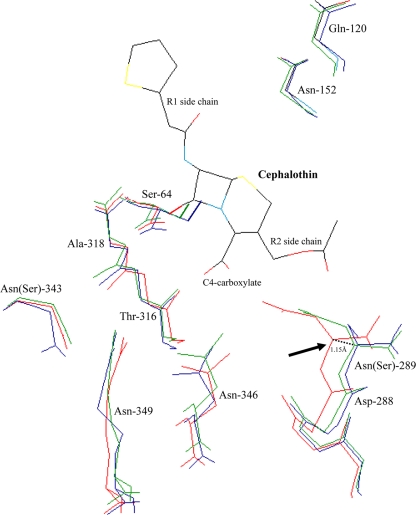
The CMY-2, ACT-1, DHA-1, ACC-1, and FOX-1 enzymes are representative of five plasmid-mediated AmpC (pAmpC) β-lactamase clusters. Resistance to imipenem has been reported in Enterobacteriaceae as a result of pAmpC expression combined with decreased outer membrane permeability. The aim of this study was to determine the role of different pAmpCs in carbapenem resistance and to define the structure/activity relationship supporting carbapenemase activity. The ampC genes encoding the five pAmpCs and the chromosomal AmpC of Escherichia coli EC6, which was used as a reference cephalosporinase, were cloned and introduced into wild-type E. coli TOP10 and OmpC/OmpF porin-deficient E. coli HB4 strains. The MICs of β-lactams for the recombinant strains revealed that CMY-2, ACT-1, and DHA-1 β-lactamases conferred a high level of resistance to ceftazidime and cefotaxime once expressed in E. coli TOP10 and reduced significantly the susceptibility to imipenem once expressed in E. coli HB4. In contrast, FOX-1 and ACC-1 enzymes did not confer resistance to imipenem. Biochemical analysis showed that CMY-2 β-lactamase and, to a lesser extent, ACT-1 exhibited the highest catalytic efficiency toward imipenem and showed low K(m) values. A modeling study revealed that the large R2 binding site of these two enzymes may support the carbapenemase activity. Therefore, CMY-2-type, ACT-1-type, and DHA-1-type β-lactamases may promote the emergence of carbapenem resistance in porin-deficient clinical isolates.
Figures
References
-
- Bradford, P. A., C. Urban, N. Mariano, S. J. Projan, J. J. Rahal, and K. Bush. 1997. Imipenem resistance in Klebsiella pneumoniae is associated with the combination of ACT-1, a plasmid-mediated AmpC β-lactamase, and the loss of an outer membrane protein. Antimicrob. Agents Chemother. 41:563-569. - PMC - PubMed
-
- Cao, V. T., G. Arlet, B. M. Ericsson, A. Tammelin, P. Courvalin, and T. Lambert. 2000. Emergence of imipenem resistance in Klebsiella pneumoniae owing to combination of plasmid-mediated CMY-4 and permeability alteration. J. Antimicrob. Chemother. 46:895-900. - PubMed
Publication types
MeSH terms
Substances
LinkOut - more resources
Full Text Sources
Medical
Molecular Biology Databases
Miscellaneous
