


Evaluating everyday competence in older adult couples: epidemiological considerations
- PMID: 20733285
- PMCID: PMC3214838
- DOI: 10.1159/000320325
Evaluating everyday competence in older adult couples: epidemiological considerations
Abstract
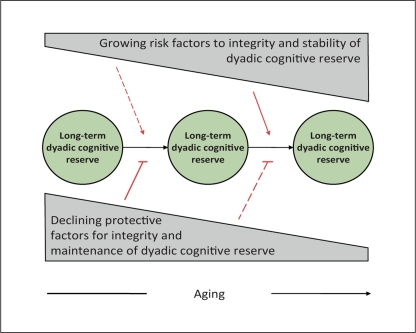
Among older adults, everyday competence is often expressed in the context of other participating individuals. Although this active human context may be occasionally comprised of mere acquaintances, long-term partners (such as couples) often act as a unit in engaging in everyday actions or reporting on familiar domains. This special section reflects an important movement in aging research to examine couples as an alternative but normatively common unit of analysis. My discussion focuses on 2 main issues. First, I sketch the rationale, logic, expectation and evidence that long-term couples might develop and display unique advantages in everyday competence. Second, I explore the possibilities that epidemiological principles - thus far applied primarily to individual-level aging, decline and disease - may provide concepts or models for research on long-term changes in couple-level adaptation.
Copyright © 2010 S. Karger AG, Basel.
Figures
References
-
- Hoppmann C, Gerstorf D, Luszcz M. Dyadic interrelations in lifespan development and aging: how does 1 + 1 make a couple? – Introduction. Gerontology. 2011;57:145–148. - PubMed
-
- Blieszner R. Introduction: challenges and resilience among later life couples. Generations. 2007;31:6–9.
-
- Berg CA, Wiebe DJ, Butner J. Affect covariation in marital couples dealing with stressors surrounding prostate cancer. Gerontology. 2011;57:168–173. - PubMed
-
- Rauers A, Riediger M, Schmiedek F, Lindenberger U. With a little help from my spouse: does spousal collaboration compensate for the effects of cognitive aging? Gerontology. 2011;57:162–167. - PubMed
Publication types
MeSH terms
Grants and funding
LinkOut - more resources
Full Text Sources
Medical
