


Treatment of patients with diabetic gastroparesis
- PMID: 20733935
- PMCID: PMC2920593
Treatment of patients with diabetic gastroparesis
Abstract
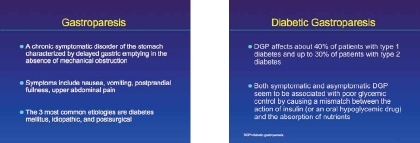
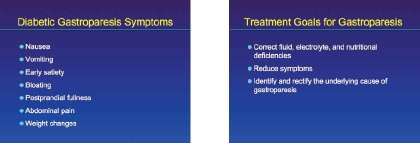
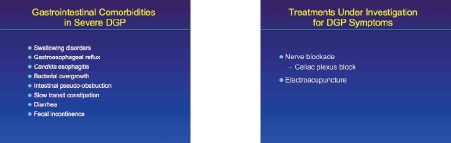
Gastroparesis, or chronic delayed gastric emptying without mechanical obstruction, affects about 40% of patients with type 1 diabetes and up to 30% of patients with type 2 diabetes. Diabetic gastroparesis (DGP) typically causes nausea, vomiting, early satiety, bloating, and postprandial fullness. These symptoms can be extremely troubling and result in poor quality of life. The diagnosis of DGP is made by documenting the presence of chronic upper gastrointestinal (GI) symptoms, ruling out mechanical obstruction, and demonstrating delayed gastric emptying. The usual treatment for DGP includes dietary modifications, prokinetic agents, and antiemetic agents. Although the majority of patients have mild-to-moderate disease that can be managed using these measures, a substantial percentage of patients have severe DGP that is characterized by inadequate oral intake, malnutrition, weight loss, and frequent hospitalizations. Optimal management of these patients presents a difficult challenge for the clinician, although emerging treatment options, such as gastric neurostimulation, are encouraging. Patients with DGP often present with gastric comorbidities, including gastroesophageal reflux disease, intestinal dysmotility, and fungal and bacterial infections of the GI tract. This monograph will present an overview of the pathophysiology of DGP, review diagnostic testing with a discussion of emerging technology, and present the latest research in treatment options for DGP. In addition, management strategies for refractory DGP and gastric comorbidities will be described.
Conflict of interest statement
The faculty reported the following financial relationships or relationships to products or devices they or their spouse/life partner have with commercial interests related to the content of this CME activity:
The following PIM planners and managers, Jan Hixon, RN, BSN, MA, Trace Hutchison, PharmD, Julia Kimball, RN, BSN, Samantha Mattiucci, PharmD, Jan Schultz, RN, MSN, CCMEP, and Patricia Staples, MSN, NP-C, CCRN, hereby state that they or their spouse/life partner do not have any financial relationships or relationships to products or devices with any commercial interest related to the content of this activity of any amount during the past 12 months. Jacquelyn Matos: No real or apparent conflicts of interest.
Figures

References
-
- Jones KL, Russo A, Stevens JE, et al. Predictors of delayed gastric emptying in diabetes. Diabetes Care. 2001;24:1264–1269. - PubMed
-
- Lyrenås EB, Olsson EH, Arvidsson UC, et al. Prevalence and determinants of solid and liquid gastric emptying in unstable type I diabetes. Relationship to postprandial blood glucose concentrations. Diabetes Care. 1997;20:413–418. - PubMed
-
- Horowitz M, Harding PE, Maddox AF, et al. Gastric and oesophageal emptying in patients with type 2 (noninsulin-dependent) diabetes mellitus. Diabetologia. 1989;32:151–159. - PubMed
-
- Lyrenas E, Olsson E, Arvidsson U, et al. Prevalence and determinants of solid and liquid gastric emptying in unstable type 1 diabetes: relationship to postprandial blood glucose concentrations. Diabetes Care. 1997;20:413–418. - PubMed
LinkOut - more resources
Full Text Sources
Other Literature Sources