


Case Reports
The use of a self-expandable plastic stent for an iatrogenic esophageal perforation
Affiliations
- PMID: 20733943
- PMCID: PMC2920591
Item in Clipboard
Case Reports
The use of a self-expandable plastic stent for an iatrogenic esophageal perforation
Gastroenterol Hepatol (N Y).
2010 Jun.
No abstract available
Figures
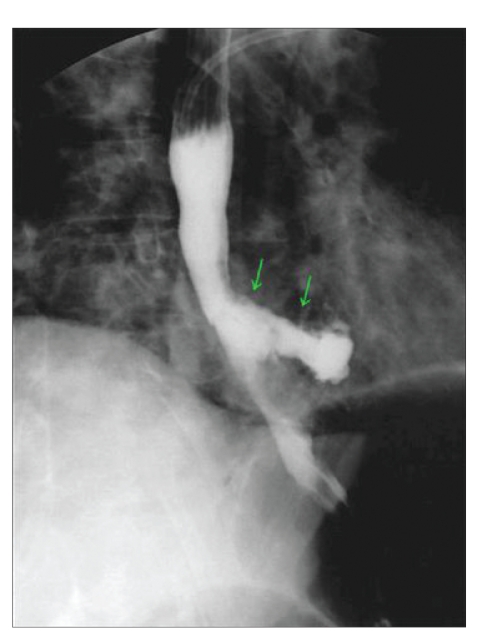
Barium esophagogram revealing a perforation in the distal esophagus.
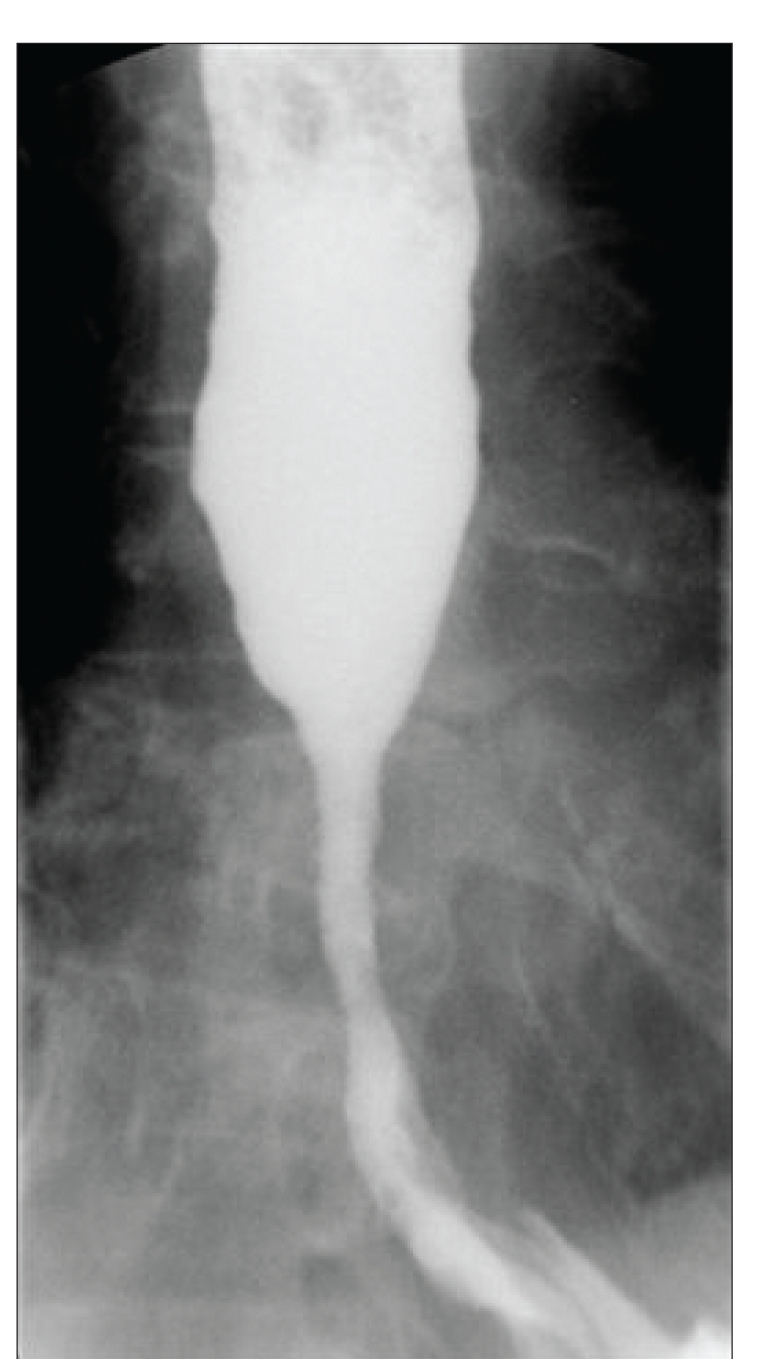
Follow-up esophagogram obtained 1 month after Polyflex stent removal.
References
-
- Papachristou GI, Baron TH. Use of stents in benign and malignant esophageal disease. Rev Gastroenterol Disord. 2007;7:74–88. - PubMed
-
- Freeman RK, Ascioti AJ, Wozniak TC. Postoperative esophageal leak management with the Polyflex esophageal stent. J Thorac Cardiovasc Surg. 2007;133:333–338. - PubMed
-
- Gelbmann CM, Ratiu NL, Rath HC, et al. Use of self-expandable plastic stents for the treatment of esophageal perforations and symptomatic anastomotic leaks. Endoscopy. 2004;36:695–699. - PubMed
-
- Fukumoto R, Orlina J, McGinty J, Teixeira J. Use of Polyflex stents in treatment of acute esophageal and gastric leaks after bariatric surgery. Surg Obes Relat Dis. 2007;3:68–71. - PubMed
-
- Repici A, Conio M, De Angelis C, et al. Temporary placement of an expandable polyester silicone-covered stent for treatment of refractory benign esophageal strictures. Gastrointest Endosc. 2004;60:513–519. - PubMed
Publication types
LinkOut - more resources
Full Text Sources