


Epoxyeicosatrienoic acids and soluble epoxide hydrolase: potential therapeutic targets for inflammation and its induced carcinogenesis
- PMID: 20733953
- PMCID: PMC2923867
Epoxyeicosatrienoic acids and soluble epoxide hydrolase: potential therapeutic targets for inflammation and its induced carcinogenesis
Abstract
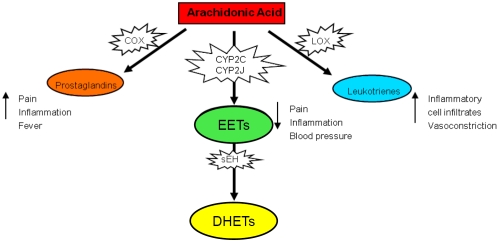
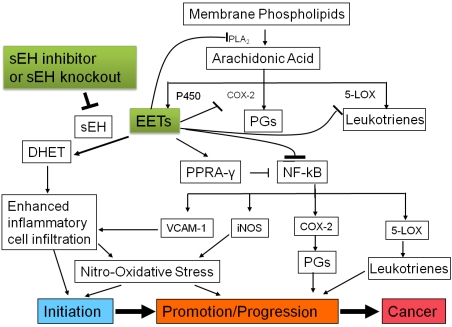
Chronic inflammation is an important factor contributing to human carcinoma, and non-steroidal anti-inflammatory drugs (NSAIDs) have been shown to have a preventive effect in the development of various types of carcinoma. However, NSAIDs also have adverse side effects including increased cardiovascular events, making them less than ideal for routine chemoprevention. Soluble epoxide hydrolase (sEH) is an enzyme that converts endogenous anti-inflammatory compounds, the epoxyeicosatrienoic acids (EETs), to the less anti-inflammatory dihydroxyeicosatrienoic acids (DHETs). Inhibition of sEH, by a highly selective and potent sEH inhibitor (sEHI), increases EETs leading to decreased inflammation. In our studies, administration of a sEHI in mouse colitis models led to decreased ulcer incidence and number of ulcers compared to controls, with no adverse side effects seen. In human tissue, sEH showed an increase in expression, as seen immunohistochemically, in ulcerative colitis (UC), UC-induced dysplasia, and UC-induced carcinoma. Thus, inhibition of sEH may be a novel biomarker and potential therapeutic target in inflammation and inflammation-induced carcinoma.
Keywords: Epoxyeicosatrienoic acids (EETs); cancer; carcinogenesis; dihydroxyeicosatrienoic acids (DHETs); inflammation; non-steroidal anti-inflammatory drugs (NSAIDs); soluble epoxide hydrolase (sEH); therapy.
Figures

References
-
- Fretland AJ, Omiecinski CJ. Epoxide hydrolases: biochemistry and molecular biology. Chemico-Biological Interactions. 2000;129:41–59. - PubMed
-
- Sandberg M, Meijer J. Structural characterization of the human soluble epoxide hydrolase gene (EPHX2) Biochem Biophys Res Commun. 1996;221:333–339. - PubMed
-
- Larsson C, White I, Johansson C, Stark A, Meijer J. Localization of the human soluble epoxide hydrolase gene (EPHX2) to chromosomal region 8p21-p12. Hum Genet. 1995;95:356–358. - PubMed
Grants and funding
LinkOut - more resources
Full Text Sources
Other Literature Sources