


Beyond incontinence: the stigma of other urinary symptoms
- PMID: 20735505
- PMCID: PMC3032268
- DOI: 10.1111/j.1365-2648.2010.05422.x
Beyond incontinence: the stigma of other urinary symptoms
Abstract
Aim: This paper is a report of a study conducted to characterize the stigma of urinary frequency and urgency and differentiate it from the stigma of incontinence and to describe race/ethnic and gender differences in the experience of stigma among a diverse sample of individuals.
Background: Lower urinary tract symptoms, including frequency, urgency and incontinence, are susceptible to stigma, but previous stigma research has focused almost exclusively on incontinence.
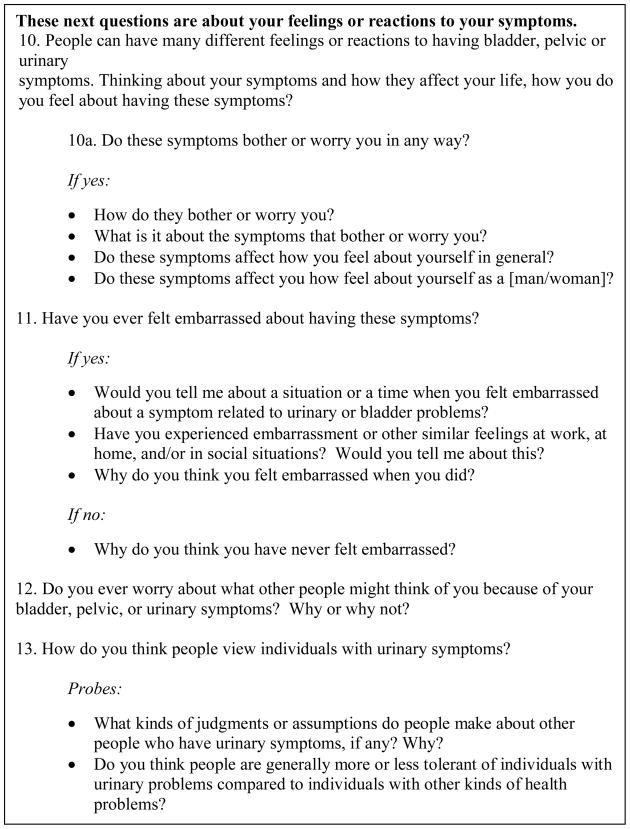
Method: The Boston Area Community Health Survey is a population-based, random sample epidemiological survey of urologic symptoms (N = 5503). Qualitative data for this study came from in-depth interviews conducted between 2007 and 2008 with a random subsample of 151 black, white and Hispanic men and women with urinary symptoms.
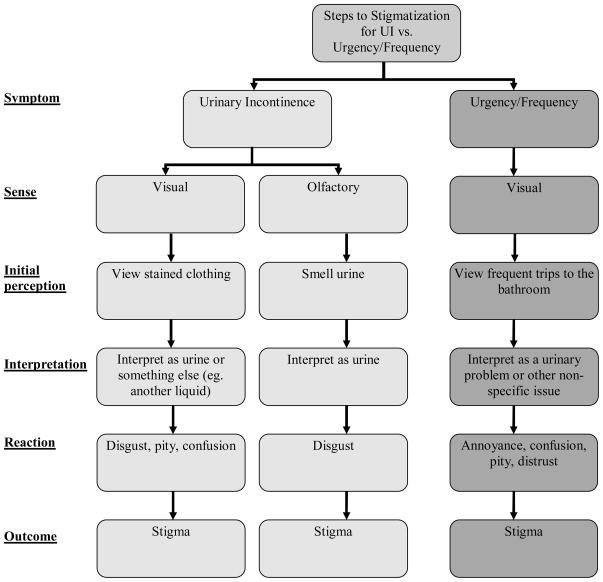
Findings: Respondents reported stigma associated with frequency and urgency - not just incontinence. The stigma of frequency/urgency is rooted in social interruption, loss of control of the body, and speculation as to the nature of a non-specific 'problem'. Overall, the stigma of urinary symptoms hinged upon whether or not the problem was 'perceptible'. Men felt stigmatized for making frequent trips to the bathroom and feared being seen as impotent. Women feared having an unclean body or compromised social identity. Hispanic people in particular voiced a desire to keep their urinary symptoms a secret.
Conclusion: The stigma of urinary symptoms goes beyond incontinence to include behaviours associated with frequency and urgency. Healthcare practitioners should assess for stigma sequelae (e.g. anxiety, depression) in individuals with frequency and urgency, and stress treatment options to circumvent stigmatization.
© 2010 The Authors. Journal of Advanced Nursing © 2010 Blackwell Publishing Ltd.
Figures
References
-
- Abrams P, Cardozo L, Fall M, Griffiths D, Rosier P, Ulmsten U, Van Kerrebroeck P, Victor A, Wein A. The standardisation of terminology in lower urinary tract function: report from the standardisation sub-committee of the International Continence Society. Urology. 2003;61(1):37–49. - PubMed
-
- Anglin DM, Link BG, Phelan JC. Racial differences in stigmatizing attitudes toward people with mental illness. Psychiatr Serv. 2006;57(6):857–62. - PubMed
-
- Barry MJ, Link CL, McNaughton-Collins MF, McKinlay JB. Overlap of different urological symptom complexes in a racially and ethnically diverse, community-based population of men and women. BJU Int. 2008;101(1):45–51. - PubMed
-
- Brittain KR, Shaw C. The social consequences of living with and dealing with incontinence--a carers perspective. Soc Sci Med. 2007;65(6):1274–83. - PubMed
-
- Chiverton PA, Wells TJ, Brink CA, Mayer R. Psychological factors associated with urinary incontinence. Clin Nurse Spec. 1996;10(5):229–33. - PubMed
Publication types
MeSH terms
Grants and funding
LinkOut - more resources
Full Text Sources
Medical
