Aberrant silencing of cancer-related genes by CpG hypermethylation occurs independently of their spatial organization in the nucleus
- PMID: 20736368
- PMCID: PMC3031132
- DOI: 10.1158/0008-5472.CAN-10-0765
Aberrant silencing of cancer-related genes by CpG hypermethylation occurs independently of their spatial organization in the nucleus
Abstract
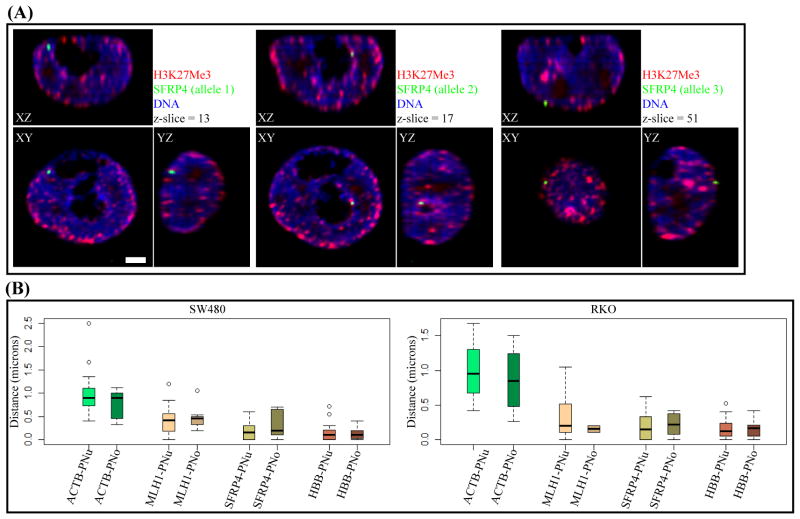
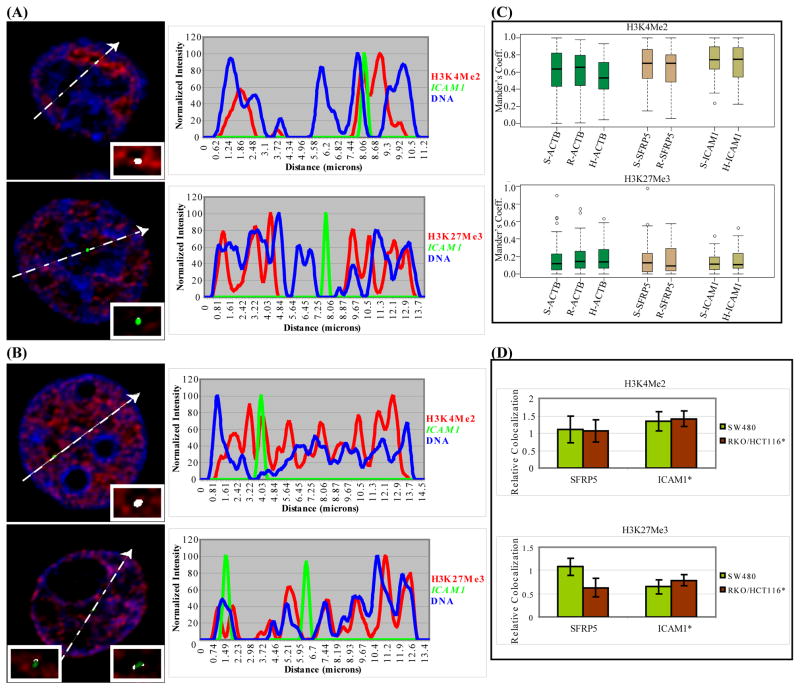
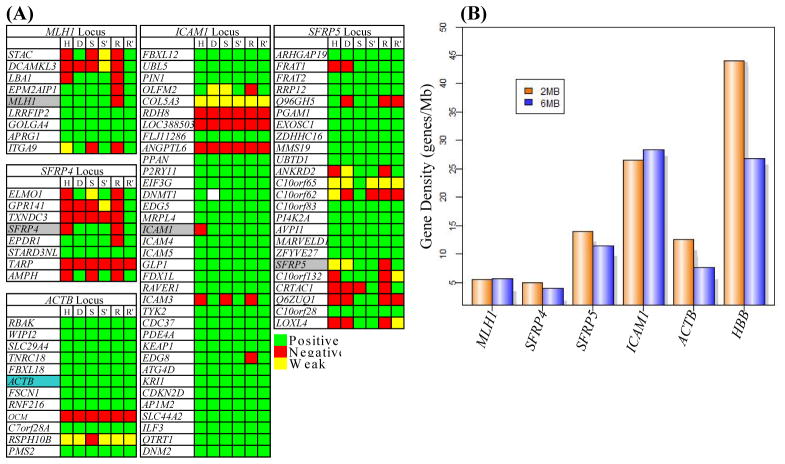
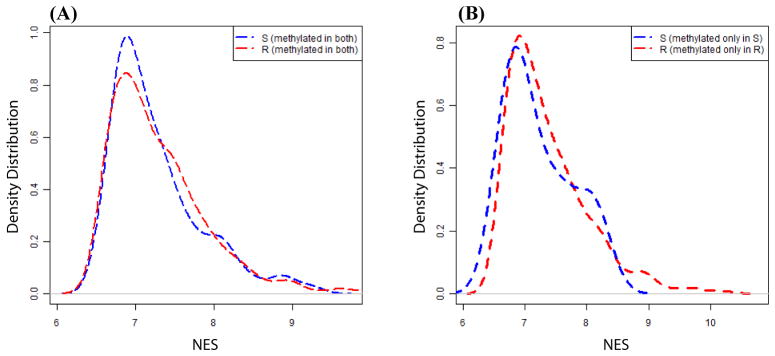
Aberrant promoter DNA-hypermethylation and repressive chromatin constitutes a frequent mechanism of gene inactivation in cancer. There is great interest in dissecting the mechanisms underlying this abnormal silencing. Studies have shown changes in the nuclear organization of chromatin in tumor cells as well as the association of aberrant methylation with long-range silencing of neighboring genes. Furthermore, certain tumors show a high incidence of promoter methylation termed as the CpG island methylator phenotype. Here, we have analyzed the role of nuclear chromatin architecture for genes in hypermethylated inactive versus nonmethylated active states and its relation with long-range silencing and CpG island methylator phenotype. Using combined immunostaining for active/repressive chromatin marks and fluorescence in situ hybridization in colorectal cancer cell lines, we show that aberrant silencing of these genes occurs without requirement for their being positioned at heterochromatic domains. Importantly, hypermethylation, even when associated with long-range epigenetic silencing of neighboring genes, occurs independent of their euchromatic or heterochromatic location. Together, these results indicate that, in cancer, extensive changes around promoter chromatin of individual genes or gene clusters could potentially occur locally without preference for nuclear position and/or causing repositioning. These findings have important implications for understanding relationships between nuclear organization and gene expression patterns in cancer.
Figures

References
-
- McGarvey KM, Fahrner JA, Greene E, Martens J, Jenuwein T, Baylin SB. Silenced tumor suppressor genes reactivated by DNA demethylation do not return to a fully euchromatic chromatin state. Cancer Res. 2006;66:3541–9. - PubMed
-
- Bender CM, Pao MM, Jones PA. Inhibition of DNA methylation by 5-aza-2′-deoxycytidine suppresses the growth of human tumor cell lines. Cancer Res. 1998;58:95–101. - PubMed
-
- Egger G, Aparicio AM, Escobar SG, Jones PA. Inhibition of histone deacetylation does not block resilencing of p16 after 5-aza-2′-deoxycytidine treatment. Cancer Res. 2007;67:346–53. - PubMed
Publication types
MeSH terms
Substances
Grants and funding
LinkOut - more resources
Full Text Sources
Other Literature Sources
Molecular Biology Databases