


Disulfiram attenuates drug-primed reinstatement of cocaine seeking via inhibition of dopamine β-hydroxylase
- PMID: 20736996
- PMCID: PMC2956132
- DOI: 10.1038/npp.2010.127
Disulfiram attenuates drug-primed reinstatement of cocaine seeking via inhibition of dopamine β-hydroxylase
Abstract
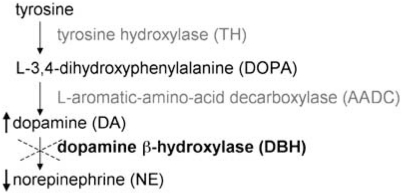
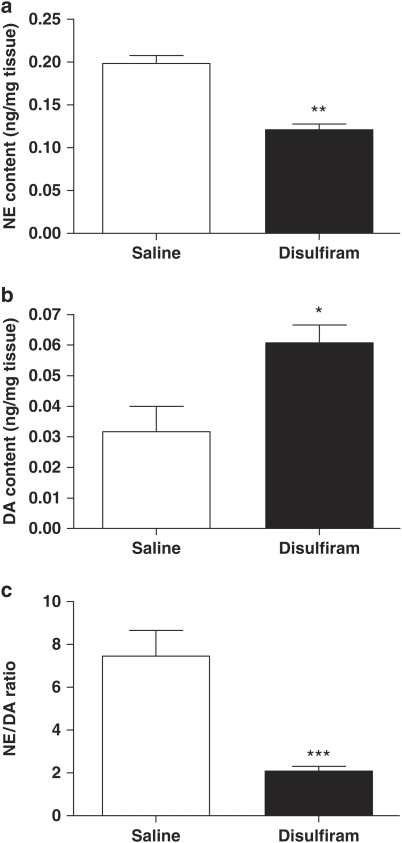
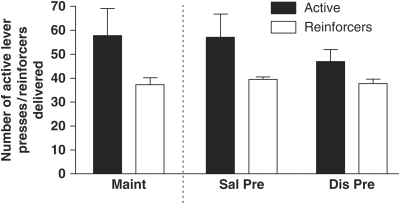
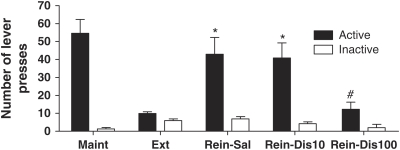
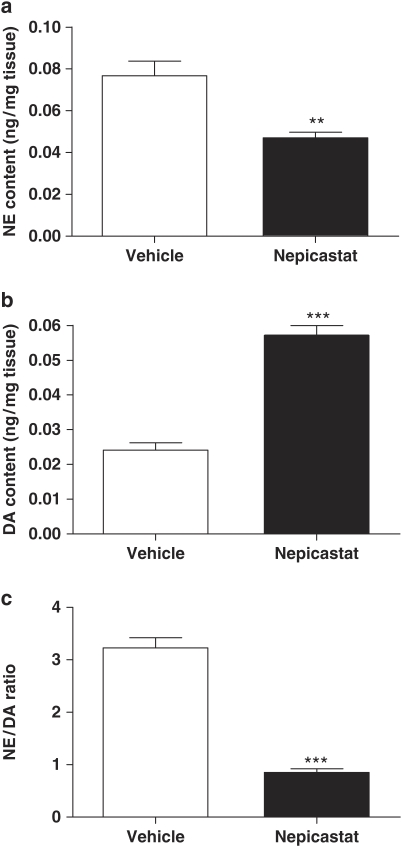
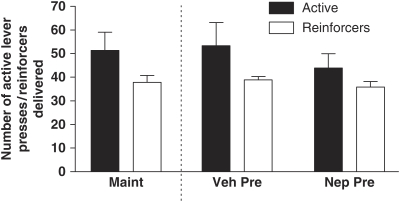
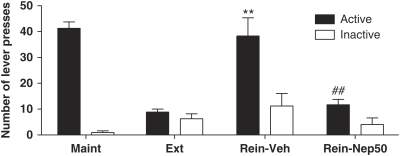
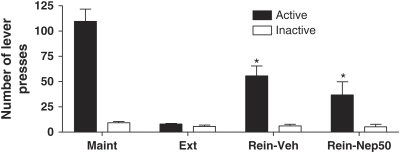
The antialcoholism medication disulfiram (Antabuse) inhibits aldehyde dehydrogenase (ALDH), which results in the accumulation of acetaldehyde upon ethanol ingestion and produces the aversive 'Antabuse reaction' that deters alcohol consumption. Disulfiram has also been shown to deter cocaine use, even in the absence of an interaction with alcohol, indicating the existence of an ALDH-independent therapeutic mechanism. We hypothesized that disulfiram's inhibition of dopamine β-hydroxylase (DBH), the catecholamine biosynthetic enzyme that converts dopamine (DA) to norepinephrine (NE) in noradrenergic neurons, underlies the drug's ability to treat cocaine dependence. We tested the effects of disulfiram on cocaine and food self-administration behavior and drug-primed reinstatement of cocaine seeking in rats. We then compared the effects of disulfiram with those of the selective DBH inhibitor, nepicastat. Disulfiram, at a dose (100 mg/kg, i.p.) that reduced brain NE by ∼40%, did not alter the response for food or cocaine on a fixed ratio 1 schedule, whereas it completely blocked cocaine-primed (10 mg/kg, i.p.) reinstatement of drug seeking following extinction. A lower dose of disulfiram (10 mg/kg) that did not reduce NE had no effect on cocaine-primed reinstatement. Nepicastat recapitulated the behavioral effects of disulfiram (100 mg/kg) at a dose (50 mg/kg, i.p.) that produced a similar reduction in brain NE. Food-primed reinstatement of food seeking was not impaired by DBH inhibition. Our results suggest that disulfiram's efficacy in the treatment of cocaine addiction is associated with the inhibition of DBH and interference with the ability of environmental stimuli to trigger relapse.
Figures
References
-
- Bourdélat-Parks BN, Anderson GM, Donaldson ZR, Weiss JM, Bonsall RW, Emery MS, et al. Effects of dopamine beta-hydroxylase genotype and disulfiram inhibition on catecholamine homeostasis in mice. Psychopharmacology (Berl) 2005;183:72–80. - PubMed
-
- Brown ZJ, Tribe E, D'souza NA, Erb S. Interaction between noradrenaline and corticotrophin-releasing factor in the reinstatement of cocaine seeking in the rat. Psychopharmacology (Berl) 2009;203:121–130. - PubMed
-
- Carroll KM, Nich C, Ball SA, McCance E, Frankforter TL, Rounsaville BJ. One-year follow-up of disulfiram and psychotherapy for cocaine-alcohol users: sustained effects of treatment. Addiction. 2000;95:1335–1349. - PubMed
Publication types
MeSH terms
Substances
Grants and funding
- R01 EY004864/EY/NEI NIH HHS/United States
- P30 EY006360/EY/NEI NIH HHS/United States
- DA027535/DA/NIDA NIH HHS/United States
- R01 DA017963/DA/NIDA NIH HHS/United States
- F31 DA019746/DA/NIDA NIH HHS/United States
- DA25040/DA/NIDA NIH HHS/United States
- T32 DA015040/DA/NIDA NIH HHS/United States
- R01 DA027535/DA/NIDA NIH HHS/United States
- F31 DA033091/DA/NIDA NIH HHS/United States
- DA015040/DA/NIDA NIH HHS/United States
- P30 EY06360/EY/NEI NIH HHS/United States
- EY004864/EY/NEI NIH HHS/United States
- F31 DA025040/DA/NIDA NIH HHS/United States
- DA017963/DA/NIDA NIH HHS/United States
- DA019746/DA/NIDA NIH HHS/United States
LinkOut - more resources
Full Text Sources
Other Literature Sources
Miscellaneous
