


Regulation of complement by cartilage oligomeric matrix protein allows for a novel molecular diagnostic principle in rheumatoid arthritis
- PMID: 20737467
- PMCID: PMC4576017
- DOI: 10.1002/art.27720
Regulation of complement by cartilage oligomeric matrix protein allows for a novel molecular diagnostic principle in rheumatoid arthritis
Abstract
Objective: Cartilage oligomeric matrix protein (COMP) is a structural component of cartilage, where it catalyzes collagen fibrillogenesis. Elevated amounts of COMP are found in serum during increased turnover of cartilage associated with active joint disease, such as rheumatoid arthritis (RA) and osteoarthritis (OA). This study was undertaken to investigate the ability of COMP to regulate complement, a capacity that has previously been shown for some other cartilage proteins.
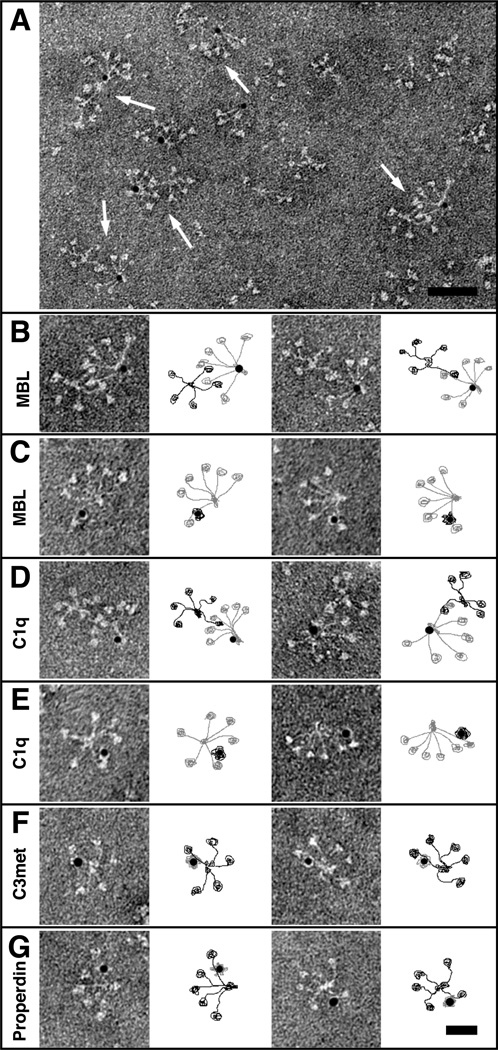
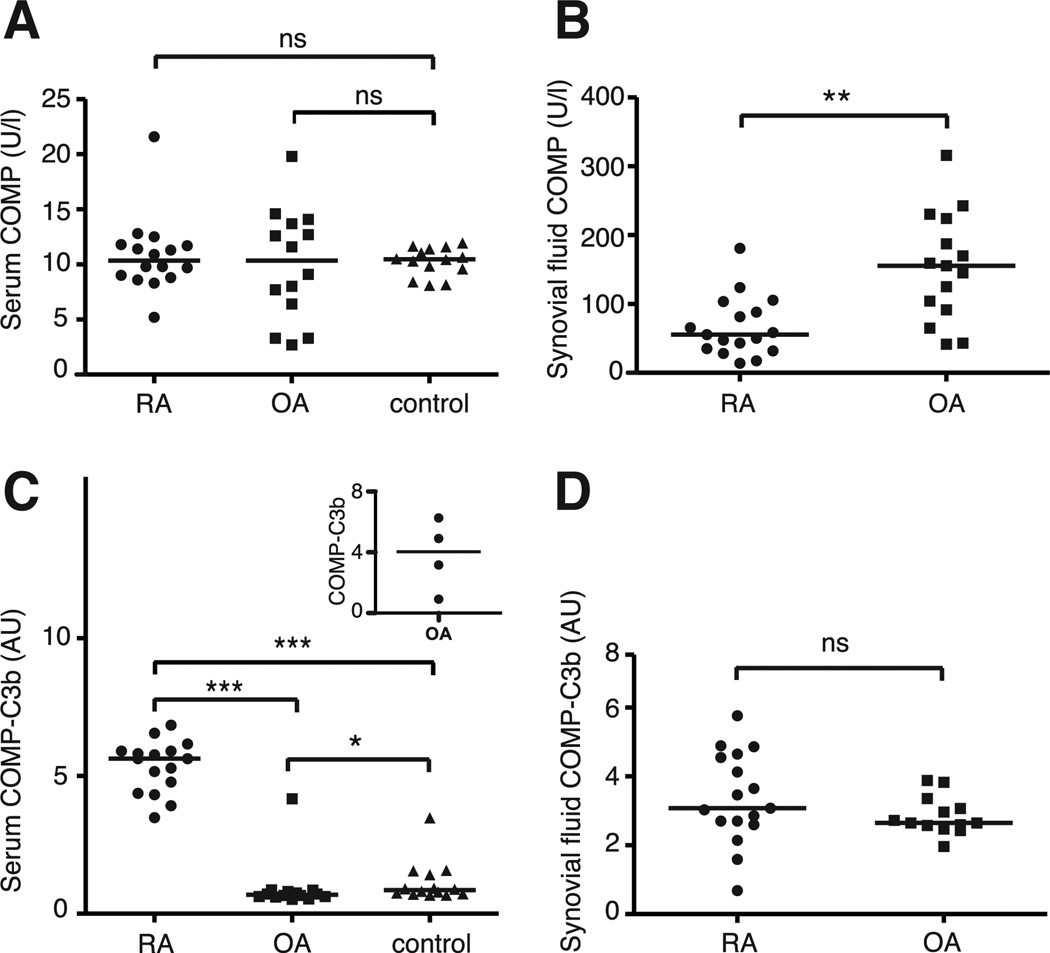
Methods: Regulation of complement by COMP was studied using functional in vitro assays. Inter-actions between complement proteins and COMP were investigated by direct binding assay and electron microscopy. Circulating COMP and COMP-C3b complexes in serum and synovial fluid from RA and OA patients and healthy controls were measured with a novel enzyme-linked immunosorbent assay.
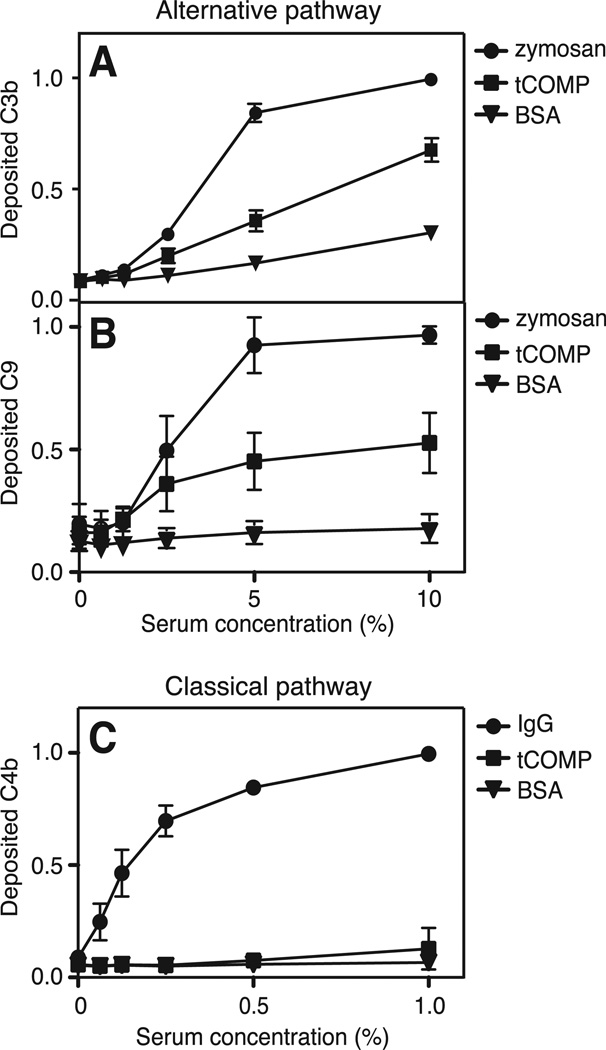
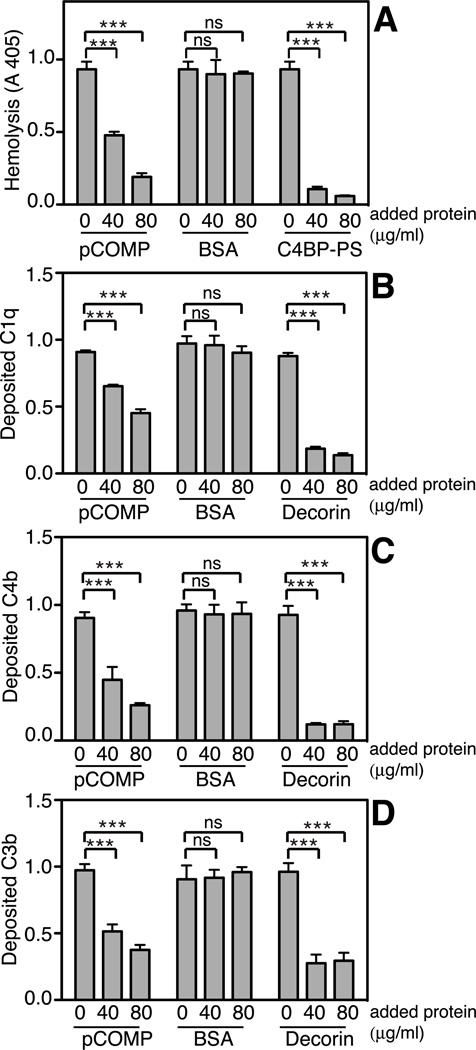
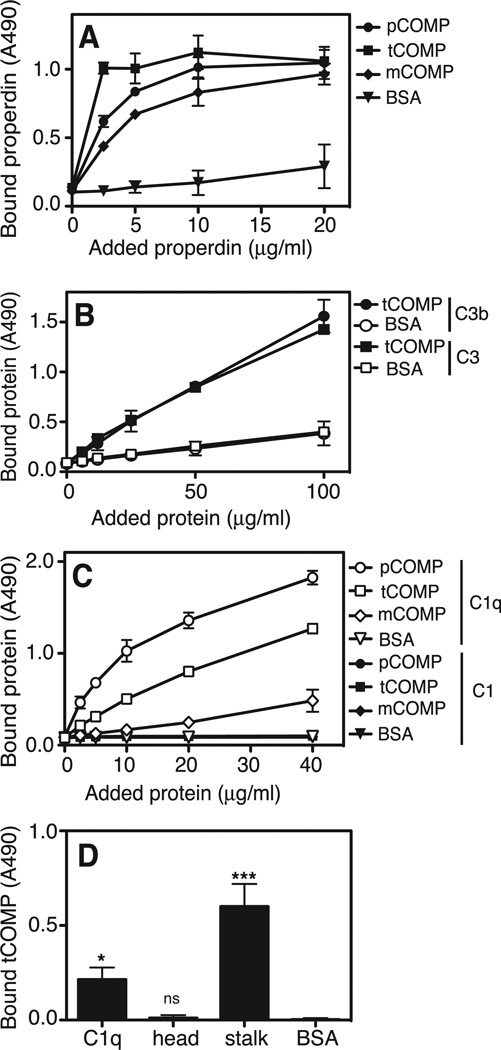
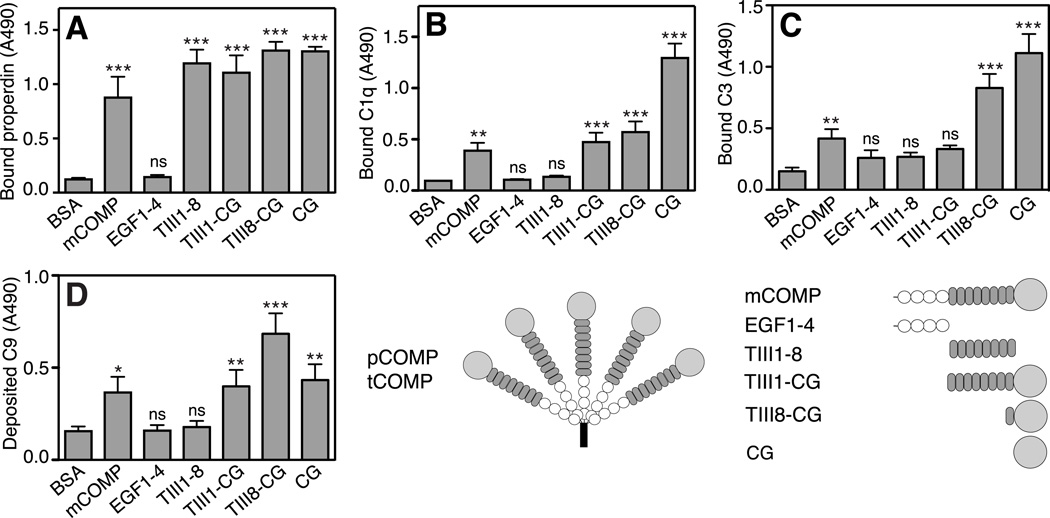
Results: We found in vivo evidence of complement activation by released COMP in the general circulation of patients with RA, but not patients with OA. COMP induced activation and deposition of C3b and C9 specifically via the alternative pathway of complement, which was attributable to direct interaction between COMP and properdin. Furthermore, COMP inhibited the classical and the lectin complement pathways due to direct interaction with the stalk region of C1q and mannose-binding lectin, respectively.
Conclusion: COMP is the first extracellular matrix protein for which an active role in inflammation has been demonstrated in vivo. It can activate one complement pathway at the same time as it has the potential to inhibit another. The net outcome of these interactions is most likely determined by the type of released COMP fragments, which may be disease specific.
Copyright © 2010 by the American College of Rheumatology.
Figures
References
-
- Hedbom E, Antonsson P, Hjerpe A, Aeschlimann D, Paulsson M, Rosa-Pimentel E, et al. Cartilage matrix proteins. An acidic oligomeric protein (COMP) detected only in cartilage. J Biol Chem. 1992;267(9):6132–6136. - PubMed
-
- Smith RK, Zunino L, Webbon PM, Heinegård D. The distribution of cartilage oligomeric matrix protein (COMP) in tendon and its variation with tendon site, age and load. Matrix Biol. 1997;16(5):255–271. - PubMed
-
- DiCesare P, Hauser N, Lehman D, Pasumarti S, Paulsson M. Cartilage oligomeric matrix protein (COMP) is an abundant component of tendon. FEBS Lett. 1994;354(2):237–240. - PubMed
-
- Dodge GR, Hawkins D, Boesler E, Sakai L, Jimenez SA. Production of cartilage oligomeric matrix protein (COMP) by cultured human dermal and synovial fibroblasts. Osteoarthritis Cartilage. 1998;6(6):435–440. - PubMed
-
- Saxne T, Heinegård D. Cartilage oligomeric matrix protein: a novel marker of cartilage turnover detectable in synovial fluid and blood. Br J Rheumatol. 1992;31(9):583–591. - PubMed
Publication types
MeSH terms
Substances
Grants and funding
LinkOut - more resources
Full Text Sources
Other Literature Sources
Medical
Research Materials
Miscellaneous
