


Integration of planar cell polarity and ECM signaling in elongation of the vertebrate body plan
- PMID: 20739170
- PMCID: PMC4510957
- DOI: 10.1016/j.ceb.2010.07.012
Integration of planar cell polarity and ECM signaling in elongation of the vertebrate body plan
Abstract
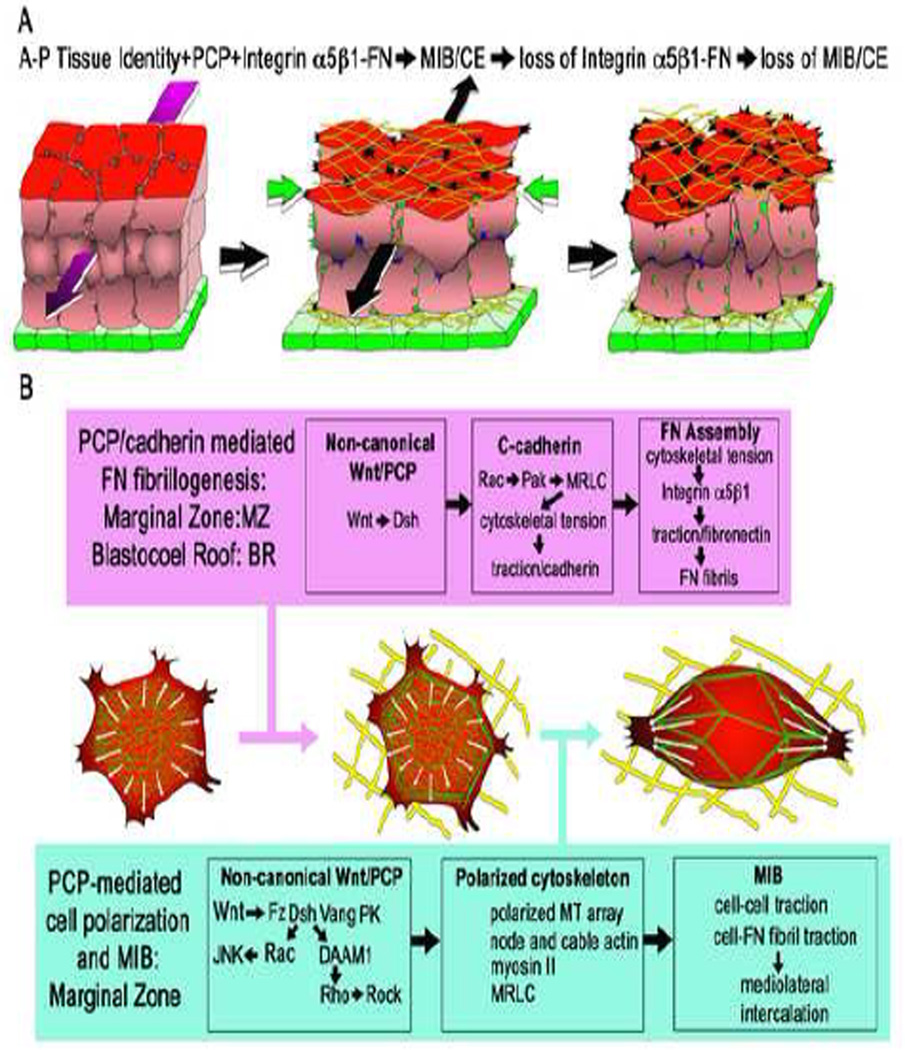
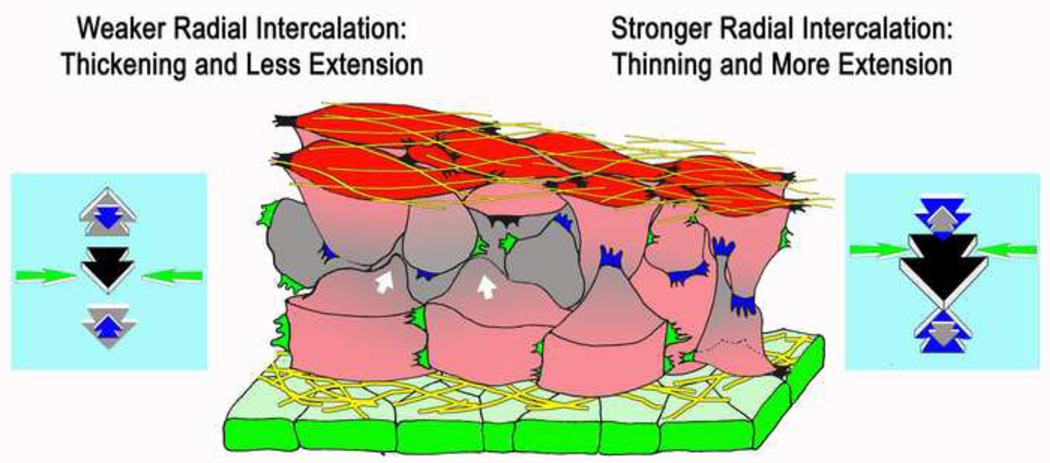
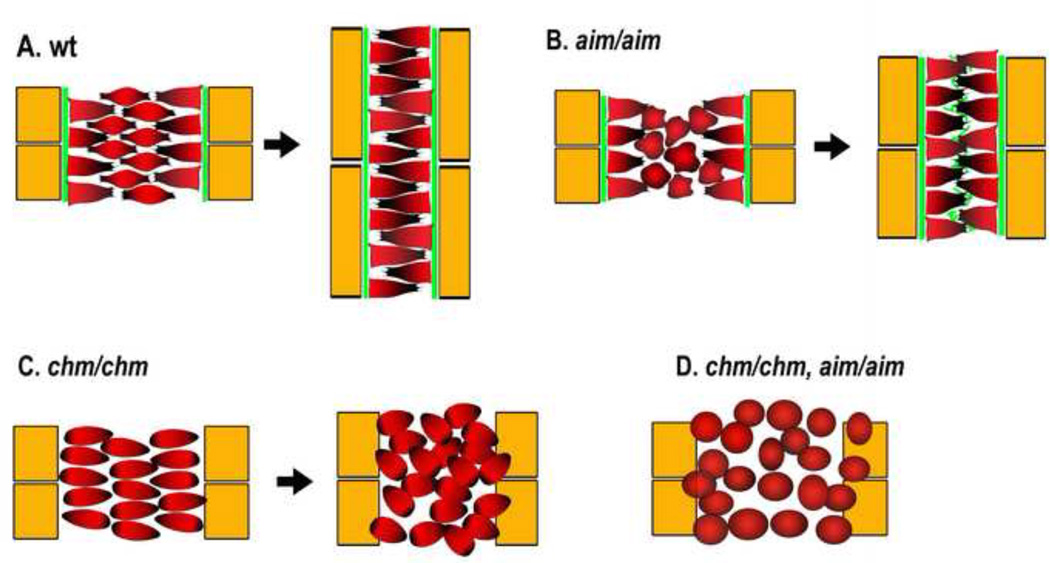
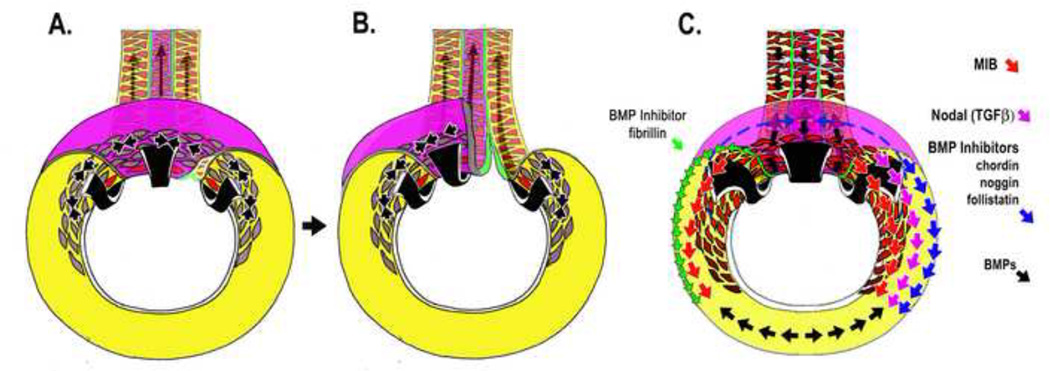
The shaping of the vertebrate embryonic body plan depends heavily on the narrowing and lengthening (convergence and extension) of embryonic tissues by cell intercalation, a process by which cells actively crawl between one another along the axis of convergence to produce a narrower, longer array. We discuss recent evidence that the vertebrate non-canonical Wnt/Planar Cell Polarity (PCP) pathway, known to directly function in polarizing the movements of intercalating cells, is also involved in the localized assembly of extracellular matrix (ECM). These cell-ECM interactions, in turn, are necessary for expression of the oriented, polarized cell intercalation. The mechanism of PCP/ECM interactions, their molecular signaling, and their mechanical consequences for morphogenesis are discussed with the goal of identifying important unsolved issues.
Copyright © 2010 Elsevier Ltd. All rights reserved.
Figures
References
-
- Shih J, Keller R. Cell motility driving mediolateral intercalation in explants of Xenopus laevis. Development. 1992;116:901–914. - PubMed
-
- Ninomiya H, Elinson RP, Winklbauer R. Antero-posterior tissue polarity links mesoderm convergent extension to axial patterning. Nature. 2004;430:364–367. - PubMed
-
- Wallingford JB, Rowning BA, Vogeli KM, Rothbacher U, Fraser SE, Harland RM. Dishevelled controls cell polarity during Xenopus gastrulation. Nature. 2000;405:81–85. - PubMed
Publication types
MeSH terms
Substances
Grants and funding
LinkOut - more resources
Full Text Sources
