doi: 10.7812/TPP/09-055.
Gastric antral vascular ectasia (watermelon stomach)-an enigmatic and often-overlooked cause of gastrointestinal bleeding in the elderly
Affiliations
- PMID: 20740102
- PMCID: PMC2911825
- DOI: 10.7812/TPP/09-055
Item in Clipboard
Gastric antral vascular ectasia (watermelon stomach)-an enigmatic and often-overlooked cause of gastrointestinal bleeding in the elderly
Perm J.
2009 Fall.
Abstract
Gastric antral vascular ectasia (GAVE) syndrome, also known as watermelon stomach is a significant cause of acute or chronic gastrointestinal blood loss in the elderly. is characterized endoscopically by "watermelon stripes." Without cirrhosis, patients are 71% female, average age 73, presenting with occult blood loss leading to transfusion-dependent chronic iron-deficiency anemia, severe acute upper gastrointestinal bleeding, and nondescript abdominal pain.
Figures
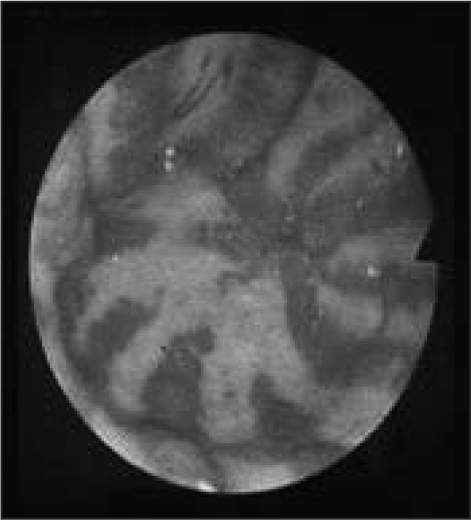
Endoscopic appearance of watermelon stomach.
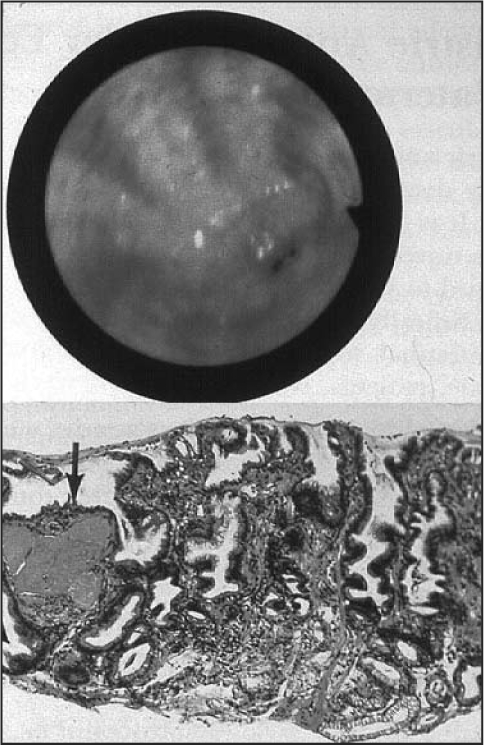
An alternate endo-scopic appearance of watermelon stomach.
References
-
- Rider JA, Klotz AP, Kirshner JB. Gastritis with veno-capillary ectasia as a source of massive gastric hemorrhage. Gastro-enterology. 1953 May;24(1):118–23. - PubMed
-
- Selinger CP, Ang YS. Gastric antral vascular ectasia (GAVE): an update on clinical presentation, pathophysiology and treatment. Digestion. 2008;77(2):131–7. - PubMed
-
- Stefandis I, Liakopoulos V, Kapsoritakis AN, et al. Gastric antral vascular ectasia (watermelon stomach) in patients with ESRD. Am J Kidney Dis. 2006 Jun;47(6):e77–82. - PubMed
-
- Novitsky YW, Kercher KW, Czerniach DR, Litwin DE. Watermelon stomach: pathophysiology, diagnosis, and management. J Gastrointest Surg. 2003 Jul-Aug;7(5):652–61. - PubMed
-
- Quintero E, Pique JM, Bombi JA, et al. Gastric mucosal vascular ectasias causing bleeding in cirrhosis. A distinct entity associated with hypergastrinemia and low serum levels of pepsinogen I. Gastroenterology. 1987 Nov;93(5):1054–61. - PubMed
LinkOut - more resources
Full Text Sources