


The effects of familism and cultural justification on the mental and physical health of family caregivers
- PMID: 20797972
- PMCID: PMC3031310
- DOI: 10.1093/geronb/gbq061
The effects of familism and cultural justification on the mental and physical health of family caregivers
Abstract
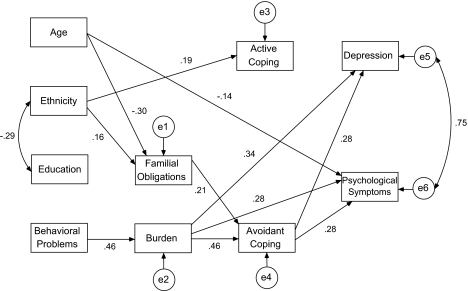
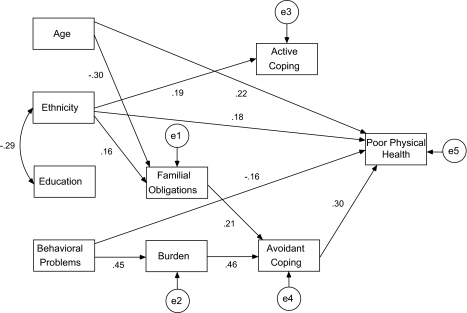
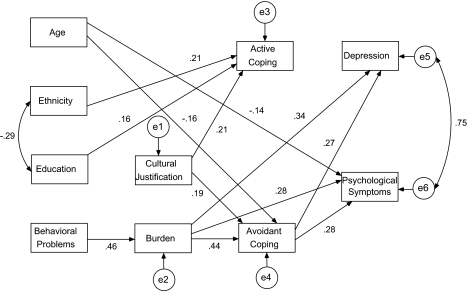
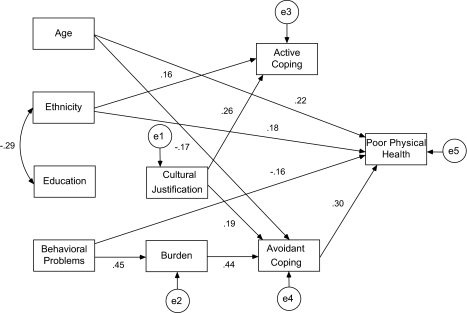
Objectives: We aimed to examine the effects of 2 factors of familism (Familial Obligations and Expected Support from the Family) and Cultural Justification on caregivers' mental and physical health as mediated by coping style.
Methods: We used a probability sample of 95 African American and 65 White family caregivers for people with dementia to test hypotheses based on the updated sociocultural stress and coping model using path analysis. Main outcome measures included depressive symptomatology, various psychological symptoms, and subjective physical health.
Results: Both Familial Obligations and Cultural Justification had an indirect effect on poor mental health and subjective physical health via avoidant coping. Expected Support from the Family had no effect on caregivers' health outcomes.
Discussion: These findings suggest that feelings of obligation may be accounting for a significant proportion of the negative effects of familism on caregivers' mental and subjective physical health. Expectations of familial social support may be relatively inconsequential in this process.
Figures
References
-
- Aranda MP, Knight BG. The influences of ethnicity and culture on the caregiver stress and coping process: A sociocultural review and analysis. The Gerontologist. 1997;37:342–354. - PubMed
-
- Bardis PD. A familism scale. Marriage and Family Living. 1959;21:340–341.
-
- Barusch AS, Spaid WM. Gender differences in caregiving: Why do wives report greater burden? The Gerontologist. 1989;29:667–676. - PubMed
-
- Bentler PM. On the fit of models of covariance and methodology to the Bulletin. Psychological Bulletin. 1992;112:400–404. - PubMed
-
- Benyamini Y, Blumstein T, Lusky A, Modan B. Gender differences in the self-rated health-mortality association: Is it poor self-rated health that predicts mortality or excellent self-rated health that predicts survival? The Gerontologist. 2003;43:396–405. - PubMed
Publication types
MeSH terms
Grants and funding
LinkOut - more resources
Full Text Sources
Medical
