


Epigenetic effects of polymorphic Y chromosomes modulate chromatin components, immune response, and sexual conflict
- PMID: 20798037
- PMCID: PMC2936610
- DOI: 10.1073/pnas.1010383107
Epigenetic effects of polymorphic Y chromosomes modulate chromatin components, immune response, and sexual conflict
Abstract
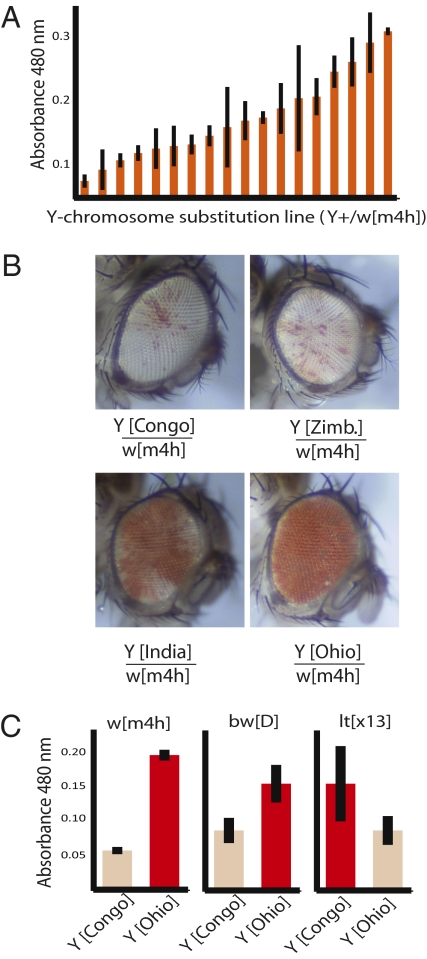
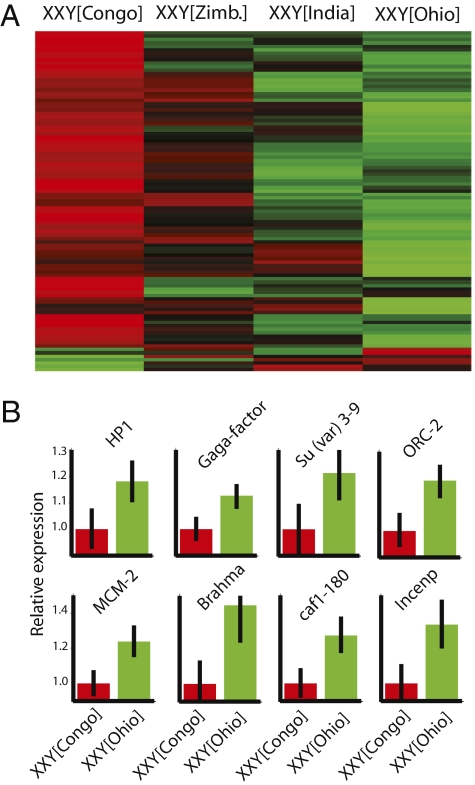
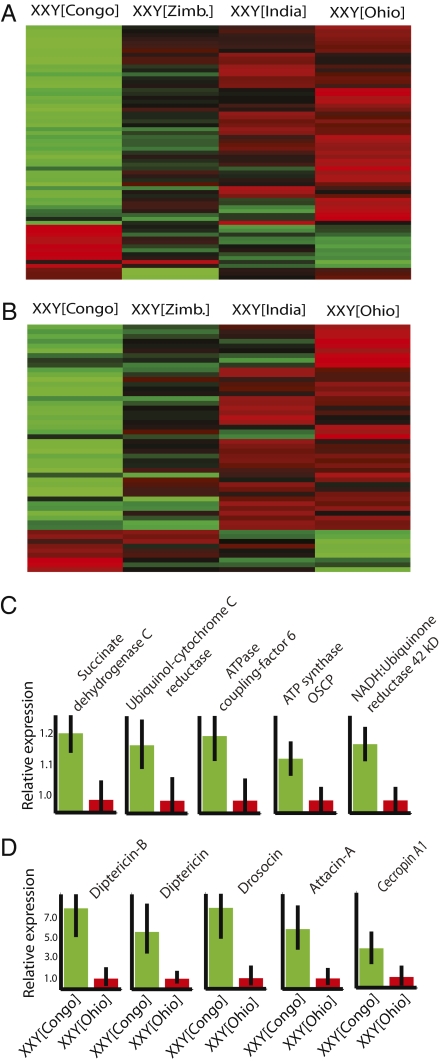
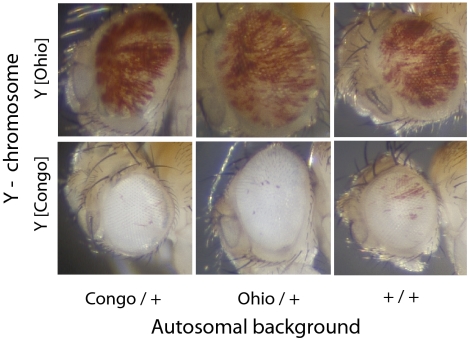
Genetic conflicts between sexes and generations provide a foundation for understanding the functional evolution of sex chromosomes and sexually dimorphic phenotypes. Y chromosomes of Drosophila contain multi-megabase stretches of satellite DNA repeats and a handful of protein-coding genes that are monomorphic within species. Nevertheless, polymorphic variation in heterochromatic Y chromosomes of Drosophila result in genome-wide gene expression variation. Here we show that such naturally occurring Y-linked regulatory variation (YRV) can be detected in somatic tissues and contributes to the epigenetic balance of heterochromatin/euchromatin at three distinct loci showing position-effect variegation (PEV). Moreover, polymorphic Y chromosomes differentially affect the expression of thousands of genes in XXY female genotypes in which Y-linked protein-coding genes are not transcribed. The data show a disproportionate influence of YRV on the variable expression of genes whose protein products localize to the nucleus, have nucleic-acid binding activity, and are involved in transcription, chromosome organization, and chromatin assembly. These include key components such as HP1, Trithorax-like (GAGA factor), Su(var)3-9, Brahma, MCM2, ORC2, and inner centromere protein. Furthermore, mitochondria-related genes, immune response genes, and transposable elements are also disproportionally affected by Y chromosome polymorphism. These functional clusterings may arise as a consequence of the involvement of Y-linked heterochromatin in the origin and resolution of genetic conflicts between males and females. Taken together, our results indicate that Y chromosome heterochromatin serves as a major source of epigenetic variation in natural populations that interacts with chromatin components to modulate the expression of biologically relevant phenotypic variation.
Conflict of interest statement
The authors declare no conflict of interest.
Figures
Comment in
-
Genetic variation: Y variants tip the chromatin balance.Nat Rev Genet. 2010 Oct;11(10):670-1. doi: 10.1038/nrg2874. Epub 2010 Sep 14. Nat Rev Genet. 2010. PMID: 20838409 No abstract available.
References
Publication types
MeSH terms
Substances
Associated data
- Actions
- Actions
Grants and funding
LinkOut - more resources
Full Text Sources
Molecular Biology Databases
Miscellaneous
