


Gigantic macroautophagy in programmed nuclear death of Tetrahymena thermophila
- PMID: 20798592
- PMCID: PMC3039737
- DOI: 10.4161/auto.6.7.13287
Gigantic macroautophagy in programmed nuclear death of Tetrahymena thermophila
Abstract
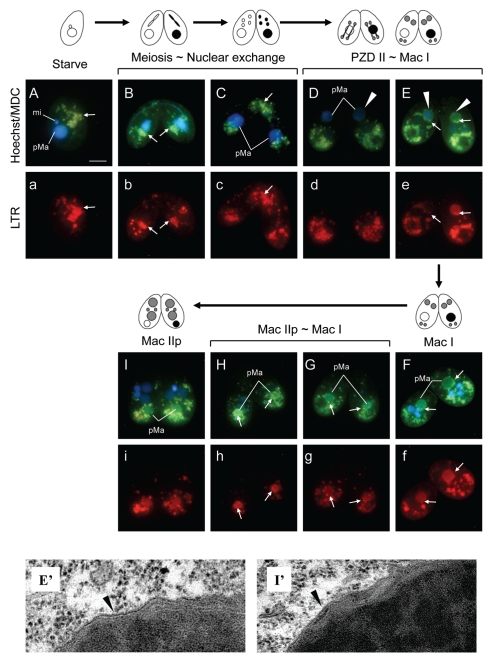
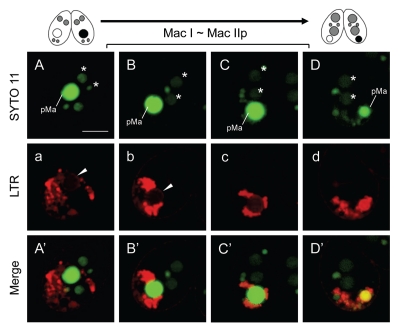
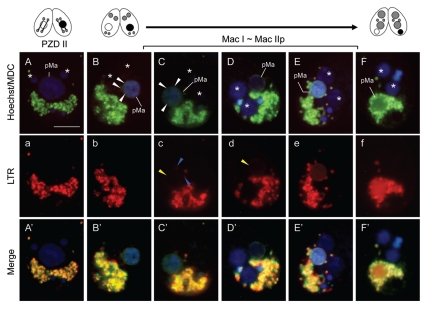
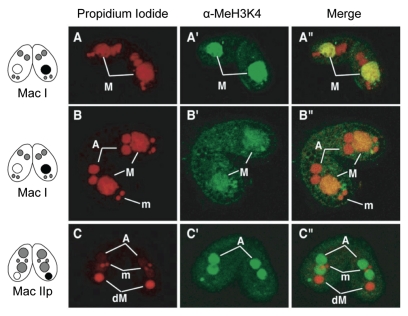
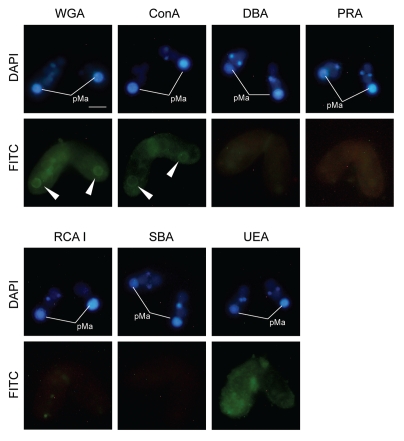
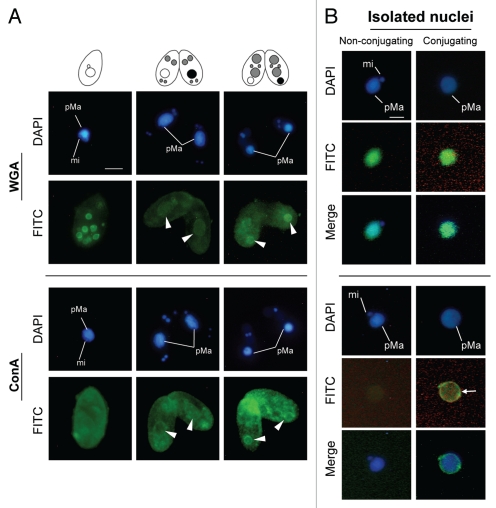
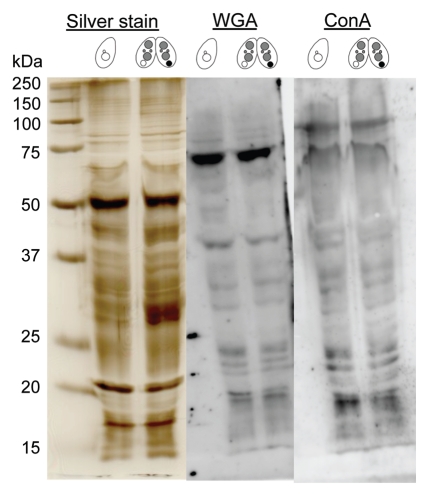
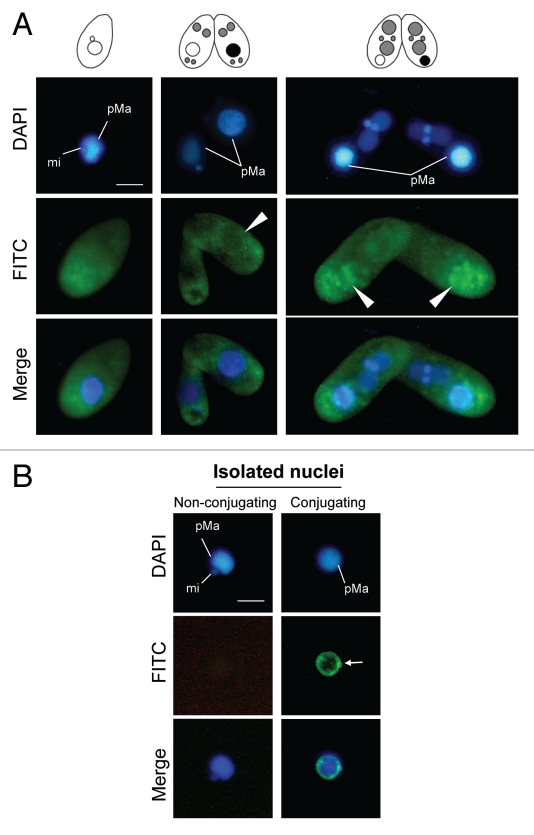
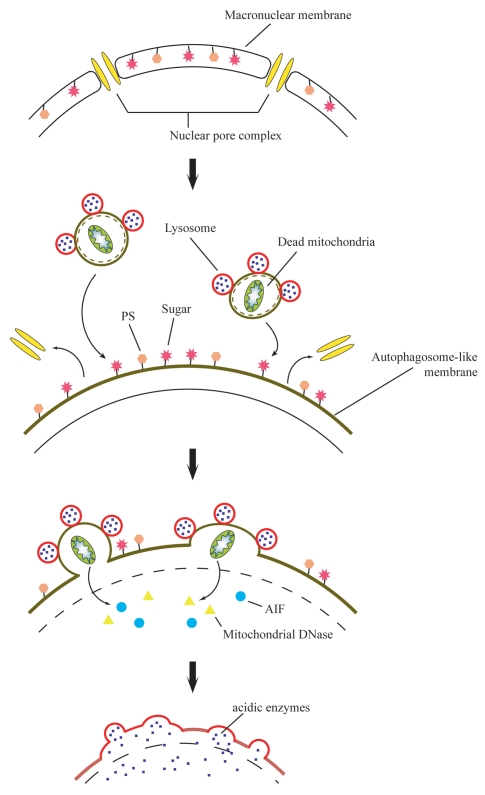
Programmed nuclear death (PND) in Tetrahymena is a unique process during conjugation, in which only the parental macronucleus is degraded and then eliminated from the progeny cytoplasm, but other co-existing nuclei such as new micro- and macronuclei are unaffected. PND through autophagic elimination is expected to be strictly controlled, considering the significant roles in ciliates such as turnover of disused organelles and production of the next generation. Here we demonstrate that PND in Tetrahymena involves peculiar aspects of autophagy, which differ from mammalian or yeast macroautophagy. Drastic change of the parental macronucleus occurs when differentiation of new macronuclei is initiated. Combined use of monodansylcadaverine and a lysosome indicator LysoTracker Red showed that prior to nuclear condensation, the envelope of the parental macronucleus changed its nature as if it is an autophagic membrane, without the accumulation of a pre-autophagosomal structure from the cytoplasm. Subsequently, lysosomes approached only to the parental macronucleus and localized at the envelope until a final resorption stage. In addition, we found that the parental macronucleus exhibits certain sugars and phosphatidylserine on the envelope, which are possible "attack me" signals, that are not found on other types of nuclei. These findings suggest that PND is a highly elaborated process, different from the typical macroautophagy seen in other systems, and is executed through interaction between specific molecular signals on the parental macronuclear envelope and autophagic/lysosomal machineries.
Figures
References
-
- Mochizuki K, Gorovsky MA. Small RNAs in genome rearrangement in Tetrahymena. Curr Opin Gent Dev. 2004;14:181–187. - PubMed
-
- Davis MC, Ward JG, Herrick G, Allis CD. Programmed nuclear death: apoptotic-like degradation of specific nuclei in conjugating Tetrahymena. Dev Biol. 1992;154:419–432. - PubMed
-
- Mpoke S, Wolfe J. DNA digestion and chromatin condensation during nuclear death in Tetrahymena. Exp Cell Res. 1996;225:357–365. - PubMed
-
- Kobayashi T, Endoh H. Caspase-like activity in programmed nuclear death during conjugation of Tetrahymena thermophila. Cell Death Differ. 2003;10:634–640. - PubMed
-
- Yakisich JS, Kapler GM. The effect of phosphoinositide 3-kinase inhibitors on programmed nuclear degradation in Tetrahymena and fate of surviving nuclei. Cell Deth Differ. 2004;11:1146–1149. - PubMed
Publication types
MeSH terms
Substances
Grants and funding
LinkOut - more resources
Full Text Sources
