


Protease corin expression and activity in failing hearts
- PMID: 20802129
- PMCID: PMC2993205
- DOI: 10.1152/ajpheart.00399.2010
Protease corin expression and activity in failing hearts
Abstract
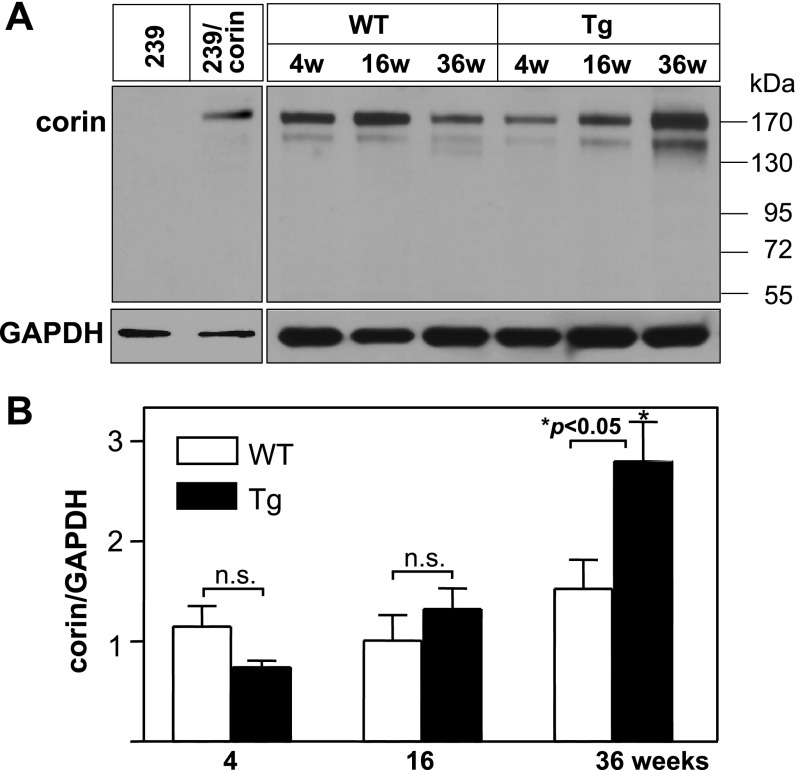
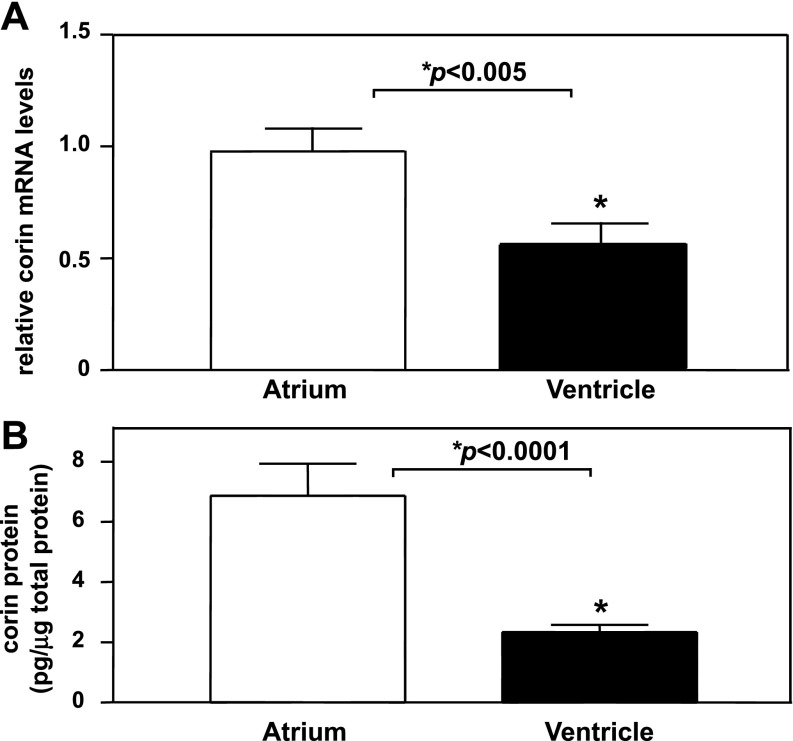
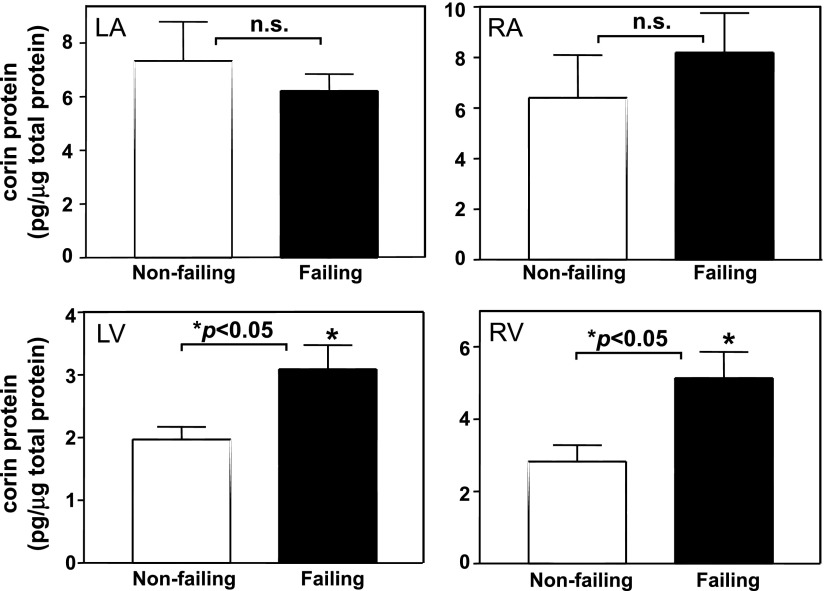
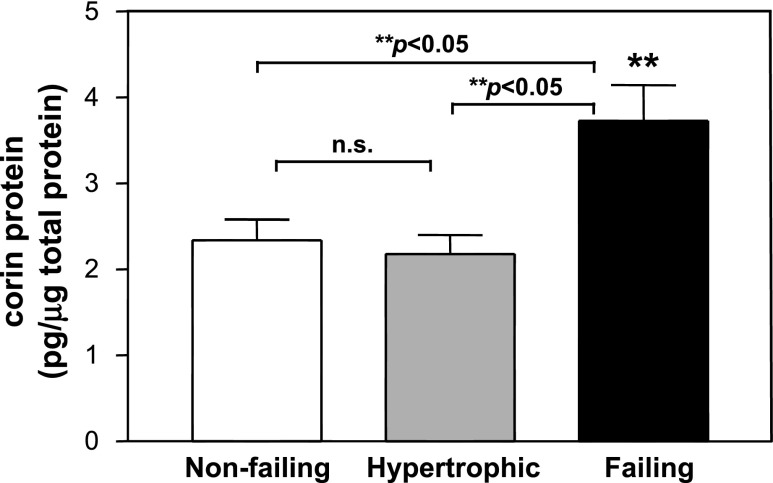
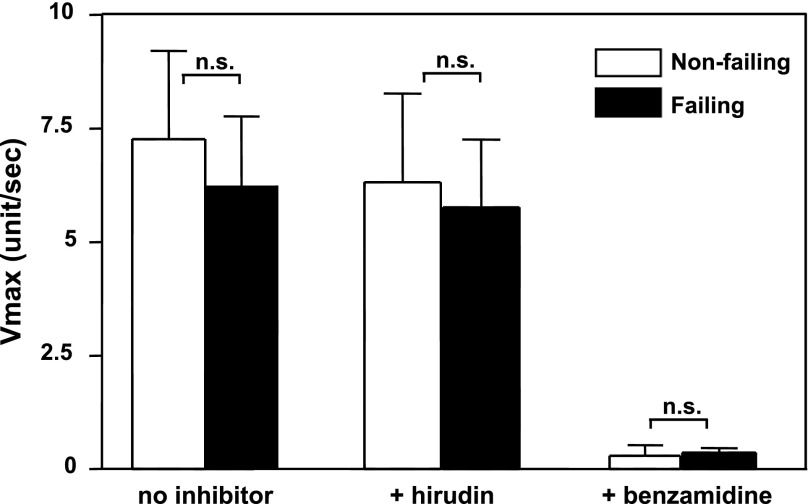
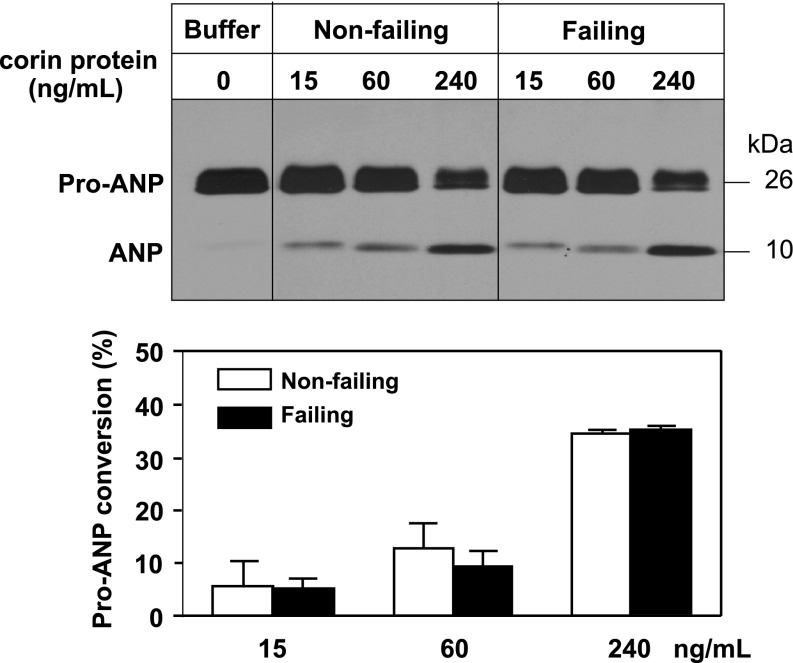
Atrial and brain natriuretic peptides (ANP and BNP) regulate blood pressure and cardiac function. In patients with heart failure (HF), plasma levels of pro-ANP and pro-BNP, the precursor forms of ANP and BNP, are highly elevated, but the mechanism underlying the apparent deficiency in natriuretic peptide processing is unclear. Corin is a cardiac protease that activates natriuretic peptides. In this study, we examined corin protein expression and activity in mouse and human failing hearts. Tissue samples were obtained from a mouse model of HF induced by myotrophin overexpression and from human nonfailing, hypertrophic, and failing hearts. Corin protein levels in the membrane fraction and tissue lysate were measured by Western blotting and ELISA. Corin catalytic and biological activities were measured by fluorescent substrate and pro-ANP processing assays. In mice, corin protein levels did not change with age in normal hearts but increased significantly in failing hearts. In humans, corin protein levels were similar in the atrium from nonfailing and failing hearts but were increased in the ventricle in failing hearts compared with those in nonfailing or hypertrophic hearts. Unlike the protein level, however, corin activity did not increase in failing hearts, as measured by fluorogenic substrate and pro-ANP processing assays. Our results indicate that corin activation is a rate-limiting step in failing hearts. Insufficient corin activation is expected to prevent natriuretic peptide processing and may contribute to body fluid retention and impaired cardiac function in patients with HF.
Figures
References
-
- Ando K, Hirata Y, Emori T, Shichiri M, Kurosawa T, Sato K, Marumo F. Circulating forms of human atrial natriuretic peptide in patients with congestive heart failure. J Clin Endocrinol Metab 70: 1603–1607, 1990. - PubMed
-
- Azizi C, Maistre G, Kalotka H, Isnard R, Barthelemy C, Masson F, Pham P, Pousset F, Eurin J, Lechat P, Komajda M, Carayon A. Plasma levels and molecular forms of proatrial natriuretic peptides in healthy subjects and in patients with congestive heart failure. J Endocrinol 148: 51–57, 1996. - PubMed
-
- Bloch KD, Scott JA, Zisfein JB, Fallon JT, Margolies MN, Seidman CE, Matsueda GR, Homcy CJ, Graham RM, Seidman JG. Biosynthesis and secretion of proatrial natriuretic factor by cultured rat cardiocytes. Science 230: 1168–1171, 1985. - PubMed
-
- Chen HH. Heart failure: a state of brain natriuretic peptide deficiency or resistance or both! J Am Coll Cardiol 49: 1089–1091, 2007. - PubMed
Publication types
MeSH terms
Substances
Grants and funding
LinkOut - more resources
Full Text Sources
Medical
Molecular Biology Databases
Research Materials
Miscellaneous
