. 2010 Sep;16(9):1001-8.
doi: 10.1038/nm.2207. Epub 2010 Aug 29.

Hypothalamic AMPK and fatty acid metabolism mediate thyroid regulation of energy balance

Affiliations

Hypothalamic AMPK and fatty acid metabolism mediate thyroid regulation of energy balance

Miguel López et al. Nat Med. 2010 Sep.

Abstract

Thyroid hormones have widespread cellular effects; however it is unclear whether their effects on the central nervous system (CNS) contribute to global energy balance. Here we demonstrate that either whole-body hyperthyroidism or central administration of triiodothyronine (T3) decreases the activity of hypothalamic AMP-activated protein kinase (AMPK), increases sympathetic nervous system (SNS) activity and upregulates thermogenic markers in brown adipose tissue (BAT). Inhibition of the lipogenic pathway in the ventromedial nucleus of the hypothalamus (VMH) prevents CNS-mediated activation of BAT by thyroid hormone and reverses the weight loss associated with hyperthyroidism. Similarly, inhibition of thyroid hormone receptors in the VMH reverses the weight loss associated with hyperthyroidism. This regulatory mechanism depends on AMPK inactivation, as genetic inhibition of this enzyme in the VMH of euthyroid rats induces feeding-independent weight loss and increases expression of thermogenic markers in BAT. These effects are reversed by pharmacological blockade of the SNS. Thus, thyroid hormone-induced modulation of AMPK activity and lipid metabolism in the hypothalamus is a major regulator of whole-body energy homeostasis.


Figures
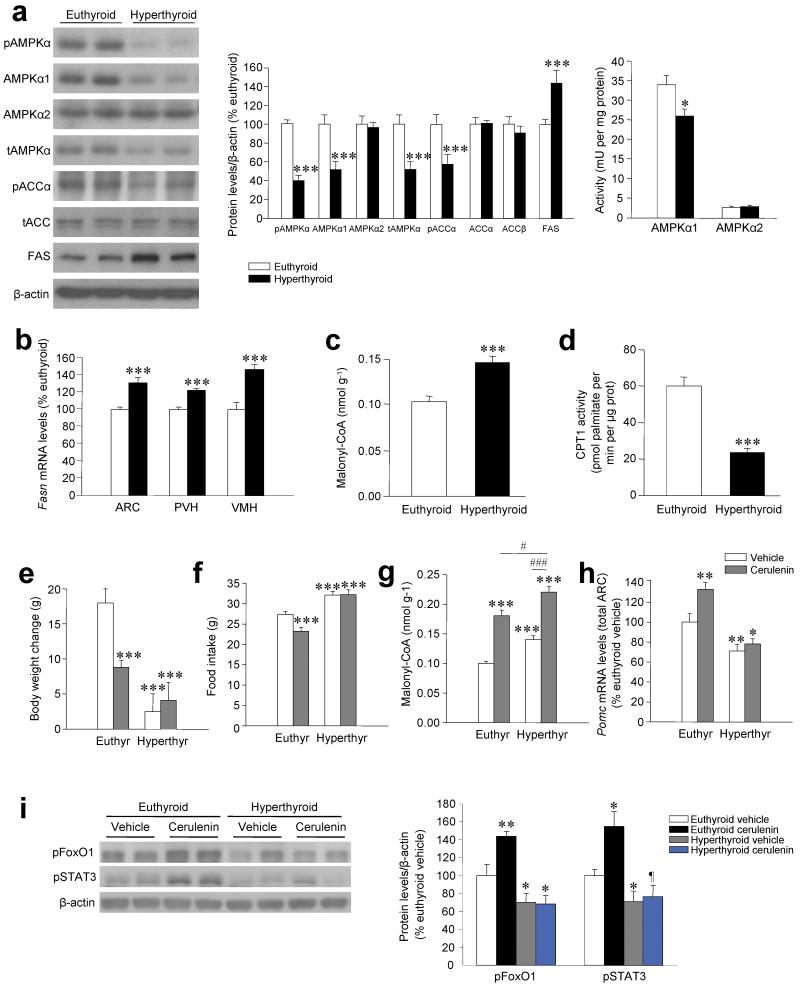
Figure 1
Figure 1. Energy balance, AMPK pathway and POMC expression
(a) Western blots (left panel) for hypothalamic protein levels (middle panels) of pAMPKα, AMPKα1, AMPKα2, tAMPKα, pACCα, ACCα (lower band in the tAMPK gel), ACCβ (upper band in the tAMPK gel) and FAS and hypothalamic AMPKα1 and AMPKα2 activities (right panel) in euthyroid and hyperthyroid rats. (b–d) Hypothalamic levels of Fasn (b), malonyl-CoA content (c) and CPT1 activity (d) in euthyroid and hyperthyroid rats. (e–i) Body weight change (e), daily food intake (f), hypothalamic malonyl-CoA levels (g), Pomc mRNA levels in the ARC (h) and western blots (left panel) for hypothalamic protein levels (right panel) of pFoxO1 and pSTAT3 (i) of euthyroid and hyperthyroid rats treated ICV with vehicle or cerulenin for 4 d. ¶P = 0.1, *P < 0.05, **P < 0.01, ***P < 0.001 vs. vehicle or euthyroid vehicle; #P < 0.05 euthyroid cerulenin vs. hyperthyroid cerulenin; ###P < 0.001 hyperthyroid vehicle vs. hyperthyroid cerulenin; all data are expressed as mean ± SEM.
Figure 2
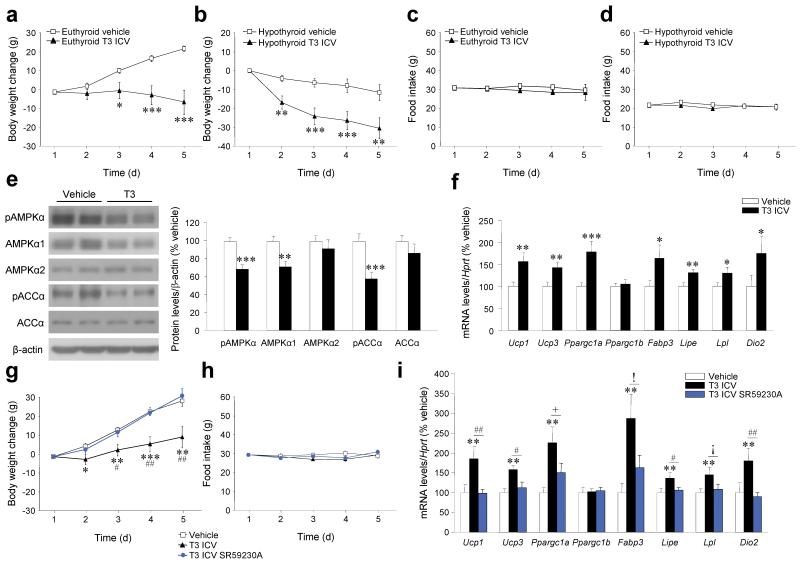
Figure 2. Effects of chronic central T3 administration
(a–d) Body weight change (a, b), daily food intake (c, d) of euthyroid and hypothyroid rats ICV-treated with T3 for 4 d. (e–f) Western blots (left panel) for hypothalamic protein levels (right panel) of pAMPKα, AMPKα1, AMPKα2, pACCα and ACCα (e) and mRNA expression profiles in BAT (f) of euthyroid rats ICV-treated with T3 for 4 d. (g–i) Body weight change (g), daily food intake (h) and mRNA expression profiles in BAT (i) of euthyroid rats ICV-treated with T3 and subcutaneously (SC) -treated with the β3-AR specific antagonist SR59230A for 4 d.!P = 0.09, ¡P = 0.08, +P = 0.06, *P < 0.05, **P < 0.01, ***P < 0.001 vs. vehicle; #P < 0.05, ##P < 0.01 T3 ICV vs. T3 ICV SR59230A; all data are expressed as mean ± SEM.
Figure 3
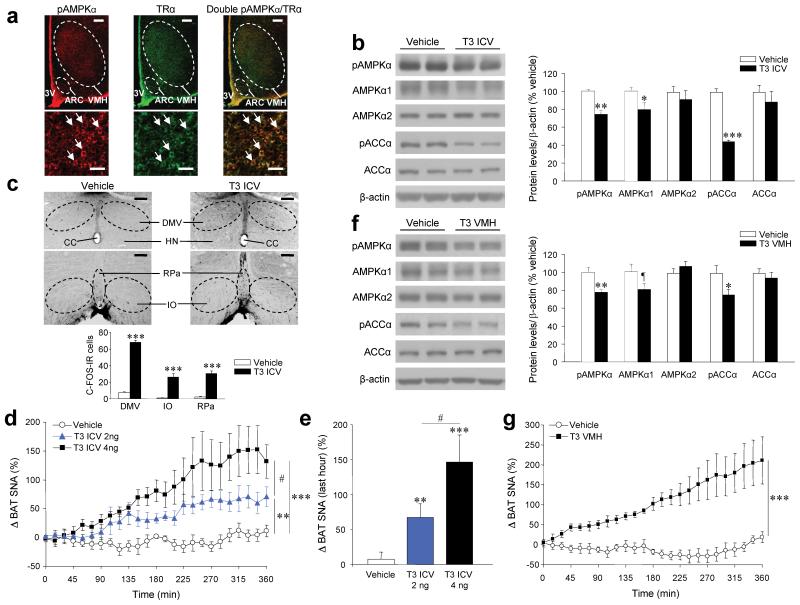
Figure 3. Effects of central T3 on BAT activation via the SNS
(a) Double immunohistochemistry (upper: 40 ×, scale bar, 200 μm; lower: 200 ×; scale bar, 20 μm) showing pAMPKα and TRα coexpression in the VMH. (b–e) Western blots (left panel) for hypothalamic protein levels (right panel) of pAMPKα, AMPKα1, AMPKα2, pACCα and ACCα (b), immunohistochemistry showing c-FOS immunoreactivity (IR) in the DMV (upper images 40 ×, scale bar, 200 μm) and in the RPa and the IO (lower images 100 ×, scale bar 100 μm) and c-FOS-IR cells in those nuclei (c) and BAT SNA (d, e) of euthyroid rats 1–3 h (protein and c-FOS) or 6 h (SNA) after ICV treatment with T3. (f, g) Western blots (left panel) for hypothalamic protein levels (right panel) of pAMPKα, AMPKα1, AMPKα2, pACCα and ACCα (f) and BAT SNA (g) of euthyroid rats 1 h after VMH microinjection of T3. P = 0.1, *P < 0.05, **P < 0.01, ***P < 0.001 vs. vehicle; #P < 0.05 T3 ICV 2 ng vs. T3 ICV 4 ng; all data are expressed as mean ± SEM. 3V: third ventricle; CC: central canal; HN: hypoglossal nucleus.
Figure 4
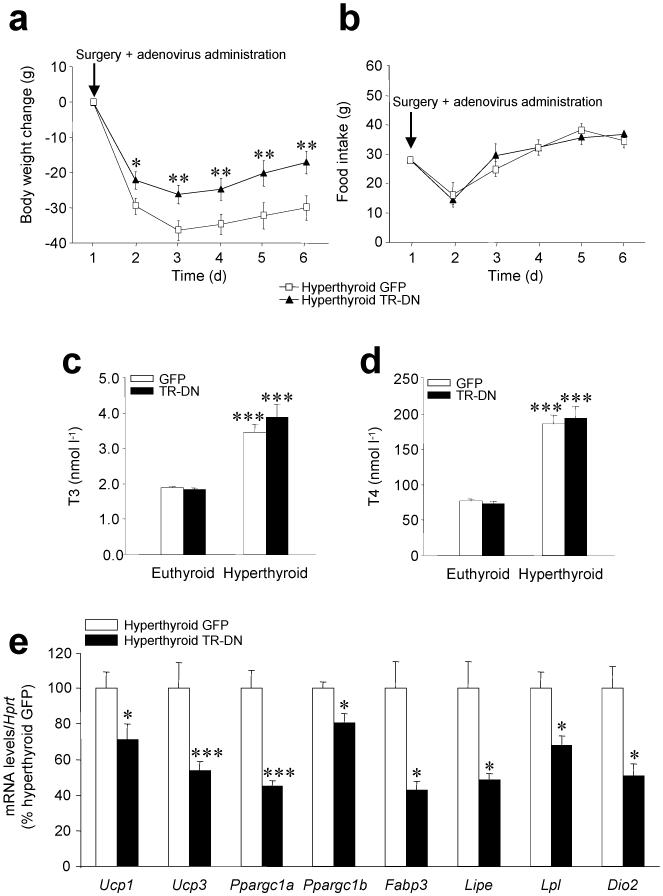
Figure 4. Effects of genetic ablation of thyroid hormone receptor in the VMH
(a–e) Body weight change (a), daily food intake (b), plasma T3 (c) and T4 (d) levels and mRNA expression profiles in BAT (e) of hyperthyroid (and euthyroid when indicated) rats stereotaxically treated with GFP-expressing adenoviruses or GFP plus TR-DN adenoviruses into the VMH. *P < 0.05, **P < 0.01, ***P < 0.001 vs. euthyroid GFP or hyperthyroid GFP; all data are expressed as mean ± SEM.
Figure 5
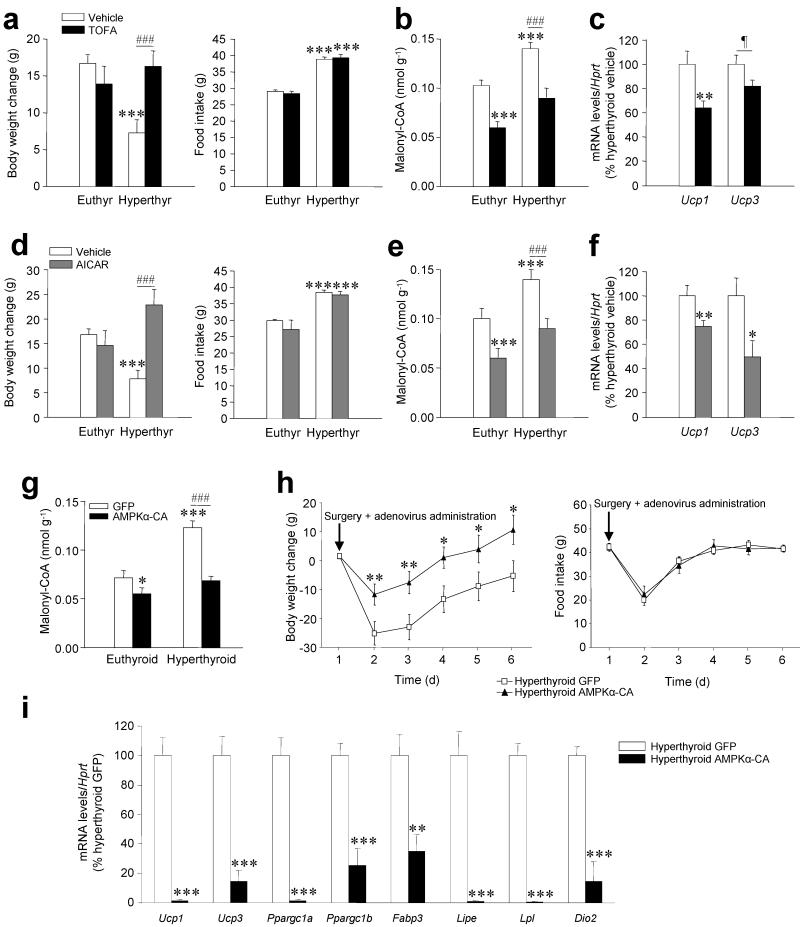
Figure 5. Effects of inactivation of hypothalamic de novo lipogenesis
(a–d) Body weight change (left panel) and daily food intake (right panel) (a), hypothalamic malonyl-CoA levels (b) and Ucp1 and Ucp3 mRNA in the BAT (c) of hyperthyroid (and euthyroid when indicated) rats treated with vehicle or TOFA. (d–f) Body weight change (left panel) daily food intake (right panel) (d), hypothalamic malonyl-CoA levels (e) and Ucp1 and Ucp3 mRNA and in the BAT (f) of hyperthyroid (and euthyroid when indicated) rats treated with vehicle or AICAR. (g–i) Malonyl-CoA levels in the ventral hypothalamus (g) body weight change (left panel), food intake (right panel) (h) and mRNA expression profiles in BAT (i) of hyperthyroid (or euthyroid when indicated) rats stereotaxically treated with a GFP-expressing adenoviruses or GFP plus AMPK constitutively active (AMPKα-CA) adenoviruses into the VMH. *P < 0.05, **P < 0.01, ***P < 0.001 vs. vehicle or GFP; ###P < 0.01 hyperthyroid vehicle vs. hyperthyroid TOFA or AICAR and hyperthyroid GFP vs. hyperthyroid AMPKα-CA; all data are expressed as mean ± SEM.
Figure 6
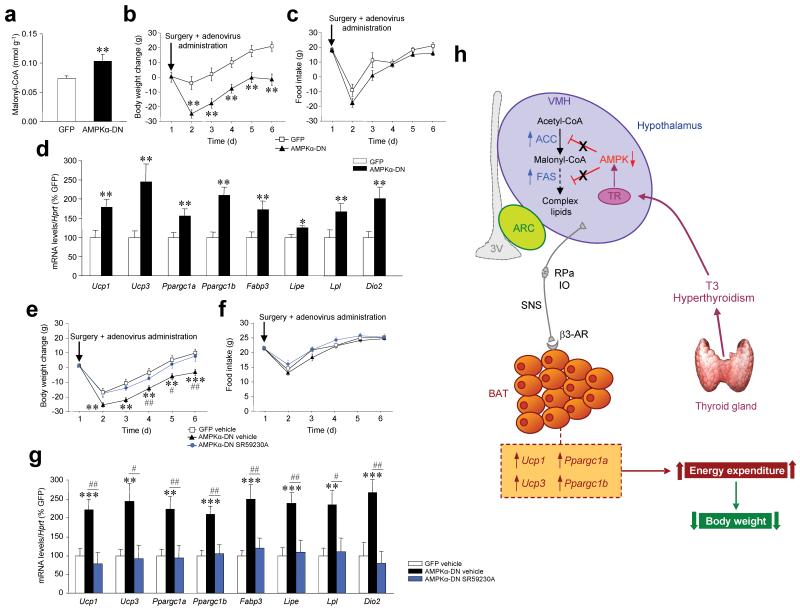
Figure 6. Effects of selective inactivation of AMPK in the VMH
(a–d) Malonyl-CoA levels in the ventral hypothalamus (a), body weight change (b), food intake (c), and mRNA expression profiles in BAT (d) of euthyroid rats stereotaxically treated with a GFP-expressing adenoviruses or GFP plus AMPK dominant negative (AMPKα-DN) into the VMH. (e–g) Body weight change (e), food intake (f), and mRNA expression profiles in BAT (g) of rats stereotaxically treated into the VMH with GFP-expressing adenoviruses SC-treated with vehicle, GFP plus AMPKα-DN SC-treated with vehicle and GFP plus AMPKα-DN SC-treated with the β3-AR specific antagonist SR59230A. (h) Proposed model of the effect of thyroid hormones excess on hypothalamic fatty acid metabolism. Hyperthyroidism and T3 upregulate de novo lipogenesis in the hypothalamus which results from decreased activity of AMPK, activation of ACC and increased expression of Fasn. Thyroid hormone-induced changes in hypothalamic lipid biosynthetic pathway increases levels of hypothalamic malonyl-CoA and complex lipids. These changes are associated with the activation of the SNS through the RPa and the IO, resulting in increased expression of BAT markers, such as Ucp1, Upc3, Ppargc1a (which encodes PGC1α) and Ppargc1b (which encodes PGC1β), promoting negative energy balance and weight loss. *: P < 0.05, **P < 0.01, ***P < 0.001 vs. GFP; #P < 0.05, ##P < 0.01 AMPKα-DN vehicle vs. AMPKα-DN SR59230A; all data are expressed as mean ± SEM.

Comment in

References

    1. Silva JE. Thyroid hormone control of thermogenesis and energy balance. Thyroid. 1995;5:481–492. - PubMed
    1. Coppola A, et al. A central thermogenic-like mechanism in feeding regulation: an interplay between arcuate nucleus T3 and UCP2. Cell Metab. 2007;5:21–33. - PMC - PubMed
    1. Herwing A, Ross AW, Nilaweera KN, Morgan PJ, Barrett P. Hypothalamic thyroid hormone in energy balance regulation. Obes. Facts. 2008;1:71–79. - PMC - PubMed
    1. Pijl H, et al. Food choice in hyperthyroidism: potential influence of the autonomic nervous system and brain serotonin precursor availability. J. Clin. Endocrinol. Metab. 2001;86:5848–5853. - PubMed
    1. Cannon B, Nedergaard J. Brown adipose tissue: function and physiological significance. Physiol Rev. 2004;84:277–359. - PubMed

Publication types

MeSH terms