


Arterial stiffness: a brief review
- PMID: 20802505
- PMCID: PMC3078647
- DOI: 10.1038/aps.2010.123
Arterial stiffness: a brief review
Abstract
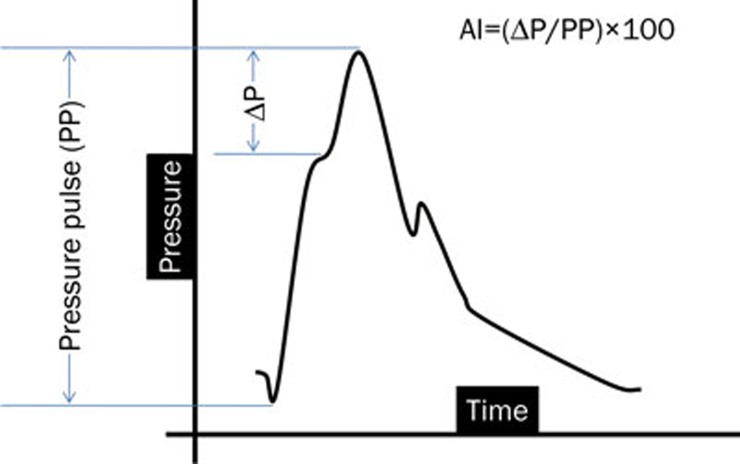
Physical stiffening of the large arteries is the central paradigm of vascular aging. Indeed, stiffening in the larger central arterial system, such as the aortic tree, significantly contributes to cardiovascular diseases in older individuals and is positively associated with systolic hypertension, coronary artery disease, stroke, heart failure and atrial fibrillation, which are the leading causes of mortality in the developed countries and also in the developing world as estimated in 2010 by World Health Organizations. Thus, better, less invasive and more accurate measures of arterial stiffness have been developed, which prove useful as diagnostic indices, pathophysiological markers and predictive indicators of disease. This article presents a review of the structural determinants of vascular stiffening, its pathophysiologic determinants and its implications for vascular research and medicine. A critical discussion of new techniques for assessing vascular stiffness is also presented.
Figures




References
-
- Franklin SS, Gustin Wt, Wong ND, Larson MG, Weber MA, Kannel WB, et al. Hemodynamic patterns of age-related changes in blood pressure. The Framingham Heart Study. Circulation. 1997;96:308–15. - PubMed
-
- Sutton-Tyrrell K, Najjar SS, Boudreau RM, Venkitachalam L, Kupelian V, Simonsick EM, et al. Elevated aortic pulse wave velocity, a marker of arterial stiffness, predicts cardiovascular events in well-functioning older adults. Circulation. 2005;111:3384–90. - PubMed
-
- Chae CU, Pfeffer MA, Glynn RJ, Mitchell GF, Taylor JO, Hennekens CH. Increased pulse pressure and risk of heart failure in the elderly. JAMA. 1999;281:634–9. - PubMed
-
- Mitchell GF, Vasan RS, Keyes MJ, Parise H, Wang TJ, Larson MG, et al. Pulse pressure and risk of new-onset atrial fibrillation. JAMA. 2007;297:709–15. - PubMed
-
- Zieman SJ, Melenovsky V, Kass DA. Mechanisms, pathophysiology, and therapy of arterial stiffness. Arterioscler Thromb Vasc Biol. 2005;25:932–43. - PubMed
Publication types
MeSH terms
Substances
Grants and funding
LinkOut - more resources
Full Text Sources
Medical
