


Stereotype Embodiment: A Psychosocial Approach to Aging
- PMID: 20802838
- PMCID: PMC2927354
- DOI: 10.1111/j.1467-8721.2009.01662.x
Stereotype Embodiment: A Psychosocial Approach to Aging
Abstract
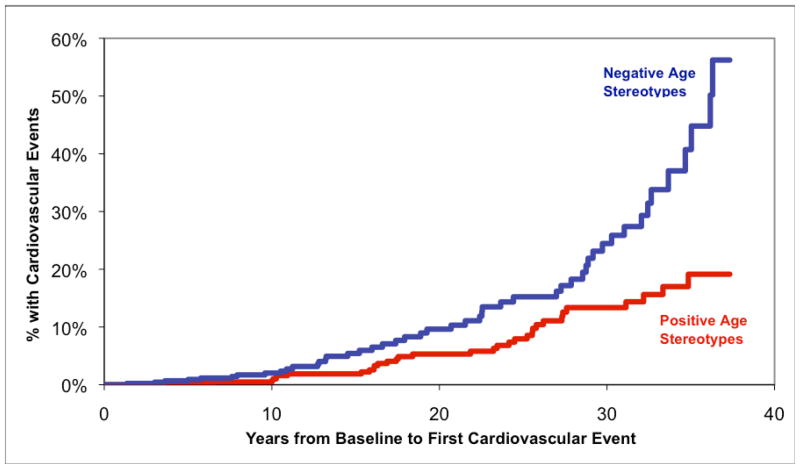
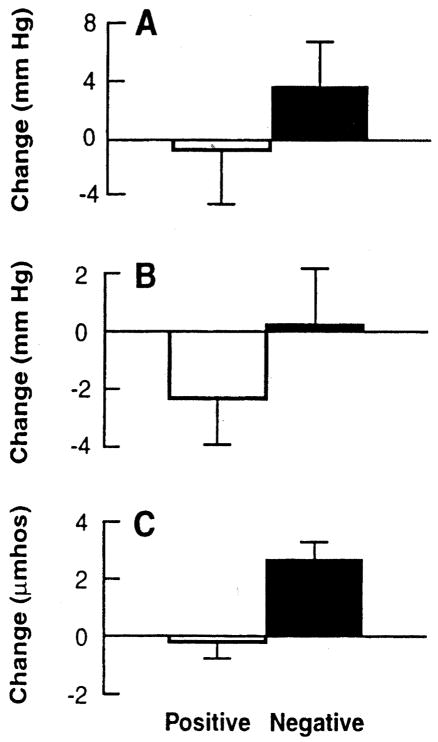
Researchers have increasingly turned their attention from younger individuals who hold age stereotypes to older individuals who are targeted by these stereotypes. The refocused research has shown that positive and negative age stereotypes held by older individuals can have beneficial and detrimental effects, respectively, on a variety of cognitive and physical outcomes. Drawing on these experimental and longitudinal studies, a theory of stereotype embodiment is presented here. It proposes that stereotypes are embodied when their assimilation from the surrounding culture leads to self-definitions that, in turn, influence functioning and health. The theory has four components: The stereotypes (a) become internalized across the life span, (b) can operate unconsciously, (c) gain salience from self-relevance, and (d) utilize multiple pathways. The central message of the theory, and the research supporting it, is that the aging process is, in part, a social construct.
Figures
References
-
- Bigler RS, Liben LS. Developmental intergroup theory: Explaining and reducing children’s social stereotyping and prejudice. Current Directions in Psychological Science. 2007;16:162–166.
-
- Dahl R. George’s Marvelous Medicine. New York: Puffin Books; 1981.
-
- Donlon M, Ashman O, Levy BR. Revision of older television characters: A stereotype-awareness intervention. Journal of Social Issues. 2005;61:307–319.
-
- Hess TM, Hinson JT, Statham JA. Explicit and implicit stereotype activation effects on memory: Do age and awareness moderate the impact of priming? Psychology and Aging. 2004;19:495–505. - PubMed
-
- Levy B. Improving memory in old age through implicit self-stereotyping. Journal of Personality & Social Psychology. 1996;71:1092–1107. - PubMed
Recommended Reading
-
- Butler R. The longevity revolution: The benefits and challenges of living a long life. New York: Public Affairs; 2008. Ageism: Another form of bigotry; pp. 40–59.
-
This chapter presents the broad spectrum of ways that older individuals are stigmatized by society.
-
- Mead GH. In: Mind, self, and society. Morris CW, editor. Chicago: University of Chicago Press; 1934.
-
A classic description of the process by which attitudes of the community influence individuals’ self-perceptions.
-
- O’Brien LT, Hummert ML. Memory performance of late middle-aged adults: Contrasting self-stereotyping and stereotype threat accounts of assimilation to age stereotypes. Social Cognition. 2006;24:338–358.
-
This experiment tested two divergent approaches, one based on an assumption of internalized age stereotypes (derived from research reported in the present Current Directions article) and the other based on stereotype threat theory; the authors found that the former, rather than the latter, explained memory-performance deficits.
Grants and funding
LinkOut - more resources
Full Text Sources