


An oxidative environment promotes growth of Mycobacterium abscessus
- PMID: 20807564
- PMCID: PMC2970643
- DOI: 10.1016/j.freeradbiomed.2010.08.026
An oxidative environment promotes growth of Mycobacterium abscessus
Abstract
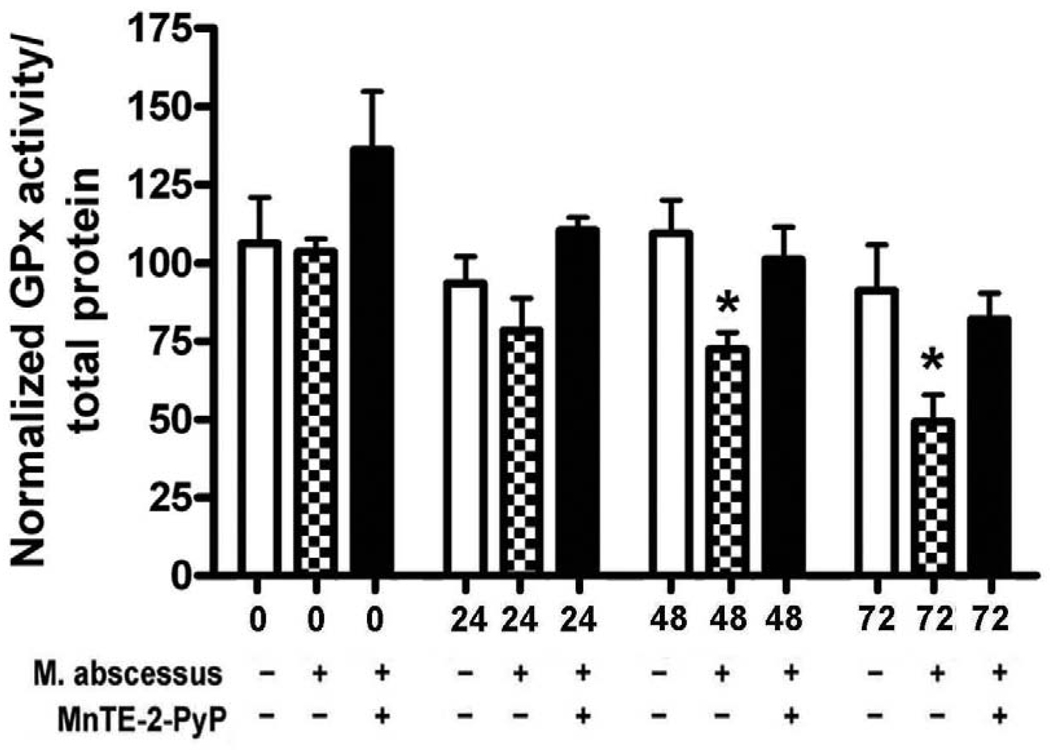
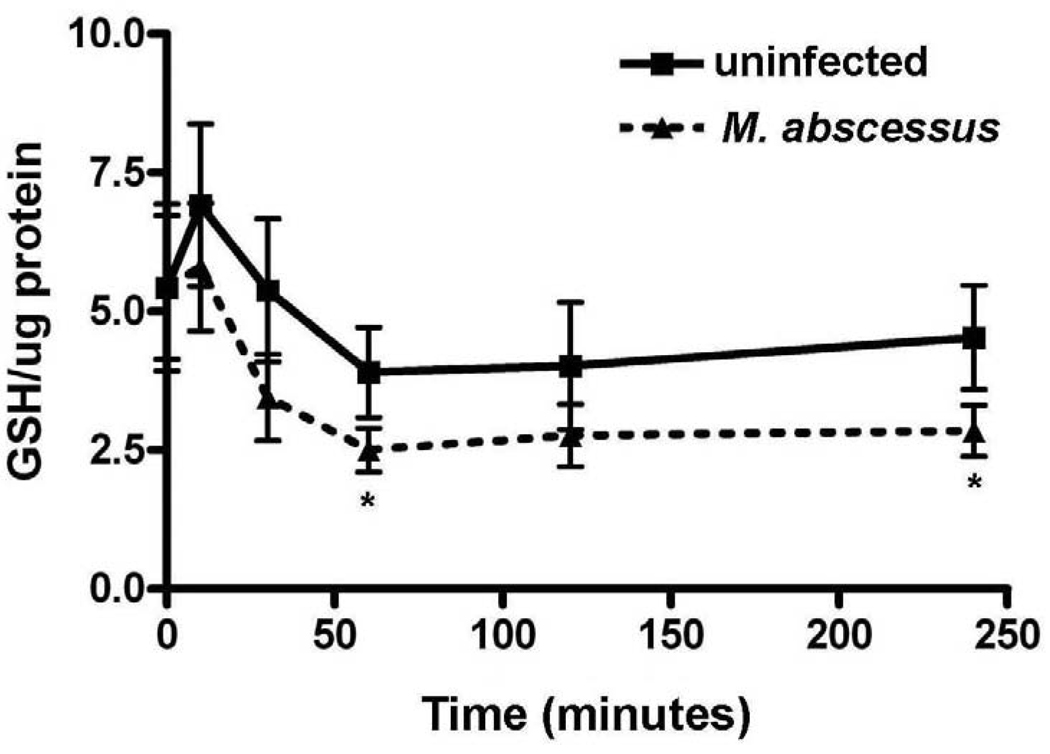
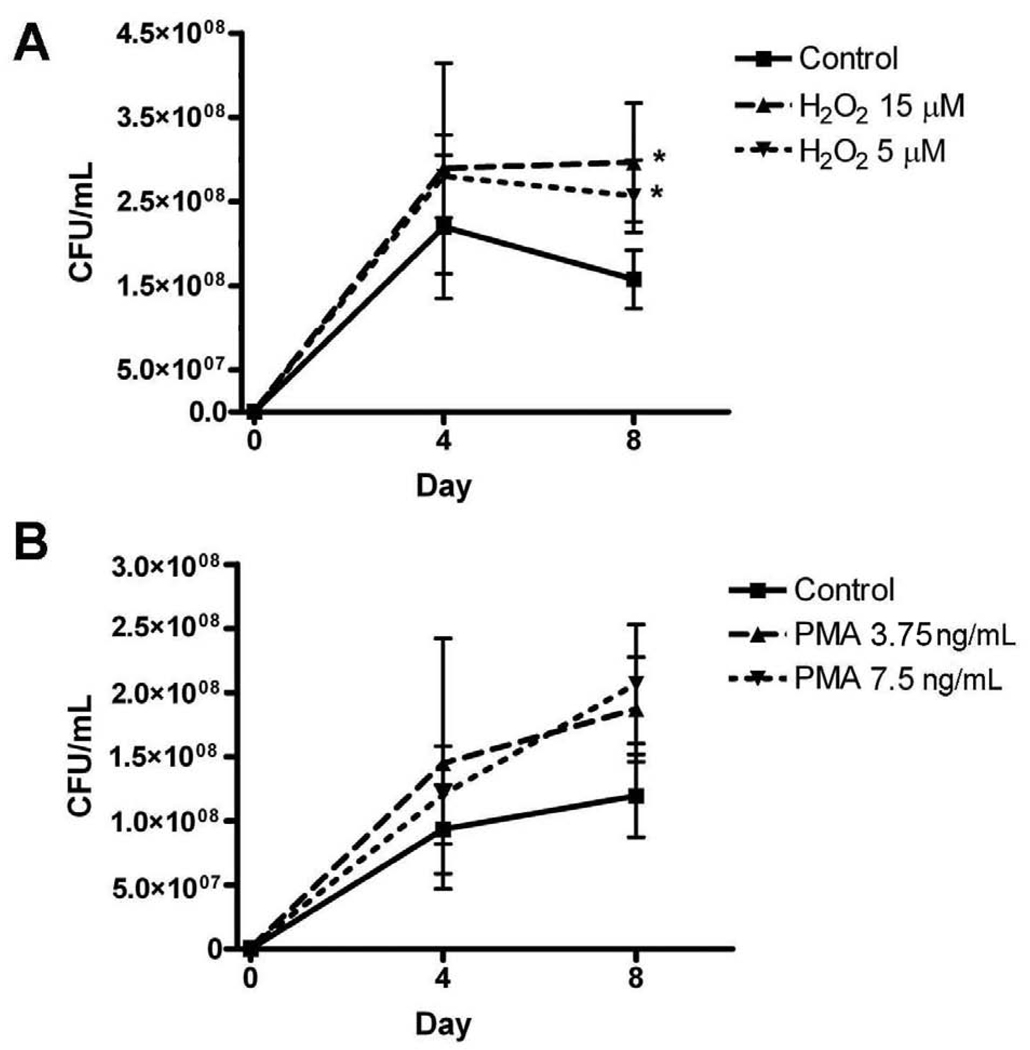
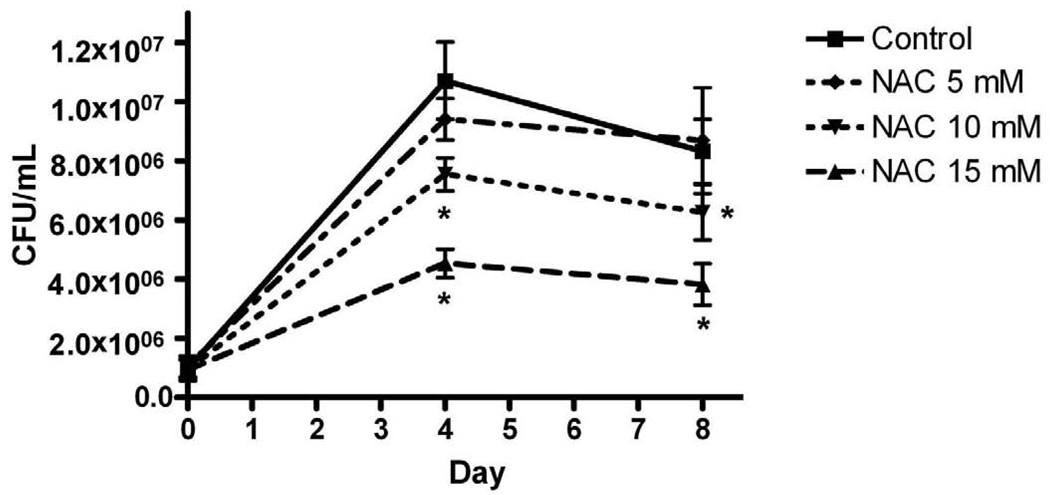
Mycobacterium abscessus infections, particularly those causing chronic lung diseases, are becoming more prevalent worldwide. M. abscessus infections are difficult to treat because of antibiotic resistance. Thus, new treatment options are urgently needed. M. abscessus is an intracellular pathogen that primarily infects macrophages and fibroblasts. Because this bacterium has only recently been identified as a separate species, very little is known about M. abscessus-host interactions and how M. abscessus growth is regulated. Oxidative stress has long been shown to inhibit the growth of bacterial organisms. However, some intracellular bacteria, such as Mycobacterium tuberculosis, grow well in oxidizing environments. In this study, we show that M. abscessus infection causes the host cell environment to become more oxidizing. Furthermore, we show that a more oxidizing environment leads to enhanced growth of M. abscessus inside macrophages. In the presence of antioxidants, MnTE-2-PyP (chemical name: manganese(II) meso-tetrakis-(N-methylpyridinium-2-yl) porphyrin) or N-acetyl-l-cysteine, M. abscessus growth is inhibited. These results lead us to postulate that antioxidants may aid in the treatment of M. abscessus infections.
Copyright © 2010 Elsevier Inc. All rights reserved.
Figures
References
-
- Petrini B. Mycobacterium abscessus: an emerging rapid-growing potential pathogen. Apmis. 2006;114:319–328. - PubMed
-
- Cassidy PM, Hedberg K, Saulson A, McNelly E, Winthrop KL. Nontuberculous mycobacterial disease prevalence and risk factors: a changing epidemiology. Clin Infect Dis. 2009;49:e124–e129. - PubMed
Publication types
MeSH terms
Substances
Grants and funding
LinkOut - more resources
Full Text Sources
Miscellaneous
