


The autophagic degradation of chloroplasts via rubisco-containing bodies is specifically linked to leaf carbon status but not nitrogen status in Arabidopsis
- PMID: 20807997
- PMCID: PMC2971599
- DOI: 10.1104/pp.110.158519
The autophagic degradation of chloroplasts via rubisco-containing bodies is specifically linked to leaf carbon status but not nitrogen status in Arabidopsis
Abstract
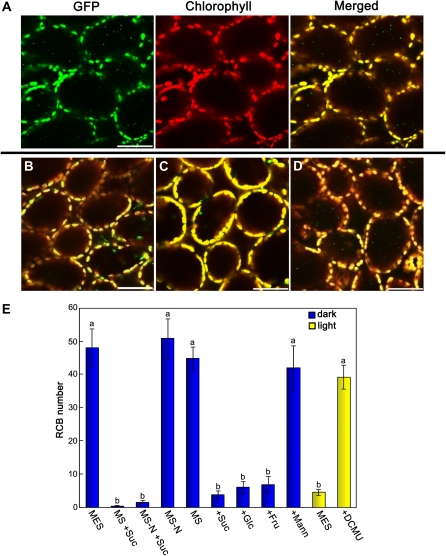
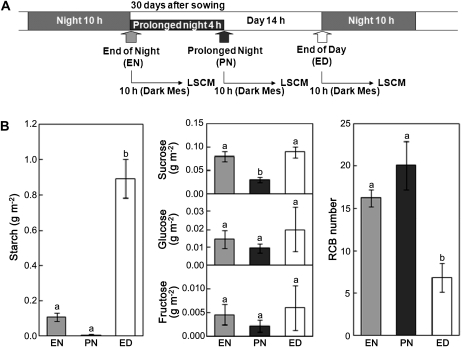
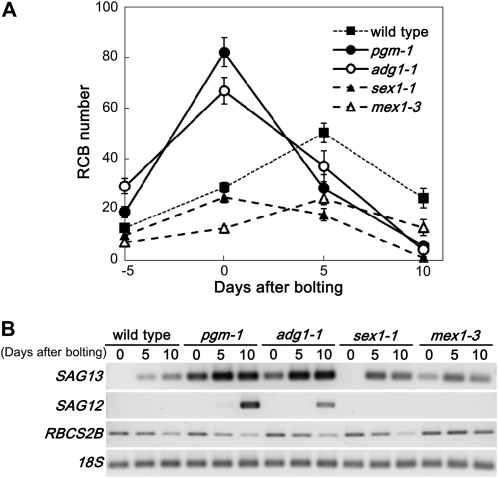
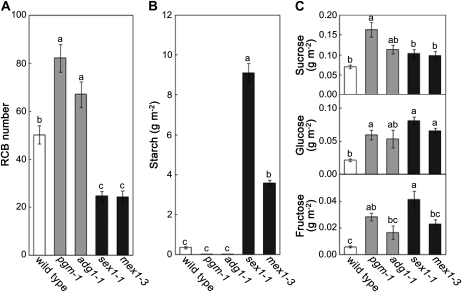
Autophagy is an intracellular process facilitating the vacuolar degradation of cytoplasmic components and is important for nutrient recycling during starvation. We previously demonstrated that chloroplasts can be partially mobilized to the vacuole by autophagy via spherical bodies named Rubisco-containing bodies (RCBs). Although chloroplasts contain approximately 80% of total leaf nitrogen and represent a major carbon and nitrogen source for new growth, the relationship between leaf nutrient status and RCB production remains unclear. We examined the effects of nutrient factors on the appearance of RCBs in leaves of transgenic Arabidopsis (Arabidopsis thaliana) expressing stroma-targeted fluorescent proteins. In excised leaves, the appearance of RCBs was suppressed by the presence of metabolic sugars, which were added externally or were produced during photosynthesis in the light. The light-mediated suppression was relieved by the inhibition of photosynthesis. During a diurnal cycle, RCB production was suppressed in leaves excised at the end of the day with high starch content. Starchless mutants phosphoglucomutase and ADP-Glc pyrophosphorylase1 produced a large number of RCBs, while starch-excess mutants starch-excess1 and maltose-excess1 produced fewer RCBs. In nitrogen-limited plants, as leaf carbohydrates were accumulated, RCB production was suppressed. We propose that there exists a close relationship between the degradation of chloroplast proteins via RCBs and leaf carbon but not nitrogen status in autophagy. We also found that the appearance of non-RCB-type autophagic bodies was not suppressed in the light and somewhat responded to nitrogen in excised leaves, unlike RCBs. These results imply that the degradation of chloroplast proteins via RCBs is specifically controlled in autophagy.
Figures






References
-
- Acevedo-Hernández GJ, León P, Herrera-Estrella LR. (2005) Sugar and ABA responsiveness of a minimal RBCS light-responsive unit is mediated by direct binding of ABI4. Plant J 43: 506–519 - PubMed
-
- Aubert S, Gout E, Bligny R, Marty-Mazars D, Barrieu F, Alabouvette J, Marty F, Douce R. (1996) Ultrastructural and biochemical characterization of autophagy in higher plant cells subjected to carbon deprivation: control by the supply of mitochondria with respiratory substrates. J Cell Biol 133: 1251–1263 - PMC - PubMed
-
- Bassham DC. (2009) Function and regulation of macroautophagy in plants. Biochim Biophys Acta 1793: 1397–1403 - PubMed
Publication types
MeSH terms
Substances
LinkOut - more resources
Full Text Sources
