


Same-sex Versus Other-sex Best Friendship in Early Adolescence: Longitudinal Predictors of Antisocial Behavior Throughout Adolescence
- PMID: 20808710
- PMCID: PMC2929664
- DOI: 10.1007/s10964-008-9311-x
Same-sex Versus Other-sex Best Friendship in Early Adolescence: Longitudinal Predictors of Antisocial Behavior Throughout Adolescence
Abstract
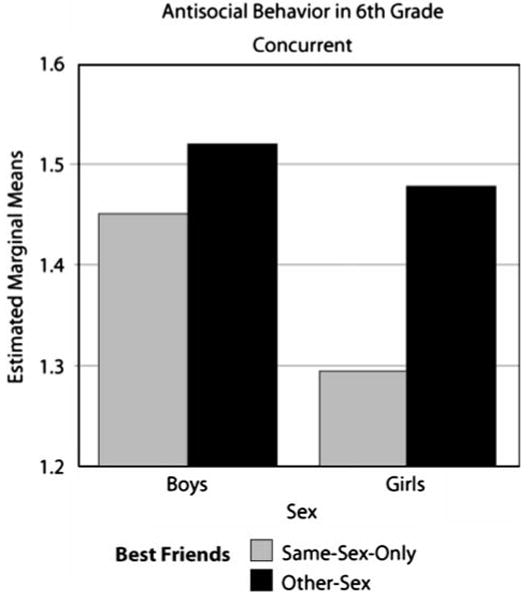
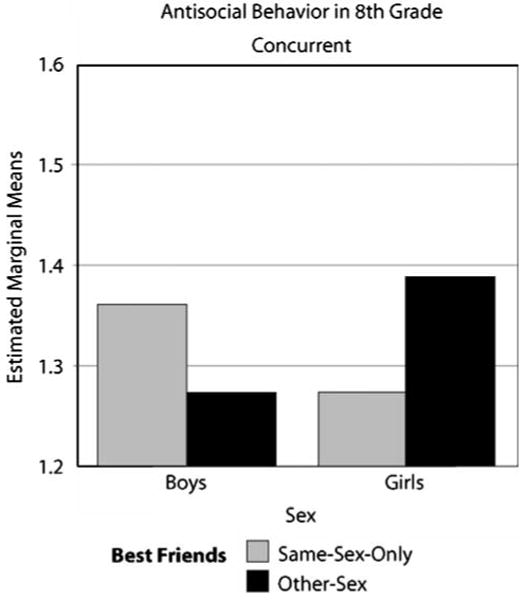
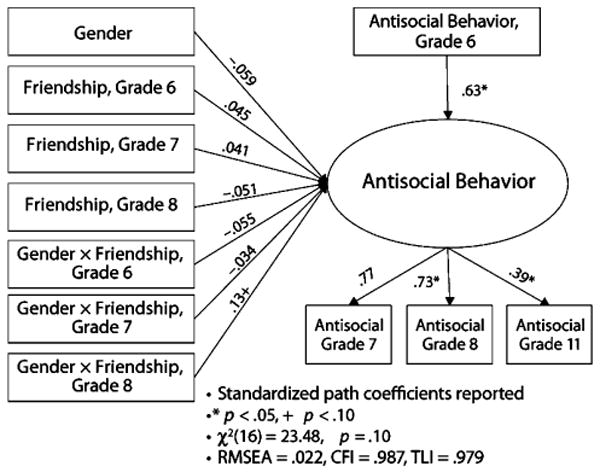
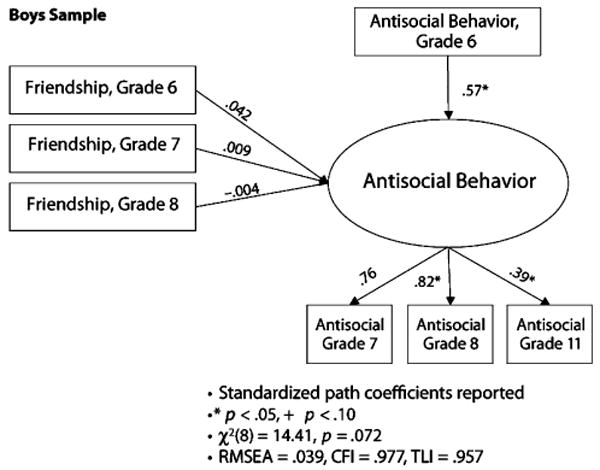
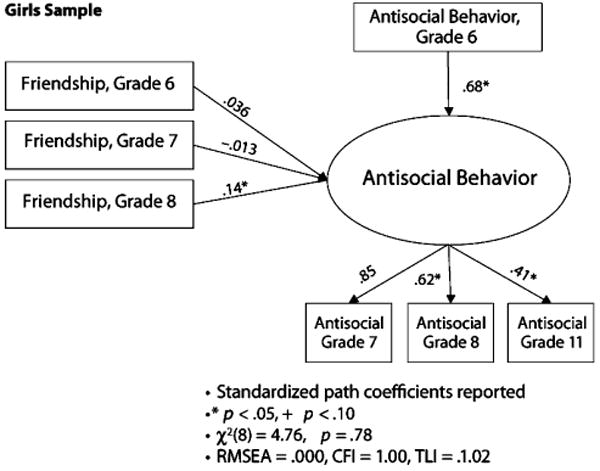
This study examines the relationship between having other-sex versus same-sex best friends and antisocial behavior throughout early adolescence. Participants (N = 955) were recruited in 6th grade and followed longitudinally through 7th, 8th, and 11th grades. Participants were 58% ethnically diverse youth and 48% girls. Results indicate that the frequency of other-sex best friendship remained stable from 6th to 7th grade but significantly increased from 8th to 11th grade. Higher rates of concurrent antisocial behavior were related to having other-sex best friends in 6th grade but not in 7th grade. In 8th grade, there was an interaction between friendship and the sex of friends. Boys with only same-sex best friends and girls with other-sex best friends endorsed higher rates of antisocial behavior. Having other-sex best friends predicted antisocial behavior from 6th to 7th grade and 8th to 11th grade, especially for girls. Implications for the development of early adolescent friendship and antisocial behavior are discussed.
Figures
References
-
- Bigelow BJ, LaGaipa JJ. The development of friendship values and choice. In: Foot H, Chapman A, Smith J, editors. Friendship and social relations in children. New York: Wiley; 1980. pp. 15–44.
-
- Bleske-Rechek AL, Buss DM. Opposite-sex friendship: Sex differences and similarities in initiation, selection, and dissolution. Personality and Social Psychology Bulletin. 2001;27(10):1310–1323.
-
- Blyth DA, Traeger C. Adolescent self-esteem and perceived relationships with parents and peers. In: Salzinger S, Antrobus J, Hammer M, editors. Social networks of children, adolescents, and college students. Hillsdale, NJ: Erlbaum; 1988. pp. 171–194.
-
- Brendgen M, Vitaro F, Doyle AB, Markiewicz D, Bukowski WM. Same-sex peer relations and romantic relationships during early adolescence: Interactive links to emotional, behavioral, and academic adjustment. Merrill-Palmer Quarterly. 2002;48(1):77–103.
Grants and funding
LinkOut - more resources
Full Text Sources