


Noncoding RNA mediated traffic of foreign mRNA into chloroplasts reveals a novel signaling mechanism in plants
- PMID: 20808865
- PMCID: PMC2924387
- DOI: 10.1371/journal.pone.0012269
Noncoding RNA mediated traffic of foreign mRNA into chloroplasts reveals a novel signaling mechanism in plants
Abstract
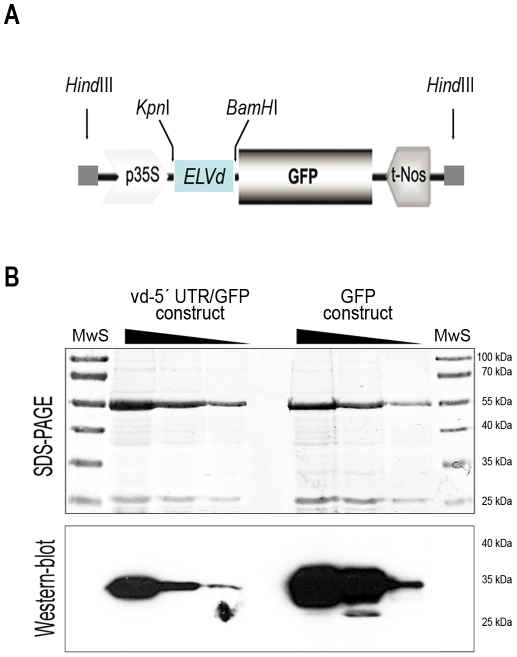
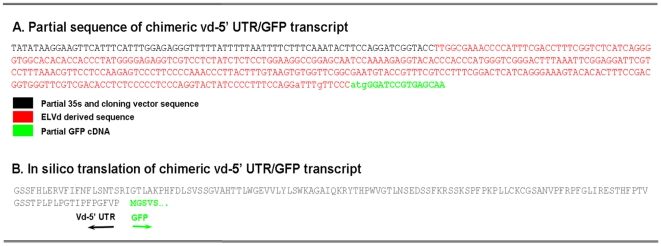
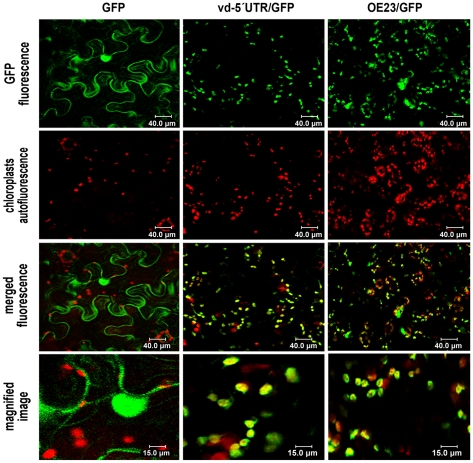
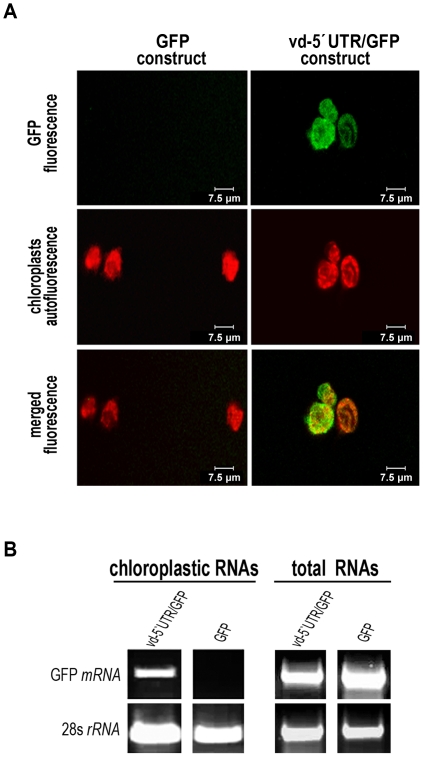
Communication between chloroplasts and the nucleus is one of the milestones of the evolution of plants on earth. Proteins encoded by ancestral chloroplast-endogenous genes were transferred to the nucleus during the endosymbiotic evolution and originated this communication, which is mainly dependent on specific transit-peptides. However, the identification of nuclear-encoded proteins targeted to the chloroplast lacking these canonical signals suggests the existence of an alternative cellular pathway tuning this metabolic crosstalk. Non-coding RNAS (NcRNAs) are increasingly recognized as regulators of gene expression as they play roles previously believed to correspond to proteins. Avsunviroidae family viroids are the only noncoding functional RNAs that have been reported to traffic inside the chloroplasts. Elucidating mechanisms used by these pathogens to enter this organelle will unearth novel transport pathways in plant cells. Here we show that a viroid-derived NcRNA acting as a 5'UTR-end mediates the functional import of Green Fluorescent Protein (GFP) mRNA into chloroplast. This claim is supported by the observation at confocal microscopy of a selective accumulation of GFP in the chloroplast of the leaves expressing the chimeric vd-5'UTR/GFP and by the detection of the GFP mRNA in chloroplasts isolated from cells expressing this construct. These results support the existence of an alternative signaling mechanism in plants between the host cell and chloroplasts, where an ncRNA functions as a key regulatory molecule to control the accumulation of nuclear-encoded proteins in this organelle. In addition, our findings provide a conceptual framework to develop new biotechnological tools in systems using plant chloroplast as bioreactors. Finally, viroids of the family Avsunviroidae have probably evolved to subvert this signaling mechanism to regulate their differential traffic into the chloroplast of infected cells.
Conflict of interest statement
Figures
References
-
- Jarvis P. Targeting of nucleus-encoded proteins to chloroplasts in plants. New Phytol. 2008;179:257–285. - PubMed
-
- Lopez-Juez E, Pyke K. Plastids unleashed: their development and their integration in plant development. Int J Dev Biol. 2005;49:557–577. - PubMed
-
- Nelson N, Ben-Shem A. The complex architecture of oxygenic photosynthesis. Nat Rev Mol Cell Biol. 2004;5:971–982. - PubMed
-
- Pogson BJ, Woo NS, Förster B, Small ID. Plastid signaling to the nucleus and beyond. Trends Plant Sci. 2008;13:602–609. - PubMed
Publication types
MeSH terms
Substances
LinkOut - more resources
Full Text Sources
Other Literature Sources
