. 2010 Oct;40(10):2692-8.
doi: 10.1002/eji.200940184.

FcγRIIB regulation of BCR/TLR-dependent autoreactive B-cell responses

Affiliations

FcγRIIB regulation of BCR/TLR-dependent autoreactive B-cell responses

Ana M Avalos et al. Eur J Immunol. 2010 Oct.

Abstract

Crosslinking of Fc γ receptor II B (FcγRIIB) and the BCR by immune complexes (IC) can downregulate antigen-specific B-cell responses. Accordingly, FcγRIIB deficiencies have been associated with B-cell hyperactivity in patients with systemic lupus erythematosus and mouse models of lupus. However, we have previously shown that murine IgG2a-autoreactive AM14 B cells respond robustly to chromatin-associated IC through a mechanism dependent on both the BCR and the endosomal TLR9, despite FcγRIIB coexpression. To further evaluate the potential contribution of FcγRIIB to the regulation of autoreactive B cells, we have now compared the IC-triggered responses of FcγRIIB-deficient and FcγRIIB-sufficient AM14 B cells. We find that FcγRIIB-deficient cells respond significantly better than FcγRIIB-sufficient cells when stimulated with DNA IC that incorporate low-affinity TLR9 ligand (CG-poor dsDNA fragments). AM14 B cells also respond to RNA-associated IC through BCR/TLR7 coengagement, but such BCR/TLR7-dependent responses are normally highly dependent on IFN-α costimulation. However, we now show that AM14 FcγRIIB(-/-) B cells are very effectively activated by RNA IC without supplemental IFN-α priming. These results demonstrate that FcγRIIB can effectively modulate both BCR/TLR9 and BCR/TLR7 endosomal-dependent activation of autoreactive B cells.


Conflict of interest statement

Conflict of interests: The authors declare no financial or commercial conflict of interest.

Figures

Figure 1
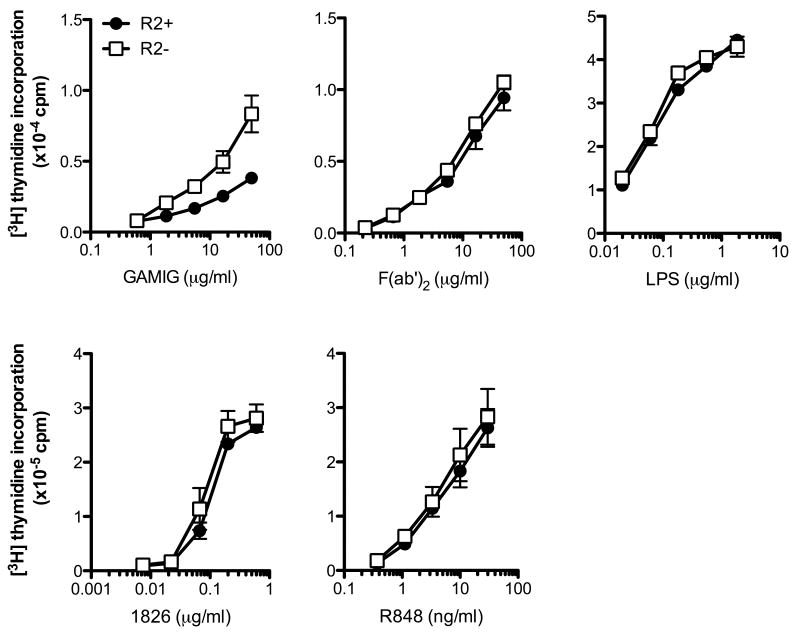
Figure 1. R2- B cells display an enhanced response to GAMIG but not to F(ab′)2 anti-IgM or TLR ligands
B cells from AM14 R2+ and R2- mice (top panels) and from non-transgenic R2+ and R2- mice (bottom panels) (R2+ (●); R2- (□)) were stimulated with increasing concentrations of F(ab′)2 fragment of goat anti-mouse IgM (F(ab′)2), intact goat anti-mouse IgM (GAMIG), LPS, 1826 and R848, and proliferation determined by [3H] thymidine incorporation. Shown are mean±SD of a representative experiment of four (top panels) and mean±SEM of five independent experiments (bottom panels).
Figure 2
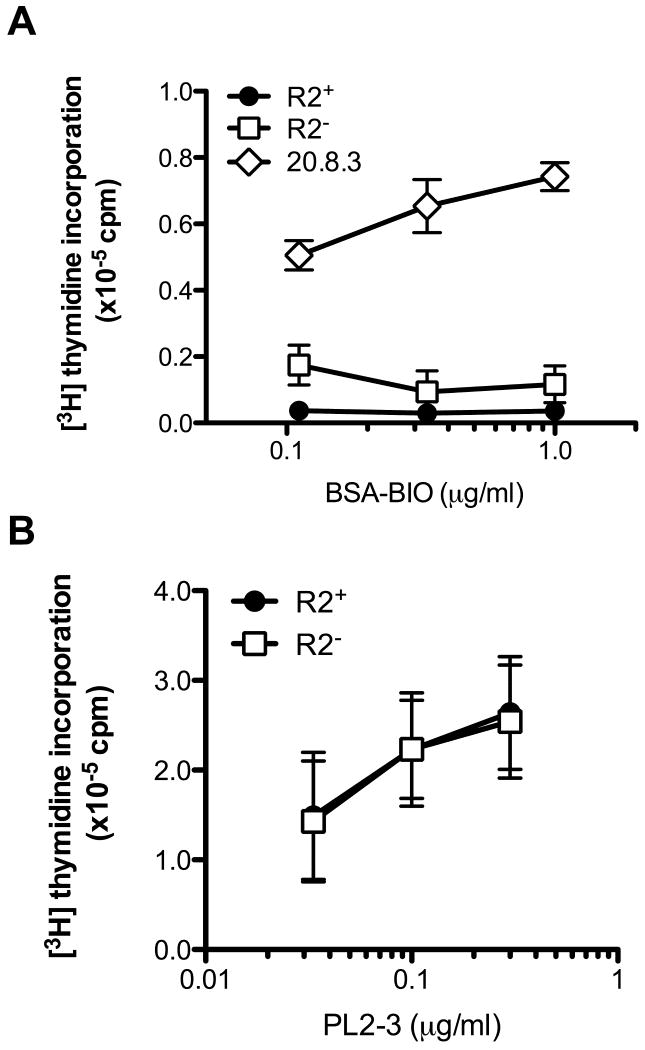
Figure 2. R2+ and R2- AM14 B cells fail to respond to protein ICs and respond comparably to chromatin ICs
(A) R2+ AM14 (●), R2- AM14 (□) and 20.8.3 (◊) splenic B cells were stimulated with protein ICs formed by combining increasing concentrations of biotinylated BSA (BSA-Bio) and 1.5 μg/ml anti-biotin IgG2a. (B) R2+ (●) and R2- (□) AM14 B cells were stimulated with increasing concentrations of PL2-3. In all panels, proliferation was determined at 24 h by [3H] thymidine incorporation. Shown are mean±SEM of four independent experiments.
Figure 3
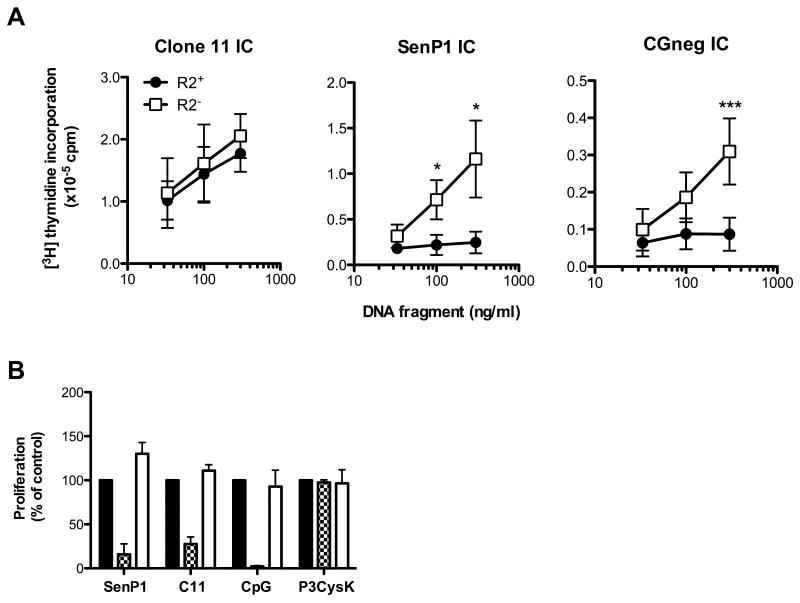
Figure 3. R2- AM14 B cells respond to dsDNA fragment ICs containing non-optimal TLR9 ligands through a TLR9-dependent mechanism
(A) Clone 11 ICs, SenP1 ICs and CGneg ICs were preformed by combining 1D4 (5 μg/ml) with increasing concentrations of Bio-dsDNA fragments and then added to R2+ or R2- AM14 B cells. Results shown are the mean±SEM of three (SenP1 and Clone 11 IC) or five (CGneg IC) independent experiments. * = p<0.05, and *** = p<0.001 indicate significant differences between R2+ and R2- B cells as calculated using the unpaired Student t test. (B) R2- AM14 B cells were stimulated with SenP1 ICs, Clone 11 ICs (C11), ODN 1826 (CpG), or Pam3CysK4 (P3CysK) in the absence (black bars) or presence of TLR9 inhibitor INH-18 (checkered bars) or control INH-48 (open bars). Results shown are the mean±SEM of three independent experiments. In all panels, proliferation was measured at 24 h by [3H]-thymidine incorporation.
Figure 4
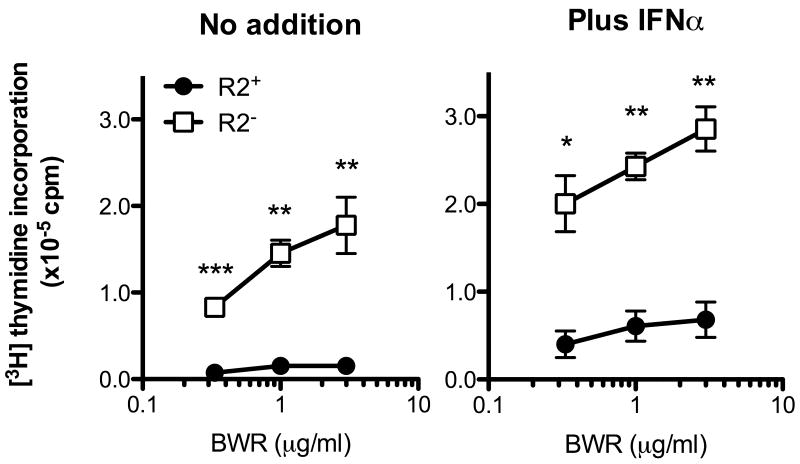
Figure 4. FcγRIIB downregulates AM14 B cell responses to RNA ICs in the absence and presence of IFNα
R2+ (●) and R2- (□) AM14 B cells were stimulated with increasing concentrations of IgG2a anti-RNA BWR4 in the absence (left panel) or the presence (right panel) of 300 U/ml of IFNα. Proliferation was measured by [3H] thymidine incorporation. Results shown are mean±SEM of three independent experiments. * p<0.05; ** p<0.01 and *** p<0.001 indicate significant differences between R2+ and R2- B cells as calculated using the unpaired Student t test.

References

    1. Nimmerjahn F, Ravetch JV. Fcgamma receptors: old friends and new family members. Immunity. 2006;24:19–28. - PubMed
    1. Takai T, Ono M, Hikida M, Ohmori H, Ravetch JV. Augmented humoral and anaphylactic responses in Fc gamma RII-deficient mice. Nature. 1996;379:346–349. - PubMed
    1. Bolland S, Ravetch JV. Spontaneous autoimmune disease in Fc(gamma)RIIB-deficient mice results from strain-specific epistasis. Immunity. 2000;13:277–285. - PubMed
    1. Jiang Y, Hirose S, Abe M, Sanokawa-Akakura R, Ohtsuji M, Mi X, Li N, Xiu Y, Zhang D, Shirai J, Hamano Y, Fujii H, Shirai T. Polymorphisms in IgG Fc receptor IIB regulatory regions associated with autoimmune susceptibility. Immunogenetics. 2000;51:429–435. - PubMed
    1. Isaak A, Gergely P, Szekeres Z, Prechl J, Poor G, Erdei A, Gergely J. Physiological up-regulation of inhibitory receptors Fc gamma RII and CR1 on memory B cells is lacking in SLE patients. Int Immunol. 2008;20:185–192. - PubMed

Publication types

LinkOut - more resources