


Review
doi: 10.1172/JCI43085.
Epub 2010 Sep 1.
Glaucoma: genes, phenotypes, and new directions for therapy
Affiliations
- PMID: 20811162
- PMCID: PMC2929733
- DOI: 10.1172/JCI43085
Item in Clipboard
Review
Glaucoma: genes, phenotypes, and new directions for therapy
J Clin Invest.
2010 Sep.
Abstract
Glaucoma, a leading cause of blindness worldwide, is characterized by progressive optic nerve damage, usually associated with intraocular pressure. Although the clinical progression of the disease is well defined, the molecular events responsible for glaucoma are currently poorly understood and current therapeutic strategies are not curative. This review summarizes the human genetics and genomic approaches that have shed light on the complex inheritance of glaucoma genes and the potential for gene-based and cellular therapies that this research makes possible.
Figures
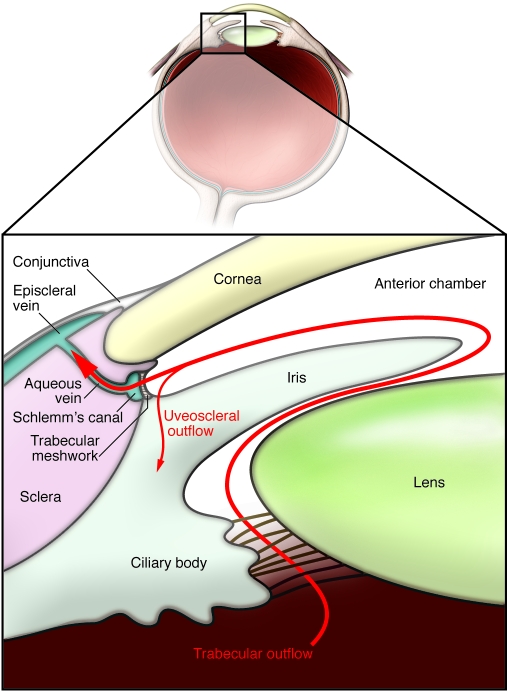
Aqueous humor is produced by the ciliary body and passes from the posterior chamber through the pupil into the anterior chamber into the trabecular meshwork, Schlemm’s canal, and finally into the episcleral venous system. The alternative path is the “uveoscleral outflow” that drains fluid through the ciliary muscle into the supraciliary and suprachoroidal spaces and then out of the eye through the sclera. Approximately 80% of aqueous humor is removed by the conventional trabecular meshwork pathway, and the remainder is removed by the uveoscleral pathway. Elevated IOP in glaucoma is caused by alterations to the conventional trabecular meshwork pathway. The figure adapted from Berwick Eye and Surgicentre (
www.berwickeye.com.au/glaucoma.htm ).
References
Publication types
MeSH terms
Grants and funding
LinkOut - more resources
Full Text Sources
Other Literature Sources
Medical
